
Air Conditioning Repair in Ludlow, MA
If your central air quit on a 90-degree afternoon in Ludlow, you are not alone this week and you are not dealing with anything exotic. A lot of the housing stock here went up with forced-air oil or gas furnaces already in the basement, which means the ductwork for cooling exists but the condenser outside is often the oldest, most neglected piece of equipment on the property.
- Powers Air HVAC, based in Granby, MA
Call {PHONE} and you get Drew directly, not a dispatcher reading from a script. He runs small on purpose so the person diagnosing your system is the same person who answers the phone and shows up with the gauges.
- No cold air, or air that is barely cooler than the room
- Ice forming on the outdoor unit or the line set
- Short cycling, where the system turns on and off every few minutes instead of running a full cycle
- A breaker that trips repeatedly when the AC starts
- Water pooling near an indoor unit, or a stain on the ceiling below one
- A system that has gotten noticeably louder, especially on startup
What Ludlow homes are working with
Ludlow’s housing is mostly mid-century and post-war construction, built when forced-air heating was standard and central air was an afterthought or a later add-on. That means the ductwork is usually already there, sized for heating airflow, and the question is whether a cooling coil and condenser were ever matched to it properly or just bolted on by whoever was cheapest at the time. On the newer edges of town you get larger footprints with longer duct runs and sometimes two zones feeding off one undersized system, which shows up as a house that cools the first floor fine and leaves the second floor miserable.
Natural gas service reaches a good share of Ludlow, which is different from towns further out on delivered fuel, but plenty of streets still run oil furnaces with the AC condenser wired off the same electrical panel that is already stretched thin. This is a strong owner-occupier town, and most of the repair calls we get are from people who’ve lived in the house ten or twenty years and know exactly when the system stopped sounding right. That history is useful information when we’re standing over the compressor trying to figure out what failed and why.
How we size and specify the system
A repair call is still a sizing conversation, because a system that was never sized correctly in the first place tends to fail the same way twice. Before anyone quotes you a compressor swap or a full replacement, we run a load calculation on the house, not a guess based on square footage. Manual J accounts for insulation, window area, orientation and duct condition, and it tells you what tonnage the house actually needs, which is frequently smaller than what’s currently installed.
Oversizing is the most common mistake we find in Ludlow basements. A system that’s too big for the load short-cycles, meaning it blasts cold air, shuts off before it has dehumidified the space, and starts up again a few minutes later. That short-cycling is brutal on the compressor and leaves the house feeling clammy even though the thermostat says it hit temperature. If a quote doesn’t reference a load calculation, it’s a guess dressed up as an estimate, and that’s true whether you’re buying a repair or a full replacement.
- The load calculation behind the recommendation, not just a model number
- Equipment capacity at your actual design temperature, not just at the 47°F rating
- What the electrical service needs to support it, and whether the panel has room
- Line set length and routing, and what that does to performance
- What backup or auxiliary heat looks like, if the system also handles heating
Most repair calls fall into a handful of categories: a capacitor or contactor that’s failed outright, a refrigerant leak that’s been slowly starving the system of capacity for a season or two, a condensate line clogged and backing up into the pan, or a compressor that’s simply worn out after fifteen-plus years of summers. We diagnose before we quote, and we tell you honestly when a repair is worth doing versus when you’re pouring money into a system on its way out.
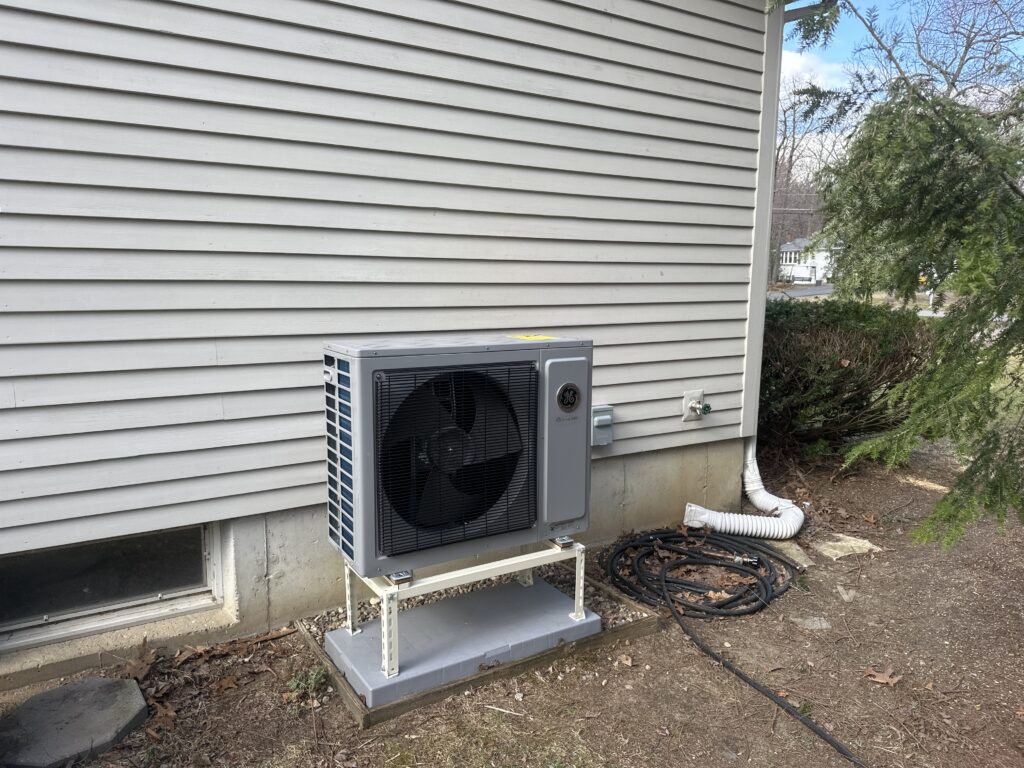
What the work involves
We start with gauges on the system, not a parts-swap guess. That means checking refrigerant charge against manufacturer specs, checking static pressure in the ductwork, and inspecting the electrical components that fail most often, the capacitor and contactor, before touching anything more expensive. If the system is low on refrigerant, we find the leak rather than just topping it off, because recharging a leaking system is a repeat service call waiting to happen.
For a straightforward repair, most jobs are same-day. Capacitor, contactor and blower motor replacements are quick once diagnosed. Refrigerant leak repairs and compressor replacements take longer and sometimes require ordering a part, in which case we tell you that up front instead of leaving you guessing. If the diagnosis points toward a system that’s genuinely at the end of its life, we’ll say so plainly and talk through replacement instead of sinking money into a repair that buys you one more season.
- Checking refrigerant charge and finding the source of a leak, rather than just topping it off
- Testing the capacitor, contactor, and other electrical components that fail from heat and age
- Inspecting the condenser coil and airflow, since a restricted coil is one of the most common reasons a system runs constantly without cooling
- Checking the condensate line and pan, since a clogged line is a common cause of water damage around indoor units
- Reviewing thermostat wiring and settings, which is sometimes the actual issue behind what looks like an equipment failure
Access matters more than people expect. A condenser tucked against a fence with no clearance, or an attic air handler with a tight hatch, adds time to a job that would otherwise be routine. We look at access on the phone when we can, so the estimate we give you over the phone holds up when we’re standing in your yard.
What it costs
Repair costs in Ludlum-area homes typically run {PRICE_LOW} to {PRICE_HIGH}, and the spread comes down to what actually failed and how hard it is to reach. A capacitor or contactor is at the low end. A refrigerant leak repair with a recharge, or a blower motor replacement, sits in the middle. A compressor replacement or anything requiring us to get into tight attic or crawlspace access runs higher, and at that point we usually have an honest conversation about whether replacement makes more sense than repair, especially on a system already past fifteen years old.
We quote the actual job after diagnosis, not a phone estimate pretending to be a price. Electrical service capacity, line set condition, and whether the existing ductwork needs any rework all factor into a replacement quote if that’s where the conversation goes.
- Number of zones or indoor units involved
- Whether the issue is electrical, mechanical, or refrigerant-related
- Access to the outdoor unit and any indoor equipment
- Age and condition of the system, including whether parts are still available
- Whether the underlying issue points to an electrical service or panel limitation
Rebates and incentives
Mass Save exists and it’s worth understanding before you commit to a repair-versus-replace decision, particularly if the system you’re nursing along is a heat pump or you’re considering adding one. The program’s rules and incentive amounts change, and what applies depends on specifics of your house and equipment, so we won’t quote a number here. What we can do is walk through your situation and help you figure out what’s realistic to pursue. For the current program details, see masssave.com [EXTERNAL LINK: Mass Save official site, to verify current program rules and incentive amounts]. For more on how heat pumps and Mass Save intersect, see our Mass Save heat pump rebates page.
Get a Quote
If your AC is down in Ludlum on a hot day, call {PHONE} and describe what’s happening, whether it’s warm air blowing, a system that won’t start, or water pooling near the air handler. We’ll walk through what it likely is before we even get in the truck, and we’ll give you a straight answer about repair versus replacement once we’ve actually looked at the system, not before.
frequently asked questions
Why did my AC stop cooling but the fan still runs?
This is usually a refrigerant issue, a failed compressor, or a dirty condenser coil blocking heat transfer outside. The fan running without cold air coming out almost always means the problem is at the condenser, not the air handler, and it's worth a diagnostic before assuming the worst.
Is it worth repairing an AC system that's over 15 years old?
Sometimes. If the repair is minor, like a capacitor, it's almost always worth it. If you're looking at a compressor replacement on an old system, the math often favors replacing the whole unit, especially since a new system paired with a proper load calculation will run more efficiently and more comfortably than what's there now.
Do you work on older Ludlow homes that added central air later?
Yes. A lot of these systems were installed as add-ons to existing forced-air heating, sometimes without a real load calculation behind the sizing. We diagnose what's there now and tell you honestly whether the fix is a repair or whether the original sizing is the real problem.
How fast can you get to a no-cool call in Ludlow?
Most calls are same-day, especially during peak summer heat. Call {PHONE} and we'll give you a realistic window based on what you're describing and what's on the schedule.
Can a bad AC repair actually make my electric bill worse?
Yes. A system that's low on refrigerant or short-cycling due to oversizing runs longer or cycles more often to try to hit temperature, which drives up usage without improving comfort. A proper diagnosis fixes the root cause instead of masking it.