
Air Conditioning Repair in Northampton, MA
If your central air or mini-split quit on a 90-degree afternoon in a Northampton Victorian, you already know the house holds heat like a brick oven once the sun hits those west-facing windows. A lot of this housing stock was built before anyone thought about cooling at all, which means the system struggling right now was probably never matched to the house in the first place.
- Powers Air HVAC, based in Granby, MA
Call {PHONE} and you get Drew, not a dispatcher reading from a script. He’ll ask what the system is doing, how old it is, and whether it’s ever actually cooled the place evenly, because in this town that last question matters more than almost anywhere else in the territory.
- No cold air, or air that is barely cooler than the room
- Ice forming on the outdoor unit or the line set
- Short cycling, where the system turns on and off every few minutes instead of running a full cycle
- A breaker that trips repeatedly when the AC starts
- Water pooling near an indoor unit, or a stain on the ceiling below one
- A system that has gotten noticeably louder, especially on startup
What Northampton homes are working with
Northampton’s housing centers on dense 19th and early 20th century construction: Victorians, triple deckers, and converted multifamilies packed close together downtown and in the neighborhoods ringing it, with some newer construction further out toward the hilltowns. Most of that older stock has radiators, not ductwork. Steam or hot water heat was the standard and central air was never part of the design, so anyone cooling one of these homes today is either running window units, a handful of mismatched ductless heads installed over the years, or ductwork that got shoehorned in later and runs poorly because the house was never built to hold it.
Gas service is spotty once you get off the main corridors, and plenty of homes here still heat with delivered oil or propane, which changes the math on a heat pump conversion in a way it doesn’t in a gas town. Northampton also has one of the strongest mixes of owner-occupiers who actually want to understand their system, which is part of why this is the most competitive market in our area for ductless and heat pump work. Alpine Heat Pumps and Girard both chase this town hard, and for good reason: the demand here is real, and the customers asking about cold-climate performance and HSPF2 ratings are asking because they genuinely want to know, not because a salesman brought it up.
How we size and specify the system
Before any recommendation, the system gets a load calculation, not a guess based on square footage. A Manual J looks at your insulation, window count and orientation, ceiling height, and air leakage to figure out exactly how much cooling (and heating, if we’re talking heat pump) the house actually needs. That number is almost always lower than what a rule-of-thumb quote assumes.
Oversizing is the single most common mistake in this trade, and it doesn’t make a house more comfortable, it makes it less. An oversized system blasts cold air, hits the thermostat setpoint, and shuts off before it’s run long enough to pull humidity out of the air. You end up with a house that’s cold and clammy instead of cool and dry, plus a compressor that’s short-cycling itself toward an early failure. A quote that doesn’t reference a load calculation is a quote built on a guess, and that’s a warning sign worth paying attention to before you sign anything.
A real quote tells you the calculated load, the equipment’s actual rated capacity at your design conditions, where the line sets run, and how the indoor units get placed for even coverage instead of one blasting head and three warm rooms.
- The load calculation behind the recommendation, not just a model number
- Equipment capacity at your actual design temperature, not just at the 47°F rating
- What the electrical service needs to support it, and whether the panel has room
- Line set length and routing, and what that does to performance
- What backup or auxiliary heat looks like, if the system also handles heating
What’s actually wrong with your system matters more than its age. Sometimes a 12-year-old unit just needs a capacitor and a good cleaning. Sometimes a struggling 6-year-old system was mis-sized from day one and no repair fixes that underlying problem.
What the work involves
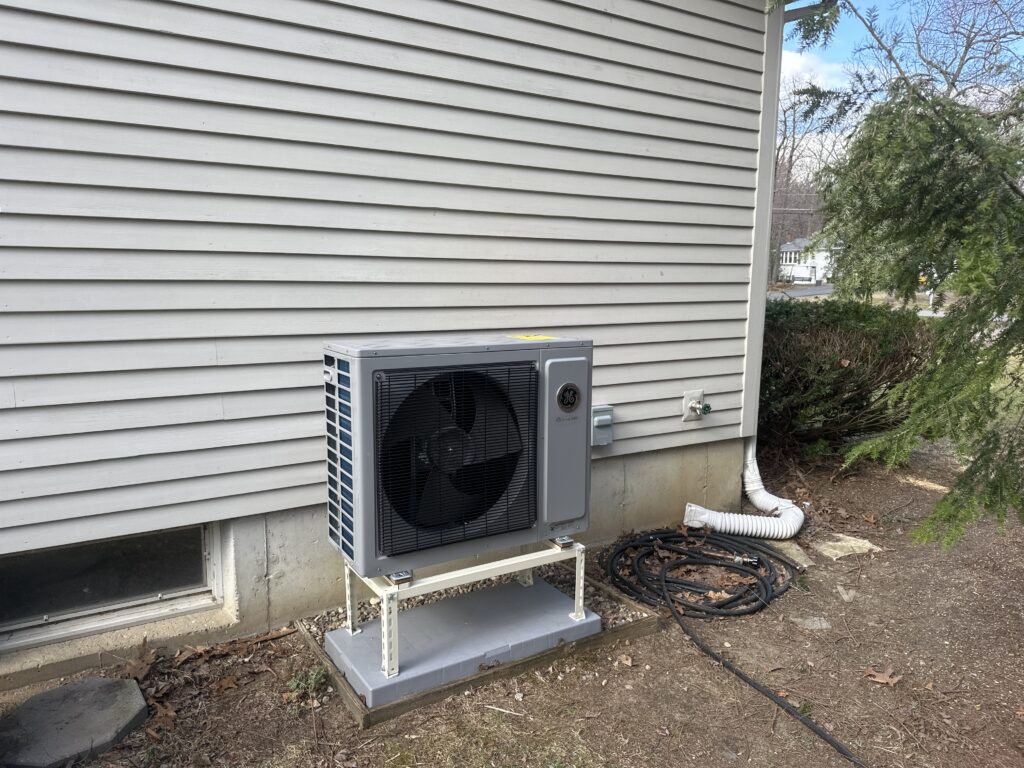
A service call starts with diagnostics: refrigerant charge, electrical components, static pressure if there’s ductwork involved, and a look at whether the outdoor unit has the airflow it needs. Common failures around here are capacitors, contactors, condensate pump or drain clogs (brutal on the humid days when you need the system most), low refrigerant from a slow leak, and failed compressors on older units that have been quietly overworking for years.
If the fix is straightforward, it usually happens the same visit. If the diagnosis points to a bigger issue, like a system that was always undersized for the square footage or a compressor at end of life, you get a straight answer about repair versus replacement, including what a replacement would actually cost to do right, not a push toward the more expensive option by default.
- Checking refrigerant charge and finding the source of a leak, rather than just topping it off
- Testing the capacitor, contactor, and other electrical components that fail from heat and age
- Inspecting the condenser coil and airflow, since a restricted coil is one of the most common reasons a system runs constantly without cooling
- Checking the condensate line and pan, since a clogged line is a common cause of water damage around indoor units
- Reviewing thermostat wiring and settings, which is sometimes the actual issue behind what looks like an equipment failure
Northampton’s older homes also mean condensate and line set routing can be more involved than a newer build. Plaster walls, narrow chases, and finished basements all factor into how a repair or a line replacement actually gets done, and that’s something a phone estimate can’t account for.
What it costs
Most AC repairs in this area run between {PRICE_LOW} and {PRICE_HIGH}, with the spread driven by what’s actually failed, how old and accessible the system is, and whether parts are readily available or need to be sourced for a discontinued unit. A capacitor swap sits at the low end. A compressor failure, a buried refrigerant leak, or a system that needs rework because of how it was installed originally pushes toward the top.
If the conversation shifts to replacement, number of zones, indoor unit type (ducted versus wall or ceiling cassette), line set length, and whether your electrical panel has capacity for new equipment all move the price. We’ll always tell you which of those apply to your house specifically instead of quoting off a generic range.
- Number of zones or indoor units involved
- Whether the issue is electrical, mechanical, or refrigerant-related
- Access to the outdoor unit and any indoor equipment
- Age and condition of the system, including whether parts are still available
- Whether the underlying issue points to an electrical service or panel limitation
Rebates and incentives
Massachusetts runs the Mass Save program, which offers incentives tied to efficiency and equipment type, and the specifics change often enough that we won’t quote a number here. It’s worth understanding what might apply to your project, and we’re glad to walk through your specific situation once we know what equipment fits your house. For the current program details, start at masssave.com [EXTERNAL LINK: official Mass Save program site for current rebate details] or see our page on Mass Save heat pump rebates for a general overview.
Get a Quote
If the air conditioning is down in Northampton right now, call {PHONE}. You’ll talk to Drew directly about what the system is doing and how fast we can get to you. If you’re further along and thinking about a ductless or heat pump replacement instead of another repair, that conversation starts with the same honest look at your house, not a sales pitch.
frequently asked questions
How fast can you get to Northampton for an AC repair?
Call {PHONE} and we'll give you a real window based on where we're at that day. During peak summer heat, same-day service is the goal whenever possible, and we'll tell you honestly if that's not realistic rather than making you wait and wonder.
My central air is from the 1990s and barely cools the upstairs. Is it worth repairing?
Depends what's wrong. If it's a simple component failure, a repair makes sense. If the system has always struggled to cool evenly, that's often a sizing or ductwork problem that a repair won't fix, and we'll tell you straight if that's what we find.
I only have radiators, no ductwork. What are my cooling options?
Ductless mini-splits are the most common answer for homes like this in Northampton, since they don't require tearing into plaster walls or ceilings to run ducts. We size them off a load calculation for your specific rooms, not a generic per-square-foot guess.
Do you work on all brands?
Yes. Diagnostics and repair work cover the common residential systems regardless of brand. For replacement, we'll recommend what actually fits your house and your budget rather than pushing one manufacturer.
Is the repair quote a flat price over the phone?
No, and we'd be skeptical of anyone who gives you one without seeing the system. We diagnose first, then give you a clear price for the actual repair needed before any work starts.