
Heat Pump Installation in Palmer, MA
Heat Pump Installation in Palmer
This town is really four places stitched together under one town line – Three Rivers, Thorndike, Bondsville, and the center itself – and the housing in each village tells you what you’re dealing with before you even open the basement door. Mill-era cottages and triple deckers sit close to the rivers that used to power the mills, oil tanks and propane tanks far outnumber gas meters on most of these streets, and a lot of the heating equipment down there is older than the people living upstairs.
So the real question is not whether a heat pump is a trendy upgrade. It’s whether a cold-climate heat pump, sized correctly and backed up properly, can actually carry a house through a January night here without you lying awake wondering. The honest answer is yes, with real qualifiers attached, and those qualifiers are what this page is actually about. A heat pump rated for cold climate performance holds most of its rated capacity down into single digits and keeps working below zero, just at reduced output, which is why the backup heat conversation matters more than the sales pitch does.
- Powers Air HVAC, based in Granby, MA
Heat Pump Installation in Palmer
Walk through Three Rivers or Bondsville and you’re mostly looking at early-1900s mill housing, narrow lots, two and three family structures, and a fair number of landlords renting to tenants who pay the heating bill. Thorndike and the center have more single-family stock from a wider range of decades, some with central ductwork added later and plenty still running entirely on cast iron radiation. Natural gas service is spotty to nonexistent through large sections of town, which means the baseline heating cost you’re comparing a heat pump against is delivered oil or propane, not a gas bill. That comparison is where heat pump economics actually make sense here in a way they don’t in towns with cheap gas on every street.
Along Route 20 you’ve got a different animal entirely – a working commercial strip with auto shops, restaurants, and small retail buildings, many with rooftop package units nearing the end of their service life or electric resistance heat that was never efficient to begin with. For a homeowner in the older housing stock, the decision usually comes down to whether there’s existing ductwork worth using or whether a ductless system is the more honest answer. For a commercial property owner on Route 20, it’s usually about replacing tired rooftop equipment with something that handles both heating and cooling without the operating cost of straight electric resistance.
What Palmer Homes Are Working With
Every recommendation starts with a Manual J load calculation, not a tape measure and a guess based on square footage. The load calculation accounts for insulation levels, window area and orientation, air leakage, ceiling height, and how the house actually loses and gains heat room by room. Skip that step and you’re guessing, and guessing almost always means oversizing.
Oversizing is the single most common mistake in this business, and it makes a house less comfortable, not more. An oversized heat pump short-cycles – it blasts up to temperature fast, shuts off, and sits idle, which means it never settles into the long, steady low-speed runs that actually dehumidify a house in summer and distribute heat evenly in winter. It also wears the compressor harder with more start-stop cycles over its life. Right-sized equipment runs longer at lower output more often, which is exactly what a modern inverter-driven heat pump is designed to do.
A proper quote reflects all of this. It should show the calculated heating and cooling load for the house, the manufacturer’s capacity data at the design temperature we actually hit around here, where the backup heat kicks in and at what outdoor temperature, and how many zones are proposed and why. If a bid shows up with a price and a brand name and nothing behind it explaining how that capacity was chosen, that’s worth asking about before you sign anything.
How We Size and Specify the System
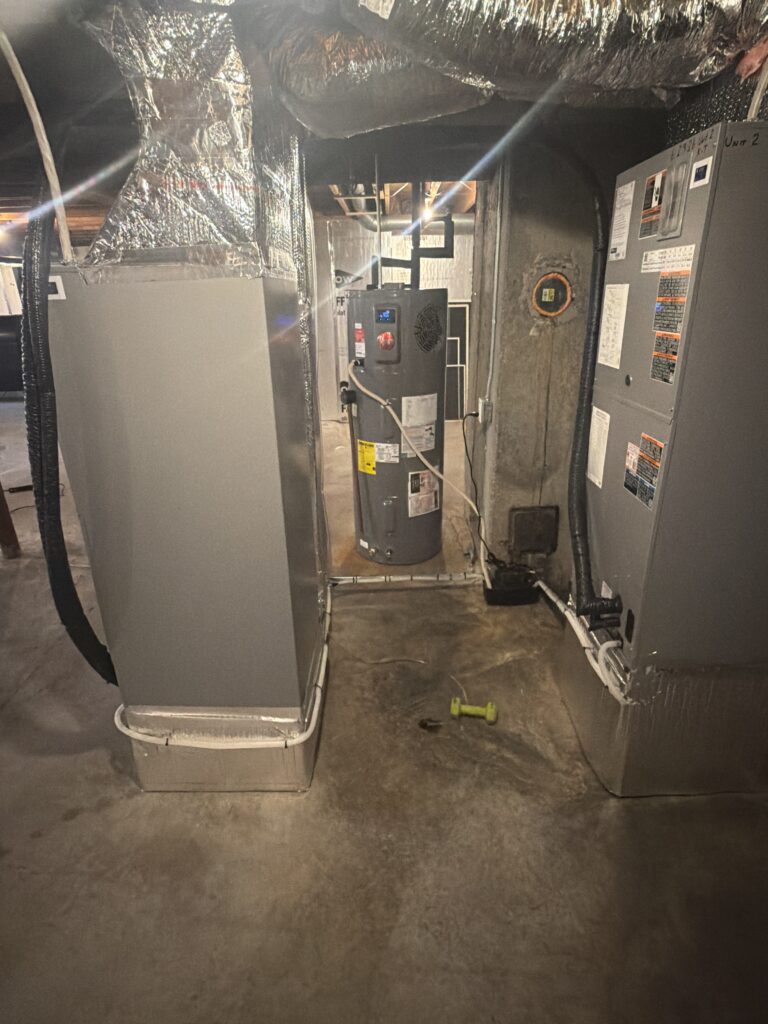
Installation work breaks down into a handful of real decisions, not a single checklist. Outdoor condenser placement needs clearance for airflow and snow load, and in mill-village housing with tight side yards that sometimes limits where it can go. Indoor units – wall-mounted heads, ducted cassettes, or a combination depending on the layout – get placed where they can actually move air through the rooms they’re serving, not just where it’s convenient to mount a bracket. Line sets carrying refrigerant between indoor and outdoor units have real length and elevation limits before performance drops off, which matters on some of these older multi-story structures. Condensate drainage has to go somewhere sensible, and on a ducted retrofit, existing ductwork gets evaluated for static pressure before we assume it can handle the new equipment’s airflow without changes.
Electrical capacity is part of the conversation on almost every heat pump install, especially in older housing that was never built to carry 240-volt equipment. We hold the electrical licensing to evaluate the panel, run new circuits, and handle a full panel upgrade in-house if the existing service can’t support the new load – permitted and inspected the way it’s supposed to be, not quietly skipped to shave a few hundred dollars off a bid. That’s part of why a heat pump quote from us accounts for the whole picture instead of surprising you with an electrician’s invoice later.
What the Work Involves
A straightforward single-zone ductless install generally lands toward {PRICE_LOW}, while a multi-zone system covering a whole house, or a ducted heat pump replacing central air and a furnace, runs up toward {PRICE_HIGH}. What moves the number inside that range is the count of zones, whether you’re installing wall-mounted heads versus ducted cassettes, how long the line set runs are and how hard they are to route, whether the electrical panel has room for the new circuits or needs an upgrade first, and how accessible the install locations actually are in a given house. None of that gets guessed at over the phone – it comes out of a site visit and the load calculation, and the number you get in writing is the number tied to your house, not a generic estimate.
- A load calculation and walkthrough to confirm zone locations
- Mounting the outdoor condenser and indoor units
- Running refrigerant line sets within the manufacturer's length and elevation limits
- Setting up a proper condensate drain
- Dedicated electrical circuits, including a check on panel capacity
- Commissioning the system and a walkthrough of the controls
Rebates and incentives
Massachusetts runs a statewide efficiency program, Mass Save, that offers incentives for qualifying heat pump installations, and it’s genuinely worth understanding before you finalize a system – the rules around eligibility, equipment efficiency thresholds, and incentive amounts change and depend on your specific house and utility. We’ll walk through what might apply to your situation as part of the quoting process. For the current program details and how rebates are structured, see the Mass Save site directly [EXTERNAL LINK: Mass Save program overview and current heat pump rebate requirements], and our own page breaks down what homeowners in this part of the state typically run into.
What it costs
If you’re trying to figure out whether a heat pump makes sense for your house in this town, the next step is a visit, not a phone estimate. We’ll look at the house, run the load calculation, check what the electrical panel can support, and tell you straight whether ductless, ducted, or a hybrid approach with your existing boiler or furnace makes the most sense. Call {PHONE} and you’ll be talking to the person who’ll actually be doing the work, not someone reading from a script.
Permits and Inspection
Get a Quote
frequently asked questions
Do heat pumps actually work in Massachusetts winters?
Cold-climate rated heat pumps maintain most of their rated heating capacity well into single-digit outdoor temperatures and continue operating below zero, just at reduced output. The honest approach is sizing the system with that drop-off in mind and specifying backup heat for the coldest stretches, rather than claiming the heat pump alone handles every condition.
Will I still need my oil or propane furnace as backup?
In a lot of houses here, yes, at least initially. Keeping the existing oil or propane system as backup for the coldest days is a reasonable, low-risk approach, and some homeowners choose to fully electrify once they've seen how the heat pump performs through a winter. The load calculation tells us at what outdoor temperature the heat pump's output starts falling short of the house's heat loss, which is where backup heat picks up the difference.
My house has radiators and no ductwork. Does that rule out a heat pump?
No. It actually points toward a ductless system, which is common in the mill-era housing around here. Wall-mounted or ducted cassette indoor units connect to an outdoor compressor without needing existing ductwork, which is exactly the situation a lot of this housing stock is in.
How long does installation take?
A single-zone ductless install is typically a one-day job. Multi-zone systems or installs that involve electrical panel work or ductwork modifications take longer, and we'll give you a realistic timeline once we've scoped the specific work your house needs.
Do you handle the electrical work if my panel needs an upgrade?
Yes, that work is done in-house under our own electrical licensing, not referred out to a separate contractor. It's permitted and inspected, which matters more than it sounds like it would when you're comparing quotes.