
HVAC Contractor in Ludlow, MA
Ludlow’s housing stock runs heavy on mid-century capes and ranches built with forced hot air furnaces and sheet metal ductwork already in the walls, plus a newer ring of colonials and raised ranches out toward the edges of town that were built the same way but bigger. A lot of those houses have never had central cooling because for decades the furnace was the whole job, and window units handled July and August.
That history is exactly why Ludlow is one of the more straightforward towns in our territory to work in. The ductwork is usually already there. The question isn’t whether you can add cooling, it’s whether to tie into what exists or do something better.
- Powers Air HVAC, based in Granby, MA
We’re Powers Air HVAC, based in Granby, a short drive from Ludlow. Drew Powers runs the company himself, with a small network of licensed plumbing and electrical trades he’s worked with for years. When you call, you’re talking to the person who will size your system and likely be on site for the install, not a scheduler reading from a script.
That matters more in a town like Ludlow than it sounds like it should. A furnace retrofit for central air looks simple from a sales pitch and gets complicated fast once someone actually measures your ductwork, checks your electrical panel, and figures out what your house really needs instead of what’s easiest to quote over the phone.
- Ductless mini-split installation, single-zone and multi-zone
- Heat pump installation and replacement, cold-climate rated equipment
- Central air conditioning
- Furnace installation and replacement
- Ductwork and ventilation
- Electrical panel upgrades and change-outs, licensed and permitted, done in-house
- EV charger installation
What Ludlow homes are working with
Ludlow sits in the part of Western Massachusetts where natural gas service is a mixed bag. Some streets have it, plenty of the older neighborhoods and the newer construction on the outskirts run on delivered oil or propane instead. If you’re one of the oil or propane households, the economics of a heat pump look different than they do in a gas town, because you’re not comparing against the cheapest fuel available, you’re comparing against one of the more expensive ones. That’s a real conversation worth having before you assume central air is your only move.
The housing itself splits a few ways. The mid-century capes and ranches near the center of town were built with ductwork for a furnace, which makes them good candidates for either extending that ductwork to add AC or, in cases where the existing trunk lines are undersized or leaky, going ductless instead and skipping the duct problem entirely. The post-war multifamilies and the two- and three-family rental stock closer to the commercial strip often have steam or hot water heat with zero ductwork, which is the classic case for mini-splits. And the newer homes on the edges of town, built in the last twenty-five years or so, usually already have central air but may be due for a heat pump swap when the AC condenser finally gives out. Owner-occupiers tend to want the long-term efficiency play; landlords managing rental units in Ludlow’s older multifamilies are usually more focused on reliability and upfront cost, and that changes what we recommend.
How we size and specify the system
Every recommendation starts with a load calculation, not a guess based on square footage. A Manual J calculation accounts for your insulation, your window area, your ceiling height, your air leakage, and your orientation, and it tells us how much heating and cooling your house actually needs room by room. Skip that step and you’re rolling dice.
Oversizing is the most common mistake we see from other quotes, and it doesn’t make a system more capable, it makes it worse at its job. An oversized air conditioner cools the air fast and shuts off before it’s pulled the humidity out of the room, so the house feels clammy even at the right temperature. An oversized heat pump short-cycles, which wears out components faster and never settles into the steady, efficient low-speed operation that these systems are designed for. Right-sized equipment runs longer, quieter, and more efficiently, and that’s true whether we’re talking about a single ductless head or a whole-house heat pump system.
If a quote shows up with a price and a model number but no load calculation behind it, that’s worth noticing. It usually means someone sized the job off the old equipment’s rating or a rule of thumb, not off your actual house. Any quote from us includes what we measured, what we calculated, and why the specific equipment matches your home, not just a number on a line.
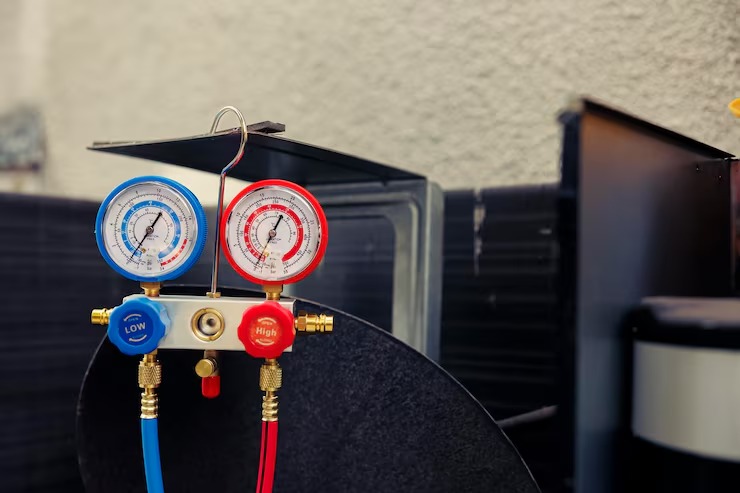
We handle the full range of residential and commercial HVAC work: ductless mini-splits and heat pumps, central air conditioning, furnace installs and replacements, and ductwork and ventilation work when an existing system needs correcting rather than replacing. If your project involves a panel upgrade or an EV charger alongside the HVAC work, that’s done in-house too, under the electrical licensing Drew holds directly, not farmed out to someone else and marked up.
Plumbing connections, like condensate routing or gas line adjustments tied to a furnace swap, go through the licensed plumbing subcontractors we’ve worked with consistently rather than being handled off-license. It’s a smaller operation by design, and every trade on the job is accountable and licensed for the work they’re doing.
- A room-by-room load calculation, not a flat square-footage number
- Specific equipment model numbers, not just "a 2-ton system"
- Line set lengths and routing
- Confirmation the electrical service has capacity, or what it will take if it doesn't
- Permit and inspection included, not an add-on
- A written price, not a verbal estimate
What the work involves
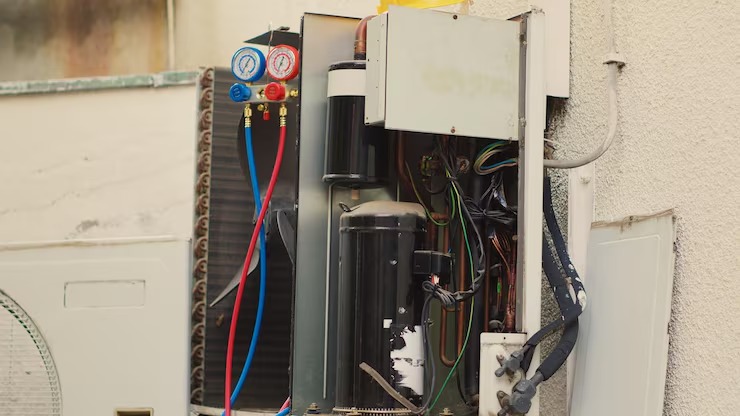
For a central air retrofit onto existing furnace ductwork, the work typically means a load calculation, an inspection of the existing trunk and branch ducts for size and leakage, static pressure testing to confirm the blower can actually move the air the new coil requires, setting the outdoor condenser on a pad with proper clearance, running refrigerant line sets, and tying the new evaporator coil into the furnace plenum. If the ductwork is undersized or leaky, that gets addressed before the new equipment goes in, because a tight compressor paired with a leaky duct system never performs the way the spec sheet says it should.
For a ductless installation, the work centers on indoor head placement, line set routing that respects the manufacturer’s maximum run length and elevation change, a dedicated electrical circuit, and condensate drainage that won’t freeze or back up. Cold-climate heat pumps carry an HSPF2 efficiency rating and a documented capacity at low outdoor temperatures, and that capacity curve is what we check against Ludlow’s actual winter design temperature, not a marketing number, to confirm the system will carry your heating load without leaning too hard on backup heat.
Either way, it finishes with startup, a check of refrigerant charge against the manufacturer’s specification, and a walkthrough of the controls so you understand how the system actually behaves, including what backup or auxiliary heat is doing on the coldest nights.
What it costs
- Site visit and load calculation
- Written proposal with equipment, zones, and price
- Permit filed with the town
- Installation, typically one to three days depending on scope
- Commissioning and system check, including refrigerant charge verification
- Inspection and walkthrough
A straightforward central air retrofit onto existing, adequately-sized ductwork runs toward the lower end of the range, roughly {PRICE_LOW} on the simple end. A ductless multi-zone install, a full heat pump system meant to carry the heating load in an oil or propane household, or a retrofit that uncovers undersized ductwork or an electrical panel that needs upgrading pushes toward {PRICE_HIGH} or beyond.
What moves the number: how many zones or indoor heads the house needs, whether you’re using ducted or ductless indoor units, how long the refrigerant line runs are and how much structure they have to pass through, whether your electrical panel has the capacity for the new equipment or needs work first, and how accessible the attic, basement, or exterior wall space is for the installers. We walk through all of that before we give you a number, not after.
Permits and Inspection
HVAC installs in Ludlow require permitting and inspection, and anything touching the electrical panel or adding circuit capacity for a heat pump, mini-split, or EV charger absolutely does, since that work involves the service conductors feeding your house. We pull the permits, schedule the inspections, and stand behind the work passing them. A contractor quoting a panel change-out or a full HVAC system without mentioning permits is usually the same contractor skipping the inspection, and that’s the corner that costs homeowners the most down the road, whether it’s an insurance issue or a problem at resale.
Rebates and incentives
Mass Save exists as a statewide program and it’s genuinely worth understanding before you finalize a heat pump or ductless project, because the rules and the amounts available change and depend on your specific equipment, your income, and your installer’s participation status. We’re glad to walk through what the program covers and help you figure out what might apply to your house, but you should go to [EXTERNAL LINK: masssave.com for current program details and eligibility] directly for the current numbers rather than relying on anything secondhand. We’ve also put together more detail on our Mass Save heat pump rebates page.
Get a Quote
If you’re in Ludlow and trying to figure out whether a central air retrofit, a ductless system, or a full heat pump conversion makes sense for your house, call {PHONE}. You’ll talk to Drew, and the first conversation is about your house and your heating fuel situation, not a sales pitch. If a load calculation says a job isn’t a good fit for what you’re asking for, we’ll tell you that too.
frequently asked questions
Does Ludlow have natural gas service?
It's mixed. Some neighborhoods have gas, but a significant share of Ludlow homes, especially older houses and newer construction on the outskirts, run on delivered oil or propane. That changes the math on a heat pump conversion since you're comparing against a pricier fuel, not the cheapest one available.
My house already has ductwork from a furnace. Can you just add central air to it?
Often yes, but we check the existing ductwork's size and condition first. Undersized or leaky ducts will choke a new AC system's performance no matter how good the outdoor unit is, so we test static pressure before we quote the job rather than assuming the ducts are fine.
Is ductless worth it if my house already has a furnace and ducts?
Sometimes. If the ducts are undersized, hard to access, or the furnace is in a part of the house that makes extending ductwork expensive, a ductless system can be the more practical and often cheaper path, especially if you're also looking to add heating capacity in a room the furnace doesn't reach well.
Do you do the electrical work for panel upgrades yourselves?
Yes. Panel upgrades and EV charger installs are performed in-house under Drew's electrical licensing, not referred out to a separate company. The work is permitted and inspected, which matters because it involves your home's service conductors.
How do I know if a quote is actually sized correctly for my house?
Ask what the load calculation showed. Any legitimate quote should be able to tell you the heating and cooling load for your specific house and explain why the proposed equipment matches it. If a contractor can't answer that, the quote is probably based on a guess rather than your home.