
Heat Pump Installation in Chicopee, MA
A good share of Chicopee’s housing stock was built before anyone thought about central air, and a good share of it was built fast after the war with baseboard hot water and nothing in the way of ducts. Between the mill-era triple deckers along the Chicopee River and the mid-century ranches and capes further out, you get two very different starting points for a heat pump, and both of them are common on the same street.
- Powers Air HVAC, based in Granby, MA
Heat Pump Installation in Chicopee
Chicopee is the second largest market in the territory we cover out of Granby, with roughly 55,600 people living in a mix of dense post-war neighborhoods, older multifamily housing closer to the river, and pockets of newer construction further from downtown. It’s a practical, price-aware city. People here want to know what a system actually does for their heating bill and their comfort, not what it’s supposed to do in a brochure. That’s the conversation we have.
What Chicopee Homes Are Working With
A lot of Chicopee’s housing predates central air entirely. The older two and three family buildings near the river were built around steam or hot water radiators, with no ductwork anywhere in the structure. If you own one of those, running new ducts top to bottom isn’t realistic, and it isn’t necessary either. A ductless or ducted mini-split system delivers heating and cooling room by room without tearing open plaster and lath, which matters a lot in buildings where every wall is original.
The mid-century housing stock, the ranches and capes built in the postwar boom, is a different case. Many of those already have some ductwork from an old forced-air furnace, which opens the door to a ducted heat pump or a central system tied into the existing trunk lines, assuming the ducts are sized right for the new airflow. Fuel source is the other variable that really changes the math here. Chicopee has natural gas in a lot of the older core, but plenty of homes on the edges of town and in surrounding areas still run on delivered oil or propane. If you’re paying for oil deliveries, a heat pump isn’t competing against cheap gas, it’s competing against one of the more expensive ways to heat a house, and that math tends to favor electrification a lot faster than people expect. We also see a fair number of landlord-owned multifamily properties in Chicopee, where the calculation includes tenant turnover, unit-by-unit control, and what a system does for the property’s long-term value, not just comfort for one owner-occupant.
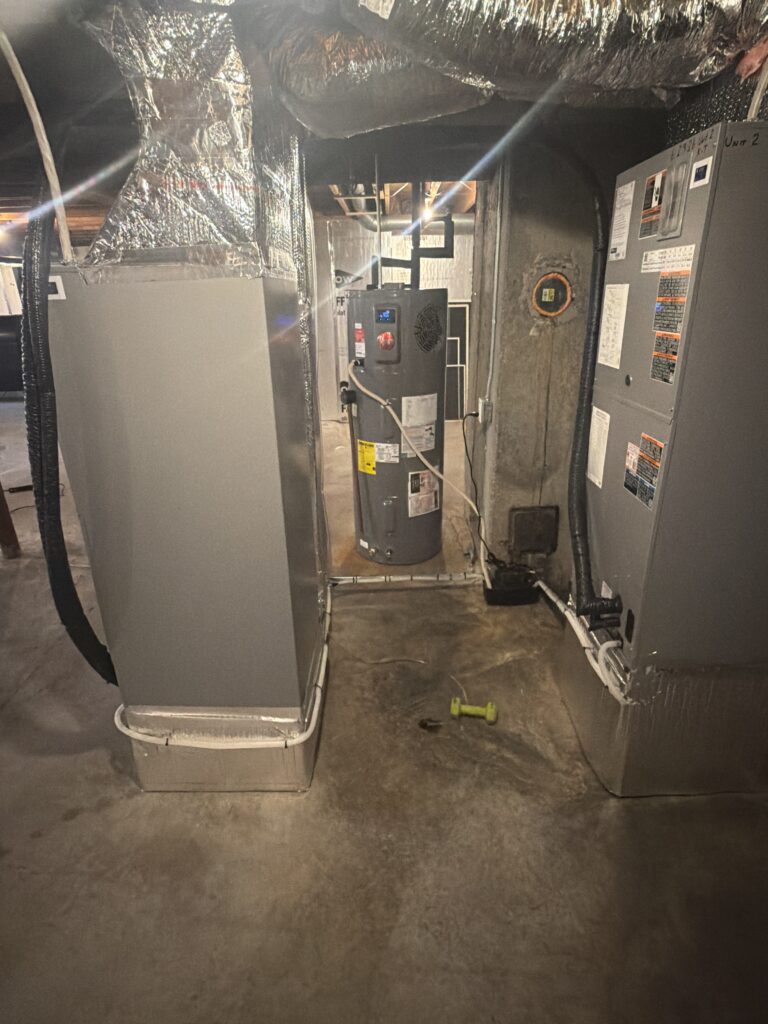
How We Size and Specify the System
Every recommendation starts with a load calculation, not a guess based on square footage. A Manual J calculation accounts for your insulation, your windows, your air sealing, your orientation, and the actual design temperatures for this part of Massachusetts, and it tells us how much heating and cooling your house actually needs room by room. Skip that step and you’re sizing by instinct, and instinct is almost always wrong in the direction of too big.
Oversizing is the single most common mistake in this industry, and it doesn’t make a house more comfortable, it makes it less comfortable. An oversized system short cycles, meaning it blasts on, satisfies the thermostat fast, and shuts off before it’s had time to properly dehumidify the air or distribute heat evenly through the space. That leads to clammy summers, cold spots in winter, more wear on the compressor from constant starts and stops, and a shorter service life on equipment that cost real money. A right-sized system runs longer, gentler cycles and actually holds comfort steady.
Once we know the load, we look at how many zones the house needs, where indoor heads or air handlers make sense, how long the refrigerant line runs will be, and what the cold-climate performance data says about the specific equipment at your design temperature, not just at 47 degrees where every spec sheet looks good. If you get a quote with a price and a brand name but no load calculation behind it, that’s a warning sign. It means someone is selling you a box, not solving your house.
What the Work Involves
Installation starts with the load calculation and a walkthrough of the house to confirm indoor unit locations, outdoor unit placement, and line set routing. We check your electrical panel’s available capacity, since heat pumps need dedicated circuits and some older Chicopee homes with 100-amp service are already near their limit before you add electrification equipment. If the panel needs work, we handle that too, as licensed electrical work, permitted and inspected, rather than farming it out and hoping it gets done right.
From there it’s mounting indoor units, running line sets and condensate drainage, setting the outdoor condenser on a pad or wall bracket positioned to handle snow load and keep airflow clear, charging the system to the correct refrigerant weight for the actual line length, and commissioning it with the manufacturer’s startup procedure. Every job gets pulled under permit and inspected, because that’s what protects you if something goes wrong down the road and it’s what separates a legitimate installation from a weekend favor.
- A load calculation and walkthrough to confirm zone locations
- Mounting the outdoor condenser and indoor units
- Running refrigerant line sets within the manufacturer's length and elevation limits
- Setting up a proper condensate drain
- Dedicated electrical circuits, including a check on panel capacity
- Commissioning the system and a walkthrough of the controls
What it costs
A heat pump installation in Chicopee typically runs between {PRICE_LOW} and {PRICE_HIGH}, and where you land in that range depends on real variables, not negotiation. The number of zones is the biggest driver, since a single-zone mini-split in a small addition costs a lot less than a whole-house multi-zone system covering a three story triple decker. Indoor unit type matters too, wall-mounted heads are the least expensive option, while ducted cassettes or air handlers tied into existing ductwork cost more in labor. Line set length, electrical panel capacity, and how easy it is to get equipment to the install location all move the number as well. We won’t give you a number before we’ve seen the house and run the load calculation, because anyone who does is guessing.
What it costs
Mass Save exists as a statewide program offering incentives for qualifying heat pump installations, and it’s worth understanding before you commit to a project, because the rules around eligibility, equipment requirements, and available funding change over time. We can walk through what applies to your specific house and help you understand the program’s current requirements, but we don’t issue or guarantee any rebate ourselves, that comes through the utility sponsors. For the current details, start at masssave.com [EXTERNAL LINK: Mass Save program site, the authoritative source for current rebate rules and amounts], and see our Mass Save heat pump rebates page for more on how the process generally works.
Permits and Inspection
Get a Quote
frequently asked questions
Do heat pumps actually work in a Chicopee winter?
Yes, and this is the question worth answering honestly rather than glossing over. Modern cold-climate heat pumps are rated to maintain a meaningful share of their heating capacity well below zero, and the technology has improved significantly in the last decade. What matters is choosing cold-climate rated equipment with strong HSPF2 performance and planning for backup or auxiliary heat for the coldest handful of days a year. We'll tell you straight whether your house needs a backup source or whether the heat pump can carry the full load on its own.
Do I need to keep my oil or propane furnace as backup?
It depends on the equipment and the load calculation. Some cold-climate heat pumps can carry a well-insulated Chicopee home through the entire winter without backup. Others, especially in older housing with higher heat loss, perform better with the existing furnace or boiler kept as backup for the coldest stretches. We'll tell you which situation you're in before you buy anything, not after.
My house has radiators and no ductwork, can I still get a heat pump?
Yes, this is exactly what ductless mini-split systems are built for. Indoor units mount on the wall or ceiling in each room or zone, connected to an outdoor condenser by refrigerant line sets run through small wall penetrations, with no new ductwork required anywhere in the house.
How is a heat pump quote different from just a price for equipment?
A real quote follows a load calculation and specifies the exact equipment, the number of zones, line set lengths, electrical requirements, and what's included for permitting and inspection. If a quote is just a dollar figure and a brand name, ask what the load calculation showed, because there should be one behind every number.