
Commercial HVAC in Ludlow, MA
Ludlow’s commercial strip runs through buildings that mostly went up between the 1950s and the 1980s, storefronts with a furnace or rooftop unit in the back and no cooling to speak of, or cooling bolted on decades after the fact. Some of that stock sits on oil or propane because gas service never reached every block out here, which changes the math on a heat pump conversion in a way a gas-town contractor won’t think to mention.
- Powers Air HVAC, based in Granby, MA
We quote commercial work in Ludlow the same way we quote a house: load calculation first, equipment second. A storefront, a small office building, and a mixed-use block with apartments above retail all carry different heat loss and heat gain numbers even if they look similar from the street, and that number is what the system gets built around, not a guess based on square footage.
- Ductless mini-splits and heat pumps, single and multi-zone
- Central air conditioning, furnaces, ductwork and ventilation
- Electrical panel upgrades, change-outs and EV charger installation, done in-house by Powers Air
What Ludlow homes are working with
Residential conversion work in Ludlow lines up with the commercial pattern because the building stock tells the same story. The town has a strong base of mid-century capes and ranches built with forced hot air furnaces, plus newer construction pushed out toward the edges of town that often arrived with central air already installed. The older homes are the classic retrofit candidate: ductwork already run for heat, zero cooling capacity, and an owner who has been putting a window unit in the bedroom for thirty years and is done with it.
What’s different here compared to a lot of the hill towns to the north is the density and the ownership pattern. Ludlow has a real commercial strip, a meaningful rental and multifamily share mixed in among the owner-occupied homes, and enough natural gas penetration in the older center of town that some buildings have the option a lot of our territory doesn’t. That matters because a building with gas heat already installed is often a better candidate for a cooling-only or hybrid heat pump setup, while a building running on oil or propane is usually a stronger candidate for a heat pump doing the full heating load, because it’s displacing a more expensive fuel.
- Converted houses with radiators and no ductwork
- Oil or propane boilers sized for the original house, not for the units it now serves
- Window air conditioners and electric baseboard in rooms the old system never reached
- Electrical services that were never upsized for the load added since
How we size and specify the system
Every quote starts with a load calculation, whether it’s a three-bedroom ranch or a 4,000 square foot commercial space. We’re measuring how much heat the building actually loses in January and gains in July based on the envelope, the windows, the insulation, and the orientation, not pulling a number off a square footage chart. A contractor who skips this step is guessing, and the guess almost always lands on the side of oversizing because bigger feels safer to sell.
Oversizing is the single most common mistake we see undone in this territory. An oversized system short-cycles: it blasts the space, satisfies the thermostat, and shuts off before it’s run long enough to actually dehumidify or distribute air evenly. That means a system that costs more up front, cycles harder, wears out its components faster, and still leaves you with clammy air in July and cold corners in January. A right-sized system runs longer, steadier cycles and does a better job at a lower operating cost.
A quote that’s worth anything should show you the load calculation, the equipment model numbers with their cold-climate rated capacity and HSPF2 figures if it’s a heat pump, how backup or auxiliary heat is handled below the point where the heat pump’s output starts to fall off, and what happens to line set runs, electrical capacity, and any ductwork modifications. If a bid shows up with just a price and a brand name on it, that’s worth asking questions about before you sign anything.
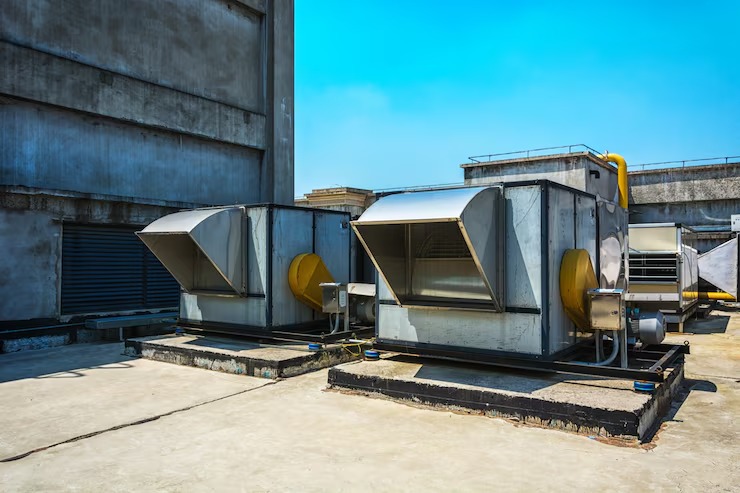
For a commercial building, the electrical service is usually the first thing we check, not the last. A rooftop unit or a bank of ductless condensers pulls real amperage, and a building running an older 100-amp service with a handful of other loads on it may need a panel upgrade before the HVAC equipment can even be installed. We handle that electrical work ourselves as licensed, permitted work rather than farming it out, which keeps the project on one schedule instead of two.
- The load calculation results for each space, or the reason one is not needed
- Exact indoor and outdoor unit model numbers
- Line set length and routing, and how condensate is handled
- Electrical requirements, including whether the panel needs work
- Permit and inspection costs shown as their own line
- What is excluded
Ductless and ducted commercial heat pump systems both show up regularly in Ludlow projects. A storefront with a drop ceiling and no existing ductwork is a strong ductless candidate, with wall-mounted or ceiling cassette indoor units tied back to one or more outdoor condensers. A building that already has a commercial air handler and distribution ductwork is often better served by a rooftop or split system replacement sized to the actual load rather than whatever was in the space before.
What the work involves
- Site visit. We walk each unit or space, look at what heats and cools it now, and check the electrical service and access.
- Load calculation and options. You get a written recommendation with what each option costs in effort and money, and what Drew would do in your position.
- Quote and permit. A written quote, and permits pulled properly.
- Installation. Scheduled around occupied units and tenants where the building allows it. Plumbing tie-ins go through Drew's plumbing subcontractors.
- Inspection and walk-through. The work is inspected and you get a walk-through of what was installed.
A commercial installation in Ludlow typically runs through site assessment and load calculation, equipment selection matched to that load, electrical service review and any panel work needed to support it, refrigerant line set and condensate routing, equipment placement with attention to rooftop access or exterior condenser location, startup and commissioning, and a walkthrough of controls and zoning with whoever’s going to be running the thermostat day to day. For a multi-tenant building we treat each unit’s conditioned space separately for load and zoning purposes rather than lumping the whole building under one calculation.
What it costs
Commercial HVAC pricing in Ludlow lands somewhere in the range of {PRICE_LOW} to {PRICE_HIGH}, and the width of that range comes down to a short list of real variables: how many zones the building needs, whether the indoor units are wall-mounted, ceiling cassettes, or a ducted air handler, how far the refrigerant line sets have to run and whether that run crosses tricky access points, whether the electrical service has room for the new load or needs a panel upgrade first, and how accessible the rooftop or exterior condenser location is. We don’t give a number until we’ve done the load calculation and seen the building, because any price quoted before that is a guess dressed up as a quote.
- Number of zones or units served
- Indoor unit type: wall-mounted, ceiling cassette, floor-mounted or ducted
- Line set runs between indoor and outdoor units
- Electrical service capacity, and whether the panel needs work
- Access, including occupied units, upper floors and outdoor unit placement
Commercial buildings in Massachusetts sometimes qualify for incentive programs beyond the residential Mass Save track, and the rules around them change often enough that we’d rather walk through your specific building than repeat a figure that might be out of date by the time you read this.
Rebates and incentives
Mass Save exists, it covers more than residential heat pumps in some cases, and it’s worth understanding before you finalize a system for a commercial building in Ludlow. We’re not going to quote dollar amounts here because the program and the eligibility rules change, and what applies to your building depends on specifics we’d need to look at directly. [EXTERNAL LINK: masssave.com, for current program details and eligibility] has the current details, and we’ve put together more background on our Mass Save heat pump rebates page. We can help you work out what, if anything, applies to your specific project once we know the building and the equipment plan.
Get a Quote
If you own or manage commercial space in Ludlow and you’re looking at a heating or cooling replacement, call Powers Air at {PHONE}. You’ll talk to Drew, not a dispatcher, and the first step will be a real walkthrough and load calculation, not a number pulled out of thin air. We also handle the full range of commercial HVAC work across our Western Mass territory, and if you need residential service elsewhere in town, our Ludlow HVAC page covers that side of the business.
frequently asked questions
Is Ludlow a good fit for commercial heat pump systems?
Many of the retail bays and office suites along the Ludlow commercial corridors already run forced air, which makes a heat pump retrofit straightforward. Where a building depends on oil or propane for heat, the economics of pairing or replacing that system with a heat pump are often stronger here than in a town with natural gas on every street.
Do you handle multi-tenant or mixed-use buildings in Ludlow?
Yes. A lot of Ludlow's commercial stock is a storefront with an apartment or office above it, and each space usually needs its own zoning and sometimes its own electrical service. We size each tenant space on its own load calculation rather than treating the building as one system.
What is the first step if I own a commercial building in Ludlow?
A walkthrough and a load calculation. We look at the envelope, the existing equipment, the electrical panel, and how the space is actually used before we talk about equipment or price.
Can you work with my electrician or do you handle panel upgrades yourselves?
We do panel upgrades and electrical service work in house, licensed and permitted. If a commercial heat pump or condenser load needs more capacity than the existing service can provide, we can scope and handle that as part of the same project instead of bringing in an outside electrician.
How long does a commercial HVAC installation take in Ludlow?
It depends on the scope. A single rooftop unit swap on an existing curb can be done in a day or two. A multi-zone retrofit with new line sets, electrical work, or ductwork modifications in an older mill-era building takes longer. We give a realistic timeline once we have done the load calculation and seen the space.