
Ductwork Installation and Repair
Ductwork is the part of a heating and cooling system nobody thinks about until it stops doing its job quietly. It moves the air your furnace, air conditioner, or heat pump produces to the rooms that need it, and it moves stale air back to be conditioned again. When it is sized right, sealed right, and laid out right, you never notice it. When it isn’t, you feel it in every room that’s too hot in July or too cold in January, and you pay for it every month on your utility bill.
This page covers what ductwork installation and repair actually involves across the towns we serve in Western Massachusetts, when it’s the right move and when it isn’t, and what to expect if you call us about it.
- Powers Air HVAC, 2 Cedar St, Framingham MA 01702
What Ductwork Installation and Repair Involves
Ductwork work falls into a few different categories, and most jobs are some combination of them. New installation means designing and building a duct system from scratch, whether for new construction, an addition, or a house that’s getting central air or a ducted heat pump for the first time. Repair means fixing what’s already there: reconnecting sections that have come apart, patching leaks, replacing crushed or collapsed runs, and dealing with duct that was undersized or laid out wrong the first time. Then there’s the maintenance side that doesn’t get talked about enough – sealing and insulating ductwork that runs through an attic, crawlspace, or unconditioned basement, where a poorly sealed duct can lose a meaningful share of the air it’s carrying before it ever reaches a room.
In practice, the work we get called for includes:
- New duct system design and installation for additions, new construction, or a first-time central air or ducted heat pump install
- Full or partial replacement of ductwork that's undersized, deteriorated, or was never installed correctly
- Sealing and insulating existing ducts that run through attics, crawlspaces, or unheated basements
- Repairing disconnected, crushed, or leaking sections
- Adding or resizing supply and return branches to fix rooms that never got proper airflow
- Redesigning or modifying ductwork to support a heat pump retrofit, since heat pumps and older oil furnaces don't move air the same way
When It Is the Right Answer and When It Is Not
Ductwork usually is the right call when:
- The house already has forced hot air heat and existing duct chases through walls, floors, or ceilings
- The existing ductwork is fundamentally sound but undersized, poorly sealed, or badly laid out
- You're adding central air to a home that already has a forced hot air furnace and usable duct runs
- A whole-house ducted heat pump is genuinely the better fit for how the house is used and how many zones it needs
Ductwork usually is not the right call when:
- The house is heated by steam or hot water radiators and has no duct chases at all - a great deal of the older housing stock in this territory, especially in the mill cities and older town centers, was built this way. Cutting chases through plaster and finished walls to add ducts after the fact is invasive, expensive, and often not necessary
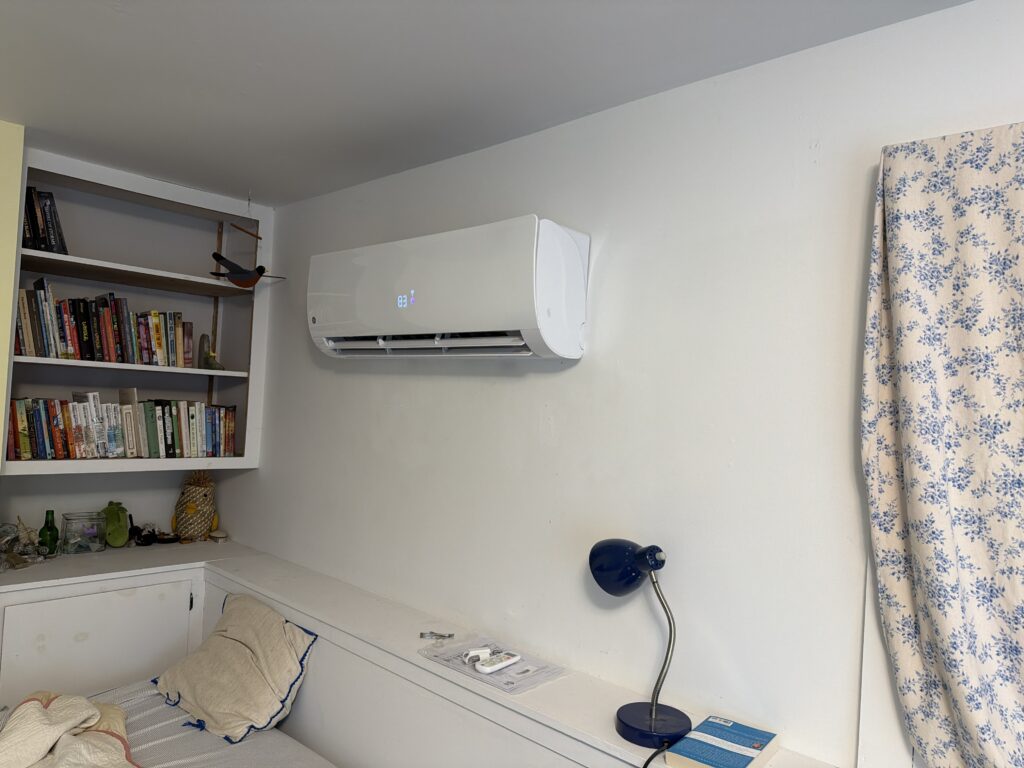
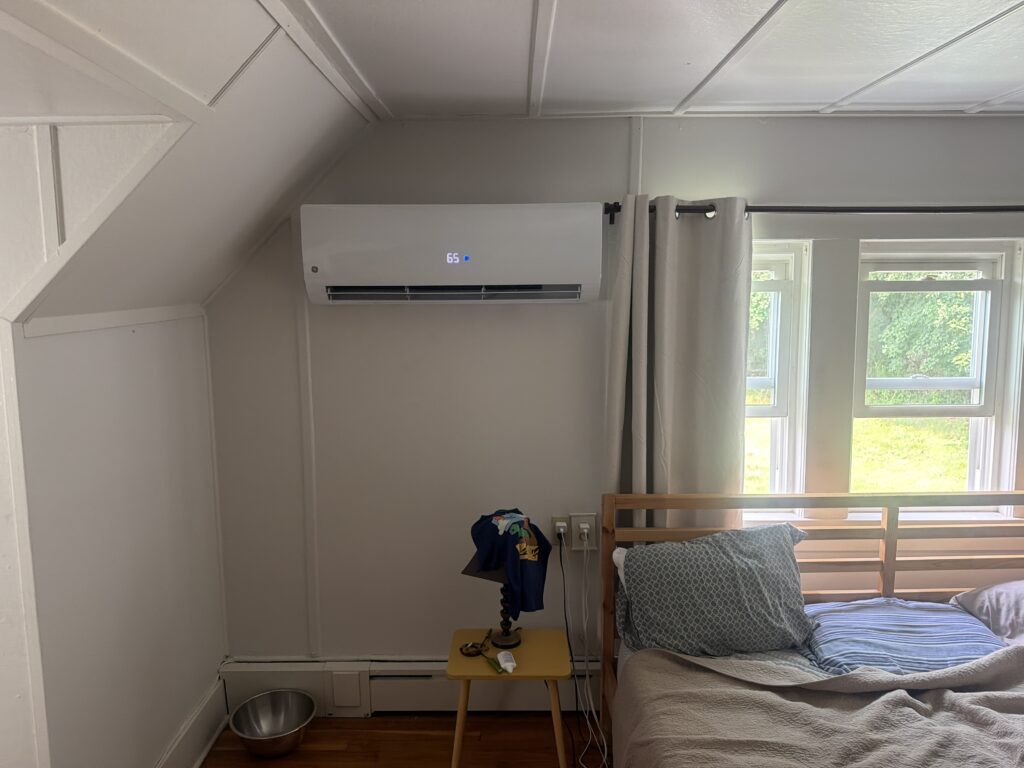
- The goal is really just cooling one or two rooms, or getting comfortable heat into a converted attic, addition, or in-law space - a ductless mini-split will usually do that for a fraction of the disruption and cost
- The existing ductwork is so undersized or restrictive that fixing it means gutting most of it anyway - at that point it's worth comparing that cost honestly against a ductless or partially ductless approach before committing
How We Size and Specify
Correct ductwork sizing starts with a Manual J load calculation for the house, not a guess based on square footage or what’s already there. The load calculation tells us how much heating and cooling capacity each room actually needs, accounting for insulation, window area, orientation, and air leakage. From there, duct sizing follows the airflow, in CFM, that the equipment needs to deliver that capacity to each room without excessive static pressure.
Static pressure matters more than most homeowners realize. Ductwork that was fine for an older oil furnace can be genuinely wrong for a cold-climate heat pump, because heat pumps are far more sensitive to restrictive duct runs, undersized returns, and high static pressure than a standard oil or gas furnace ever was. A duct system that’s too restrictive will choke a heat pump’s output and can shorten the life of the equipment. This is why we test static pressure on existing systems rather than assuming old ductwork will work with new equipment just because the sizes look close.
We also size returns as carefully as supplies. A house with plenty of supply registers and one undersized return will never balance properly, no matter how good the equipment is.
Equipment and What Actually Differs Between Systems
- Metal duct versus flexible duct - metal holds its shape and airflow characteristics better over time; flex duct is faster and cheaper to install but loses efficiency if it's kinked, stretched too tight, or run in long, unsupported spans
- Trunk-and-branch layout versus radial layout - trunk-and-branch is more common in retrofit work and existing chases; radial layouts are common in newer construction with a central plenum
- Insulation R-value - ductwork running through an attic, crawlspace, or unconditioned basement needs enough insulation to keep conditioned air conditioned before it reaches the room, otherwise you're paying to heat or cool the attic
- Sealing method - mastic sealant holds up over time; cloth-backed tape, despite the name, degrades and is one of the most common sources of duct leakage we find on older systems
- Zoning and dampers - some homes benefit from zone dampers that let one duct system serve areas with different heating and cooling needs, rather than running everything at one setting
What the Work Looks Like Start to Finish
- Assessment and, where needed, load calculation or static pressure testing
- Design or repair plan, including where ductwork needs to be resized, rerouted, sealed, or replaced
- Coordination with insulation or, where an electrical panel or circuit is involved, with our in-house electrical work
- Installation or repair itself
- Sealing all joints and connections, and insulating runs in unconditioned spaces
- Balancing the system with dampers so every room gets the airflow it was designed for
- A final walkthrough so you understand what was done and why
What it costs
Ductwork pricing depends on too many variables to give a meaningful number without seeing the house: how much of the existing duct system can be reused versus replaced, whether runs are accessible or need to go through finished ceilings and walls, how many branches and returns the layout needs, whether insulation and sealing are part of the scope, and whether the work is standalone or tied to a furnace, AC, or heat pump install. A repair to reconnect a disconnected trunk line is a different job entirely from redesigning ductwork for a whole-house heat pump retrofit.
What we can tell you honestly is that the cheapest duct quote is often the one that skips sealing, skips proper return sizing, or reuses ductwork that should be replaced. Those shortcuts show up later as comfort problems and higher bills, not savings. Every quote we give is itemized so you can see exactly what you’re paying for and why.
Rebates and Incentives
Where We Work
We serve Granby and the surrounding towns across our Western Massachusetts service area, handling ductwork installation and repair for both homes and small commercial buildings throughout the territory. Because ductwork needs vary so much from one house to the next – especially between homes with existing forced hot air systems and the steam and hot water heated housing common in the older town centers – we treat every property in every town on its own terms rather than applying a one-size answer. For the full list of towns we cover and what we handle in each, see our Service Areas page.
Get a Quote
If you’re dealing with a room that’s never comfortable, ductwork that’s showing its age, or you’re planning a central air or heat pump install and want the duct question answered honestly before you commit to equipment, call us at 413-339-3194. We’ll look at what you actually have and tell you what it needs, not what’s easiest to sell.