
Central Air Conditioning Installation in Holyoke, MA
Walk through most Holyoke neighborhoods and you’re looking at nineteenth-century mill housing built for a working population, not for air conditioning. A lot of it is steam or hot water heat with zero ductwork, which means central AC here usually isn’t a swap-in, it’s a decision about whether ducted equipment even belongs in the house at all.
- Powers Air HVAC, based in Granby, MA
Central Air Conditioning Installation in Holyoke
Powers Air installs central air conditioning in Holyoke for the houses where it genuinely makes sense: homes that already have a duct system from a gas or oil furnace, newer construction with ducts run for forced-air heat, or larger single-family homes where one ducted system can cool the whole house more simply than several indoor units. We’re not here to sell central air to a triple-decker with cast iron radiators in every room. That’s a ductless job, and we’ll tell you so.
What we will do is size a central system correctly for the ductwork you have, or tell you honestly when that ductwork can’t support the cooling load without rework. Drew runs the load calculation and the site visit himself. There’s no dispatcher between you and the person making the call on equipment.
- Ductwork already exists and is in decent condition
- A furnace or air handler is already in place and just needs a matching outdoor condenser
- One thermostat and one system serving the whole house is genuinely simpler than several ductless zones
- Whole-house humidity control matters as much as temperature does
What Holyoke homes are working with
Holyoke’s housing stock splits pretty cleanly into two eras. There’s the dense nineteenth-century canal-district housing, triple-deckers and older multifamilies built when the mills ran this city, most of it on steam or hot water radiators with no ducts anywhere. Then there’s a smaller stock of mid-century and later single-family homes on the outskirts, some with forced-air furnaces and existing ductwork, which is the housing type where central air conditioning is a straightforward, sensible addition. Natural gas service is present in a lot of the city given its industrial history, but plenty of outlying homes still run on delivered oil or propane, which changes the economics of any whole-house system you’re comparing central air against.
The other factor that matters in Holyoke specifically is ownership mix. There’s a meaningful amount of rental and multifamily housing here, and landlords ask different questions than owner-occupants do: what’s the simplest system to maintain across multiple units, what’s the equipment life, and what adds value at resale versus what just adds cost. If you own a triple-decker with no ducts, central air usually isn’t the efficient answer. If you own a single-family with an existing furnace and trunk line, it often is, and the conversation shifts to sizing it right rather than whether to do it.
How we size and specify the system
Every central air quote we write starts with a Manual J load calculation, not a square-footage guess. We look at insulation levels, window area and orientation, ceiling heights, and how the existing ductwork is laid out and sized, because a duct system built for heating airflow doesn’t automatically move enough air for cooling without some adjustment.
Oversizing is the single most common mistake in this business and it makes a house less comfortable, not more. An oversized system blasts cold air, hits the thermostat setpoint, and shuts off before it’s run long enough to pull humidity out of the air. You end up with a house that’s cold and clammy, short-cycling equipment that wears out its compressor faster, and higher electric bills for worse comfort. The right-sized system runs longer, quieter cycles and actually dehumidifies while it cools.
If a contractor hands you a number with no load calculation behind it, no discussion of your ductwork’s static pressure, and no mention of how the system was sized, that’s worth questioning before you sign anything. A real quote tells you the sized tonnage, the equipment’s SEER2 rating, what ductwork modifications are included, and what happens to existing supply and return runs.
- Short cycles: it cools the air fast and shuts off before it's run long enough to pull humidity out, so the house ends up cold and clammy at the same time
- Wears out faster, because more starts and stops means more stress on the compressor
- Costs more to buy and more to run than a correctly sized system would
What the work involves
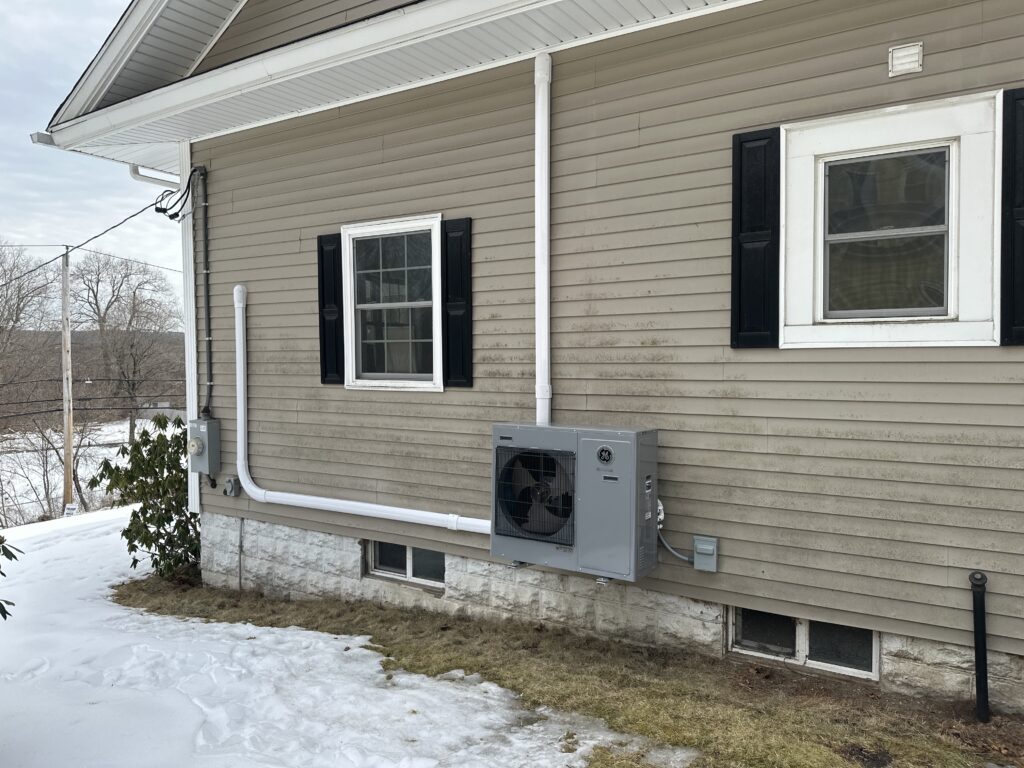
On a home with usable existing ductwork, a central air installation means setting an outdoor condenser on a pad, running refrigerant line set to a new or existing indoor coil mounted above the furnace, tying into the existing supply trunk, and setting a condensate drain with a safety pan and float switch, which matters in a finished basement or living space below the air handler. We check static pressure on the existing ducts before we commit to a design, because undersized return ducting is common in older forced-air systems and it will choke a new system’s performance no matter how good the equipment is.
On a home where the ductwork is undersized, poorly sealed, or only partially there, the honest answer is sometimes a hybrid approach or a full duct rework, and we’ll walk you through what that adds to the job before you’re committed to it rather than after.
What it costs
A straightforward central air installation onto existing, adequately sized ductwork typically runs in the {PRICE_LOW} to {PRICE_HIGH} range. What moves that number: the tonnage required by the load calculation, whether the existing ductwork needs sealing or modification versus being left alone, the length and routing of the refrigerant line set, whether your electrical panel has capacity for a new 230-volt circuit or needs work first, and site access for the outdoor unit and line set run. We’ll never give you a single flat number before we’ve actually seen the ductwork and run the numbers. Anyone who does is guessing.
- The load calculation itself, not just a tonnage number pulled from it
- The SEER2 rating of the equipment proposed and what that means for the summer electric bill
- Ductwork condition, and whether sealing or modification is part of the job
- Electrical circuit requirements for the outdoor condenser
- What's covered under manufacturer parts warranty versus labor warranty
Rebates and incentives
Holyoke is served by Holyoke Gas and Electric, a municipal utility, which means it operates outside the Mass Save programs that most of Massachusetts runs on. If you’ve seen rebate figures quoted for mini-splits or heat pumps elsewhere in the state, those numbers are tied to investor-owned utility funding and generally don’t apply the same way to a Holyoke Gas and Electric account. There may be municipal incentive programs worth checking into directly, and the right move is to confirm current eligibility with HG&E and with [EXTERNAL LINK: masssave.com, to show readers the general program structure even though HG&E is not a participating utility] before assuming anything carries over. We can help you understand what you’re looking at for your specific address and equipment, but we don’t issue rebates ourselves and we’re not going to quote you a number that may not apply to your utility.
Get a Quote
If you’ve got a furnace and ductwork already in the house and you’re ready to add or replace central air conditioning, call {PHONE} and Drew will set up a time to look at the system in person. You’ll get a load calculation, a straight answer on whether your ductwork can support it as-is, and a written quote that shows its work.
- A straight conversation about whether central air is still worth the disruption, or whether ductless is the better fit for that unit
- New duct runs through closets, dropped ceilings, or chases, placed to do the least damage to finished space
- Coordination on panel capacity if the building's electrical service can't support another circuit
Holyoke requires a permit and inspection for central air installation, and we pull it on every job. It’s not a corner we cut to shave the quote. If another estimate comes in well below ours, ask whether permitting is actually included, because that’s often where the difference hides.
Why timing matters
Holyoke’s warm, humid summers put real strain on aging or undersized equipment, and waiting until a heat wave hits often means longer lead times and rushed decisions. Scheduling your central air conditioning installation during the shoulder seasons gives us room to plan ductwork, electrical needs, and equipment placement properly.
- Avoid peak-season backlogs
- Lock in system sizing before extreme heat arrives
- Keep your home comfortable from the first hot day on
- Number of zones or separate systems needed
- Whether ductwork exists, needs sealing, or needs to be built new
- Line set length between the indoor and outdoor equipment
- Whether the electrical panel has capacity for another circuit or needs work first
- Access, a condenser pad on an open side yard costs less to install than one on a tight lot with a fence and a neighbor's driveway in the way
Holyoke’s mix of historic multi-families and newer builds means duct layouts, insulation levels, and sun exposure vary block to block. A number given without walking the house and running a proper load calculation is just a guess dressed up as a quote.
We measure the actual home before we talk equipment size or cost, so the system we recommend matches what your walls, windows, and attic are really doing – not an average pulled from square footage alone.
Keeping your system running right
A new central air system in Holyoke is only as good as the setup behind it. Once installation wraps up, we walk you through thermostat settings, filter schedules, and what to listen for if something’s off. Proper airflow and refrigerant charge matter just as much as equipment quality for long-term performance.
- Filter checks every 1-3 months
- Annual tune-up before peak summer heat
- Outdoor unit kept clear of debris and growth
Simple habits go a long way toward protecting your investment.
Built for Holyoke's Housing Stock
Holyoke’s mix of triple-deckers, canal-district mill conversions, and older single-family homes each present different challenges for central air installation. Duct routing through plaster walls, limited attic access, and panel capacity all factor into how a system gets designed, not just which unit gets sold. Rather than a one-size approach, each install accounts for the home’s existing layout, insulation, and electrical setup so the equipment performs as expected once summer heat actually arrives and stays reliable through years of use.
frequently asked questions
Does my Holyoke triple-decker qualify for central air conditioning?
Usually not without major rework. Most of Holyoke's older multifamily housing was built with steam or hot water heat and has no ductwork at all. Running new ducts through finished floors in a triple-decker is expensive and often impractical, which is why ductless mini-splits are the more realistic cooling option for this housing type. Central air makes more sense in homes that already have a furnace and duct system in place.
Can my existing furnace ductwork handle central air conditioning?
Sometimes, but not automatically. Ductwork sized for heating airflow doesn't always move enough air for efficient cooling, and we check static pressure before specifying a system. If the ducts are undersized or leaky, we'll tell you what it takes to fix that rather than installing a system that will underperform on day one.
Why does oversizing a central air system cause problems?
An oversized system cools the air fast, satisfies the thermostat, and shuts off before it's run long enough to remove humidity from the house. That leaves rooms feeling cold and damp instead of comfortable, and the frequent on-off cycling wears out the compressor faster than a properly sized system running longer, steadier cycles.
Do Holyoke Gas and Electric customers get Mass Save rebates?
Not in the same way as customers of the investor-owned utilities that fund most Mass Save programs. Holyoke Gas and Electric is a municipal utility and runs its incentive structure separately, so any rebate figures you've seen quoted elsewhere may not apply here. Check directly with HG&E for what's currently available to your account.
What does a central air quote from Powers Air include?
A sized tonnage based on an actual load calculation, the equipment's efficiency rating, a clear statement of what ductwork work is or isn't included, and the condensate and electrical scope. If a quote skips the load calculation entirely, that's a sign it was sized off a guess rather than your house.