
EV Charger Installation in Springfield, MA
Springfield is not one kind of housing stock, it is three or four of them stacked next to each other. You have dense triple-deckers and older multifamily buildings close to the core, substantial single-family neighborhoods spreading out from there, and a real commercial and institutional base mixed through the city. That matters more for EV charging than it does for almost any other electrical job we do, because a home charger only works where the car can sit still, overnight, on property the homeowner controls.
- Powers Air HVAC, based in Granby, MA
A triple-decker with on-street parking is not a candidate for this. A single-family house with a driveway or a garage is. That is the honest version of why this page exists for Springfield’s single-family neighborhoods and not for the dense multifamily core, where the electrical work that makes sense is panel and service upgrades, not a dedicated car charger nobody can park next to reliably.
Where the Car Parks and What That Means
Before we talk about equipment, we talk about the spot. Driveway charger on the side of the house, detached garage at the back of the lot, attached garage off the kitchen – each one is a different job. An attached garage with the electrical panel on the same wall is the easy case. A detached garage fifty or eighty feet from the house usually means a trench, conduit, and a sub-panel, which changes the scope and the cost before we ever talk about the charger itself.
We look at where the car actually parks, not where it would be convenient to run a wire. If you park nose-in to a garage bay every night, that is where the unit goes. If you charge in a driveway, we talk about weatherproofing and where conduit can run without turning your siding into a construction project.
- Single-family home with a driveway or garage. The straightforward case. The main cost driver is distance from the panel to where the car sits, and whether the run is exposed in a garage or fished through finished walls.
- Small multi-family conversions. A lot of the older housing here was carved into two or three units over the decades, often still fed by one aging panel with circuits nobody has traced in thirty years.
- Larger apartment or condo buildings. Stacked meter banks, a house panel sized in a different era for hallway lighting and laundry, and a question that is rarely about the charger itself.
None of this is hypothetical once you own the car. The difference between a charger ten feet from the panel and one sixty feet away, routed through finished basement ceiling or around a masonry foundation, is often the biggest single cost variable on the job. We walk the actual path with you before we quote anything.
Level 2, and What Your Car Can Actually Take
Every residential EV charger sold today is a Level 2 unit, meaning it runs on a 240 volt circuit instead of a standard 120 volt outlet. Past that, the specs on the box mean less than people think. A charger rated at 48 amps or 80 amps is not telling you what your car will draw, it is telling you the maximum the unit can supply if the car asks for it.
Your car’s onboard charger is the real limit. Plenty of EVs on the road today top out around 7.2 to 7.7 kW no matter what charger you plug into. Buying a 19.2 kW unit for a car that can only take 7.7 kW does not charge it faster, it just means you paid for capacity the car cannot use. We check what your car actually accepts before we size anything.
There is also a code distinction between hardwired chargers and ones that plug into a NEMA 14-50 receptacle. A hardwired unit is permanently connected and typically allowed to run at its full rated output as a continuous load. A plug-in unit on a 14-50 receptacle is treated differently under the electrical code because the connection point itself has a lower continuous rating, which generally caps that circuit at a lower output than a hardwired install on the same wire size. For most Springfield single-family setups, a realistic Level 2 circuit gives you enough overnight range to go from near-empty to full charge before morning, which is the only number that actually matters.
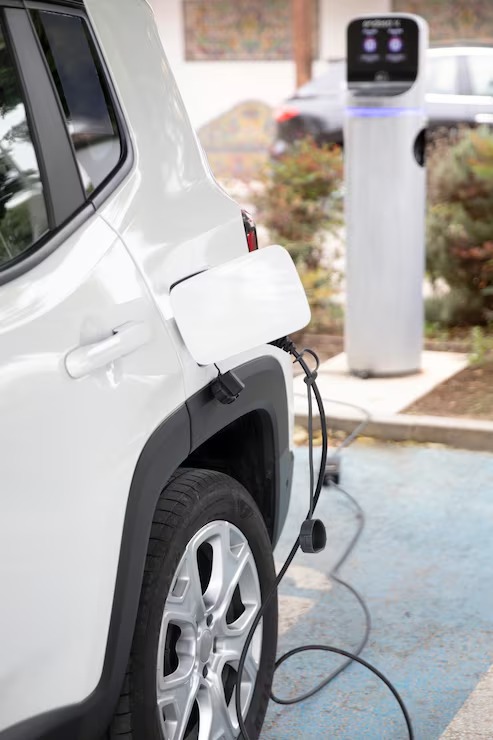
- Hardwired connection. No receptacle in the circuit at all. Typically the choice for higher-amperage installs, and there is no plug and cord sitting outdoors year after year to work loose or corrode.
- Plug-in on a NEMA 14-50 receptacle. The same style of receptacle used for a range or a welder. You can unplug the charger and take a portable unit with you, but code treats a cord-and-plug load differently than a hardwired one, and that changes some of the sizing and protection requirements.
This is the part of the sales pitch most installers skip because selling you the biggest charger is easier than explaining why you do not need it. We would rather spend ten minutes going over your car’s charging specs than sell you a unit that outperforms what your vehicle can use.
Whether Your Panel Has Room
A Level 2 charger is one of the largest continuous electrical loads in a house, often larger than anything else on the panel except electric heat. If your house already has a heat pump, a heat pump water heater, an electric range, or electric baseboard backup, the panel may not have the capacity to add a charger circuit without exceeding what the service is rated for.
The way to know, not guess, is a load calculation. We add up what the house actually draws across its circuits, apply the method the electrical code requires, and see what headroom exists. More often than people expect, the answer comes back yes, the panel has room, and the job is a straightforward circuit addition. When it does not, the fix is frequently a load management device that lets the charger and the rest of the house share available capacity safely, which is usually a lot less expensive than a full service upgrade. A panel replacement is sometimes the right call, but it is not the first thing we reach for.
If your load calculation points toward a panel that is maxed out or outdated, our panel upgrade page for Springfield covers what that work involves. And if the house is juggling a heat pump alongside everything else, this page on heat pump and panel capacity is worth reading before you commit to either job.
What the Work Involves
Once we know the car, the parking spot, and the panel capacity, the job itself is a dedicated 240 volt circuit run from the panel to the charger location, terminating in either a hardwired connection or a NEMA 14-50 receptacle, with the breaker and wire sized to match. This is permitted electrical work involving the service conductors and the panel, and it is performed by Powers Air under our Massachusetts electrical licensing, not referred out to someone we hope does it right.
Where the run goes matters for cost and appearance. Surface-mounted conduit along a garage wall is the simplest path. Fishing wire through finished living space to reach an attached garage from the other side of the house takes longer and sometimes means opening and patching drywall. A masonry foundation or a detached structure adds trenching and possibly a sub-panel. We tell you which situation you are in before we price it, not after.
- A load calculation confirming the panel can carry the new circuit, or sizing a load management approach if it can't.
- Planning the run from the panel to the charger location, whether surface-run, fished through finished space, or trenched to a detached garage.
- Pulling the electrical permit before any work begins.
- Installing the dedicated circuit and charger or receptacle, sized and protected to code.
- Scheduling and passing the town inspection, which is what makes it code-compliant rather than just working.
What It Costs
A straightforward Level 2 installation, panel to garage, short run, panel with available capacity, typically lands between {PRICE_LOW} and {PRICE_HIGH}. What moves that number: the distance from the panel to where the car actually parks, whether the run is surface-mounted or fished through finished space, whether you are dealing with masonry walls or a detached garage that needs a trench, whether the panel itself needs work first, and whether the permit and inspection fee is actually included in the quote you were given.
That last point is where a lot of cheap quotes fall apart. A permit and an inspection add a real, modest cost to the job and some installers leave them out of the number to look competitive, then either skip them entirely or add them back after the fact. Our quotes include the permit because the work gets permitted either way.
- Distance from the panel to where the car actually parks.
- Whether the run is surface-mounted in an open garage or has to be fished through finished walls and ceilings.
- Whether the wall is masonry, which changes how the run is fastened and routed.
- Whether a trench is needed to reach a detached garage.
- Whether the panel itself needs work, from a load management device up to a full upgrade.
- Whether the permit and inspection are included in the quote at all.
Utility and state incentive programs for EV charger installation exist and they change often enough that we would rather talk through what currently applies to your situation than print a figure here that is out of date by the time you read it.
Permits and Inspection
This work is permitted and inspected in Springfield and in every town we serve. Running a new 240 volt circuit back to the panel requires a permit, and the finished work gets inspected before it is signed off. That is not optional paperwork we add on, it is how the job is supposed to be done, and it is the step most often missing from an installer who comes in noticeably cheaper. We pull the permit, we schedule the inspection, and the job is not finished in our eyes until it passes.
Get a Quote
If you have a single-family house in Springfield with a driveway or garage and you are thinking about an EV charger, the right first step is a conversation about where the car parks, what the car can actually charge at, and whether your panel has the room. Call {PHONE} and you will talk to Drew, not a dispatcher reading from a script. For the broader picture of what this work involves across our service area, visit the EV charger installation hub, see current pricing detail on the EV charger installation cost page, or check out our full Springfield service area page for everything else we handle in the city.
frequently asked questions
Can I get a home EV charger installed in a Springfield apartment or triple-decker?
Generally no, not through this service. A home charger needs a dedicated parking spot the owner controls for hours at a stretch, which is why this installation makes sense for single-family driveways and garages and not for on-street or shared multifamily parking. If you own a multifamily property and want to explore charging for tenants, that is a different conversation involving shared infrastructure and metering.
Do I need a bigger electrical panel to add an EV charger?
Sometimes, but less often than people assume. A load calculation tells us whether your existing panel has the capacity. Many houses have room without any panel work. When they do not, a load management device is often a cheaper fix than a full panel replacement, though a replacement is sometimes the right answer too.
What is the difference between a hardwired charger and a plug-in one?
A hardwired charger is permanently wired into its own circuit with no receptacle in between. A plug-in unit connects to a NEMA 14-50 receptacle. The electrical code treats the two differently for continuous-load ratings, which can affect the maximum output allowed on the same size wire. We size the circuit based on which option you choose.
Is a bigger charger always better?
No. Your car's onboard charger, not the wall unit, usually sets the real limit on how fast it charges. A lot of EVs cap out well below what the largest residential chargers can deliver, so buying beyond what your car can accept just means spending more without any charging speed benefit.
Is EV charger installation permitted work in Springfield?
Yes. It involves a new circuit back to your electrical panel, which requires a permit and a final inspection in Springfield and every town we work in. We handle the permit and schedule the inspection as part of the job.