
What a Level 2 EV Charger Installation Involves
You plugged the car into a regular outlet, and it gained a few miles overnight. That is Level 1 charging, and it is the reason most new EV owners start looking for a Level 2 charger within the first month.
Then the quotes arrive, and they do not agree. One is a flat number over the phone. Another is three times that after a visit. Both claim to be “a standard install.”
- Powers Air HVAC, based in Granby, MA
The short version
- Level 1 runs on a standard 120 volt outlet and adds a few miles of range per hour. Level 2 runs on 240 volts and adds many times that.
- Level 2 needs a dedicated circuit sized to the charger's continuous load, not just to the number on the box.
- Hardwired and plug-in (NEMA 14-50) installations are both legitimate, but the code treats them differently and so does the long-term wear on the equipment.
- Your car's onboard charger sets the real charging speed. A bigger wall unit cannot push a car faster than the car will accept.
- The price is driven by the distance from the panel to the parking spot, whether the run goes through finished space, whether the panel has spare capacity, and whether permit and inspection are in the quote.
- A typical installation falls between. That is a range, and the rest of this page explains where in it a given house lands.
Level 1 versus Level 2, and why almost nobody stays on Level 1
Level 1 charging uses the cord that came with the car and a standard 120 volt outlet. Those outlets sit on 15 or 20 amp circuits, and the car typically draws about 12 amps continuously. That works out to roughly 1.4 kilowatts, which is on the order of 3 to 5 miles of range per hour of charging, depending on the car.
For a driver covering a modest daily distance with a long overnight window, that can be enough. It is also why some people stay on Level 1 for a few months and are happy.
It stops working in a few common situations. A longer commute, a car with a large battery, two EVs in the household, or a cold February night when the car spends part of the incoming energy keeping its battery conditioned. In those cases a car plugged in every night can still end up a little further behind each day.
Level 2 charging uses 240 volts, the same kind of supply as an electric dryer or range, and delivers several times the power. Depending on the circuit and the car, that is commonly somewhere around 20 to 40 miles of range per hour. A car that is empty in the evening is full by morning, without planning around it.
There is also a practical point beyond speed. A Level 1 cord running for hours at its limit through an ordinary outlet is a heavier duty than that outlet and its wiring were usually designed for. Outlets in older houses are a common weak point. Moving to a dedicated circuit is both faster and a better match for the load.
What the circuit has to be
An EV charger is treated by the electrical code as a continuous load, meaning one that runs for three hours or more. The National Electrical Code, which the Massachusetts Electrical Code is built on, requires the circuit and breaker to be sized at 125 percent of that continuous load. Article 625 of the NEC covers electric vehicle charging equipment specifically.
In plain terms, that is the familiar 80 percent rule seen from the other direction:
- A 40-amp circuit supports a charger drawing up to 32 amps continuously.
- A 50-amp circuit supports a charger drawing up to 40 amps continuously.
- A 60-amp circuit supports a charger drawing up to 48 amps continuously.
The circuit has to be dedicated to the charger. It cannot share with other loads. The wire size has to suit the breaker and the distance, and a long run can call for a heavier conductor than a short one to hold voltage drop within reason.
This is the part that explains why a flat quote over the phone is a guess. The right circuit depends on what you are charging, how fast you want it, and what your service can support.
Hardwired versus a NEMA 14-50 receptacle
There are two ways to connect a Level 2 charger.
Hardwired. The charger is wired directly to the circuit. There is no plug. This is the cleaner installation, and it is the only way to deliver the highest charging currents, since a hardwired unit can run at up to 48 amps on a 60 amp circuit.
Plug-in on a NEMA 14-50 receptacle. A 50-amp receptacle, the type used for ranges and RVs, with a charger that plugs into it. This lets you take the charger with you if you move, and some people like the flexibility of swapping the charger later.
The code does not treat them the same, and that is not paperwork for its own sake.
- A receptacle for EV charging has its own protection requirements under the NEC. Ground-fault protection is required for it, and the receptacle must be rated for the load.
- A hardwired charger carries its own built-in protection, so the installation is simpler on that side.
- A plug-in setup is limited by the receptacle. A 14-50 on a 50 amp breaker supports 40 amps continuous at most.
- A receptacle that is plugged and unplugged repeatedly can wear, and heat at a worn connection is the failure to avoid. That is why quality and rating matter, and why a cheap receptacle in a cheap install is a bad place to save.
The car sets the speed, not the wall unit
This is the most common misunderstanding we hear, and it leads people to overspend.
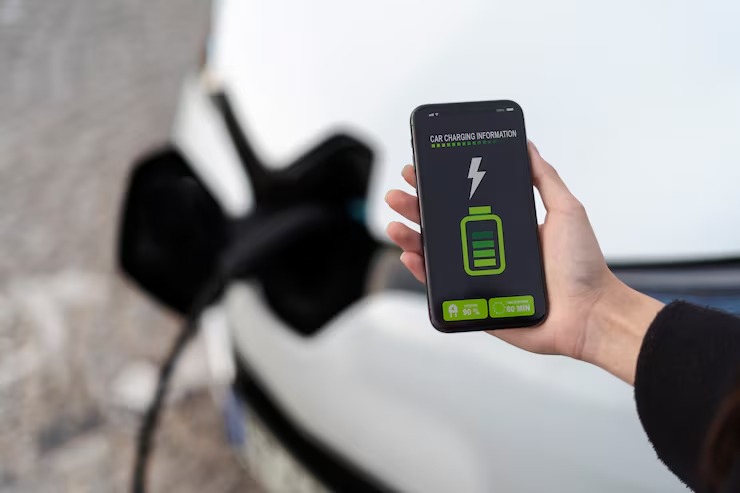
Every EV has an onboard charger that converts the AC power from the wall into DC for the battery. That onboard charger has a maximum rate, and the car will not accept more than that no matter how powerful the unit on the wall is.
The rates vary a great deal between models. Some cars accept around 7 kilowatts, some around 11, and some plug-in hybrids and older EVs accept considerably less. A 48-amp charger on the wall will not charge a car with a 7-kilowatt onboard charger any faster than a 32-amp charger will.
So before sizing the circuit, find your car’s maximum AC charging rate in the owner’s manual or the manufacturer’s specifications. If you might replace the car in a few years, think about what the next one is likely to accept. Sizing for a slightly larger circuit costs relatively little at the time of installation. Running a new circuit later costs the whole job again.
In practice, a 32 or 40 amp charger covers the large majority of homes and cars, and a larger circuit is mainly worth it when the car can use it or when you expect it to.
Why homeowners here are looking at heat pumps
What actually drives the price
- Distance from the panel to the parking spot. This is usually the biggest variable. A garage wall on the other side of the panel is a short run. A detached garage, a driveway post, or the far end of a long house is a long run, and cost rises with conductor size, conduit and labour.
- Whether the run goes through finished space. Running cable through an unfinished basement or along an accessible garage wall is straightforward. Running it through finished ceilings, plaster, or a finished room means opening and repairing, or finding a different route. In older Western Massachusetts houses, the path from the panel to the garage is often the hardest part of the job.
- Whether the panel has capacity. A Level 2 charger is a large addition to a house's electrical load. If the service and panel have room, the installation is simple. If they do not, the answer may be a load management device, a subpanel, or a service upgrade. We cover how that decision works on our heat pump and panel upgrade page, and the same logic applies to chargers.
- Outdoor or underground work. A charger mounted outside needs weather-rated equipment and weather-rated wiring methods. Reaching a detached garage underground means trenching, and in this region that can mean frost depth, rock and ledge, and restoration of lawn or driveway.
- Permit and inspection. These are included in a proper quote and sometimes missing from a cheap one. We say more below.
- The charger itself. Basic units and units with connected features, cable length, and outdoor ratings differ in price, though less than most of the factors above.
- More than one charger. Two cars change the capacity question, and sometimes the right answer is a different arrangement than two separate circuits.
What a complete quote contains
- The circuit size and charger amperage being installed
- The route from the panel to the charger, and whether it passes through finished space
- Whether the panel and service have capacity, and how that was determined
- Whether the work includes the permit and the inspection
- The charger make and model, and whether it is hardwired or on a receptacle
- What is included for patching or restoration where walls or ground were opened
- Who is doing the electrical work, and under whose licence
What the cheap quote usually leaves out
- No permit and no inspection. This is the biggest one. It saves a few hundred dollars of someone's time and leaves you with unpermitted electrical work in your house. That can surface when you sell, when you make an insurance claim, or if something goes wrong.
- No check of panel capacity. The charger gets installed, and the problem shows up later as a tripping breaker or an overloaded service.
- An undersized or mismatched circuit. It works, but it runs hotter than it should or limits what the car can do.
- A short-run assumption. The quote assumes the garage is next to the panel. Then the real route is longer, and a change order arrives.
- A receptacle that is not rated for the use. Cheap parts at the one point in the system that carries the most heat.
Get a Quote
Permit and inspection
In Massachusetts, a new circuit for an EV charger requires an electrical permit from your town, and the work is inspected by the local wiring inspector. Powers Air pulls the permit and arranges the inspection as part of the job, and both are in our quotes.
The inspection is a second set of eyes from someone who has no stake in the sale. It checks the circuit, the protection, the connections and the workmanship against the code. You get a record that the work was done properly, which is worth having when the house changes hands.
When the panel is the real question
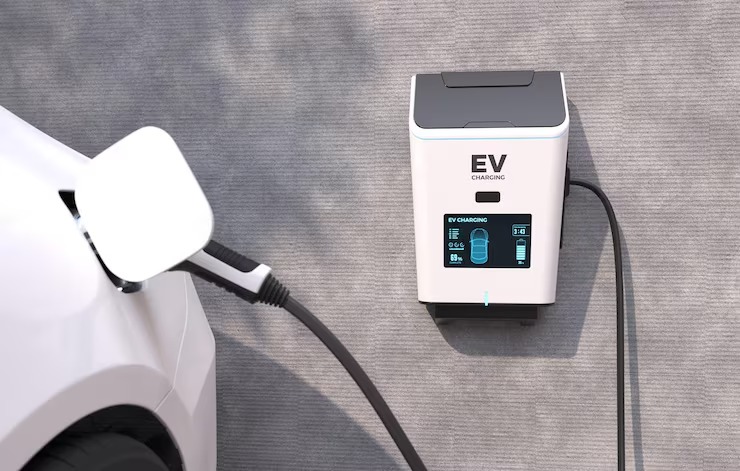
Sometimes the answer to “what will a charger cost” is “it depends what your panel can do.” A house with a 100-amp service, a full panel and an electric range may not have room for a large new continuous load without some change.
That does not automatically mean a new panel. Depending on the house, the options include a load management device that limits the charger when the rest of the house is drawing heavily, a smaller charger circuit, or a subpanel. Sometimes a service upgrade really is the right answer. The way the code treats existing load, and how to tell whether you are being upsold, is covered on our panel upgrade page.
The point to carry over is the same one. Capacity should be checked before you sign, not discovered afterward.
What Drew would do in your position
Find out what your car’s onboard charger accepts. Size the circuit for that, with a little room if you expect a different car later. Decide honestly whether you will stay, which usually points to hardwired. Have someone look at the route from the panel to the parking spot and check whether the panel has room. Get a quote that names the permit and inspection. And be wary of any number given before someone has seen the house.