
HVAC Contractor in Springfield, MA
Walk into a Springfield triple-decker’s basement and you’re as likely to find an oil tank or a propane line as a gas meter. Walk into one of the older three-families in the McKnight or Forest Park neighborhoods and there’s a decent chance the heat is still steam or hot water radiators with no ductwork anywhere in the building.
- Powers Air HVAC, based in Granby, MA
That combination, limited gas service in parts of the city and a lot of housing that was never built with ducts, shapes almost every HVAC decision in Springfield more than it does in towns closer to the gas main. We work on all of it: ductless systems, central air retrofits, furnace replacements, and the electrical work that often comes along with any of those upgrades.
- Ductless mini-split installation, single-zone and multi-zone
- Heat pump installation and replacement, cold-climate rated equipment
- Central air conditioning
- Furnace installation and replacement
- Ductwork and ventilation
- Electrical panel upgrades and change-outs, licensed and permitted, done in-house
- EV charger installation
What Springfield homes are working with
At roughly 155,900 people, Springfield is the largest market in this territory by a wide margin, and it’s the most varied. You’ve got dense triple-decker neighborhoods where three families share one building and one electrical service, single-family streets in Sixteen Acres and East Forest Park with more conventional lot sizes, and a real commercial and institutional base downtown and along the business corridors. Each of those has a different starting point for HVAC work.
In the older multifamily stock, the usual setup is a boiler feeding cast iron radiators, no ducts, and an electrical panel that was sized for 1950s expectations, not for a heat pump plus modern appliance loads. In the single-family areas you’ll more often find a forced-air furnace already in place, which simplifies a central air retrofit because the ductwork exists, but those same homes are frequently on oil or propane rather than gas, which changes the economics of adding or replacing a heating system. And because a meaningful share of Springfield’s housing is rental or landlord-owned, we get a different kind of question from owners here than we do from, say, a young family in a newer Granby subdivision: what’s the equipment that needs the least callback risk and holds up with less attentive day-to-day care.
How we size and specify the system
Every recommendation starts with a load calculation, not a guess based on square footage. A Manual J calculation accounts for insulation, window area and orientation, ceiling height, air leakage, and how the space is actually used, and it’s the only honest way to land on the right size equipment for a specific house or unit.
Oversizing is the most common mistake we see in quotes from other companies, and it doesn’t make a house more comfortable, it makes it less comfortable. An oversized system short-cycles: it blasts the space, satisfies the thermostat, and shuts off before it’s run long enough to pull humidity out of the air or settle into a steady temperature. That means a clammy house in summer, temperature swings in winter, and a compressor that wears out faster from constant starts and stops. For heat pumps specifically, we also look at the cold-climate rating and HSPF2 number for the equipment being proposed, because capacity drops as outdoor temperature drops, and what matters is how much heat the unit can still deliver at 5 degrees or below, not just its rated output at a mild 47 degrees.
A quote that skips all of this, no load calc, no discussion of backup heat strategy, no mention of your existing ductwork’s condition, is a warning sign regardless of the price attached to it. A real quote tells you what was measured, what was assumed, and why the specific equipment was chosen for your house.
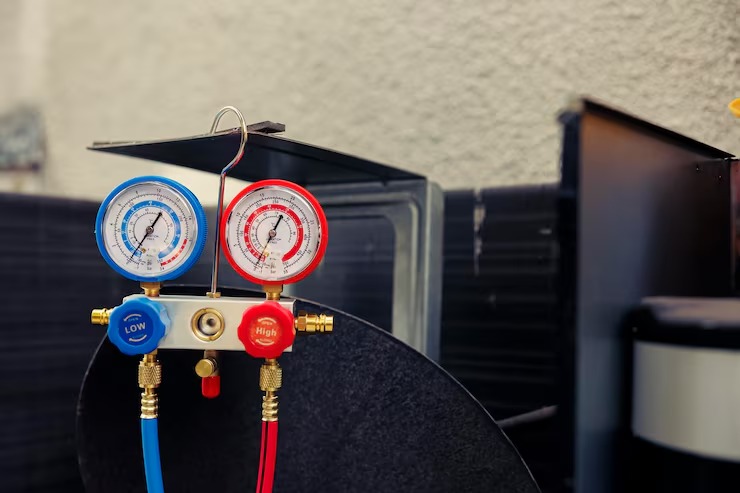
Where ductwork already exists, we test it rather than assume it’ll handle a new system fine. Older duct runs in Springfield homes often weren’t sized for today’s higher-efficiency equipment, and static pressure that’s too high forces a system to work harder and shortens its life. Where there’s no ductwork at all, which is common in the older multifamily buildings, ductless mini-splits let us deliver heating and cooling room by room without opening walls or ceilings.
- A room-by-room load calculation, not a flat square-footage number
- Specific equipment model numbers, not just "a 2-ton system"
- Line set lengths and routing
- Confirmation the electrical service has capacity, or what it will take if it doesn't
- Permit and inspection included, not an add-on
- A written price, not a verbal estimate
Line set length and routing matter more in dense housing than people expect. In a triple-decker, getting refrigerant lines from an outdoor condenser to indoor units on the second or third floor without running through a tenant’s living space takes planning before anything gets installed, not after.
What the work involves
- Site visit and load calculation
- Written proposal with equipment, zones, and price
- Permit filed with the town
- Installation, typically one to three days depending on scope
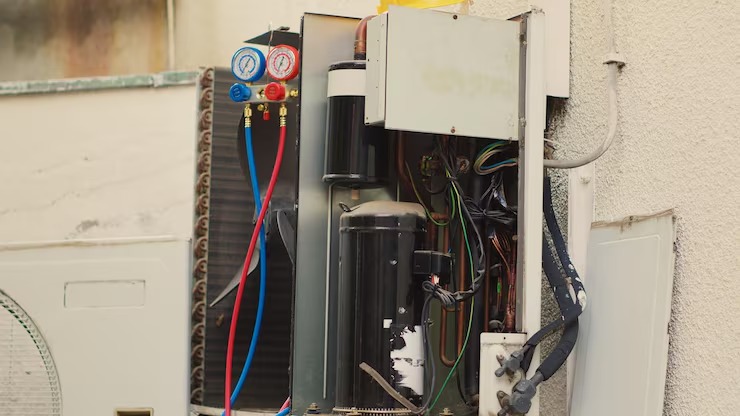
- Commissioning and system check, including refrigerant charge verification
- Inspection and walkthrough
Depending on what a house needs, the scope can include a full heat pump or mini-split installation, a central air retrofit onto existing ductwork, furnace replacement, ductwork modification or sealing, and ventilation work for tighter homes. We also do electrical panel upgrades and change-outs and EV charger installation as licensed in-house work, under electrical license {ELECTRICAL_LICENCE}. That matters in a city with a lot of older electrical services: if a panel doesn’t have the capacity for a new heat pump circuit or an EV charger, that’s not a separate contractor we have to bring in and coordinate, it’s work we do ourselves, permitted and inspected.
Permits aren’t optional paperwork we skip to save you money. Electrical panel work involves the service conductors feeding your home, and there’s no version of that job that’s safe to shortcut. A permitted, inspected job means someone with no financial stake in the outcome checked the work before it’s closed up. The quote that’s missing a permit line is usually the quote that’s cutting a corner you won’t see until something fails.
What it costs
For most residential jobs in Springfield, total installed cost typically falls in the {PRICE_LOW} to {PRICE_HIGH} range, with commercial work scoped and priced separately based on the building. What moves the number inside that range: how many zones you’re heating and cooling, whether you need ducted air handlers or ductless indoor units, how long the line set runs need to be, whether your electrical panel has capacity for the new load or needs an upgrade first, and how accessible the install locations are in your specific building.
A triple-decker with three separate systems to zone and limited access between floors is a different job than a single-family ranch with existing ductwork and an updated panel. We don’t quote a number without seeing the house, and we won’t quote a flat rate over the phone, because the variables that actually drive cost can’t be assessed without a visit.
Rebates and incentives
Mass Save exists and is worth understanding before you finalize equipment choices, since eligibility depends on the specific system and sometimes on other upgrades to the home. We’re not going to quote you a dollar figure here because the amounts and rules change, and we’re not going to claim we’re the ones issuing any rebate, because we’re not. What we can do is help you understand what your specific project might qualify for and point you to the program directly. See our page on Mass Save heat pump rebates for more detail, or go straight to [EXTERNAL LINK: masssave.com, the official Mass Save program site, for current eligibility and program rules].
Get a quote
If you’re in Springfield and trying to figure out whether your next move is a heat pump, a central air retrofit, a furnace swap, or an electrical panel upgrade to support any of those, call Powers Air at {PHONE}. You’ll talk to Drew Powers directly, not a dispatcher reading a script, and the first conversation is about your specific house, not a sales pitch.
frequently asked questions
Does Powers Air work on triple-deckers and multifamily buildings in Springfield?
Yes. A lot of Springfield's housing stock is triple-deckers and older multifamily buildings, and those come with their own sizing questions: separate systems per unit versus one larger system, where line sets can run without cutting through tenant space, and how to handle a building with no existing ductwork. We look at the building as a whole before we talk about equipment.
Is a heat pump a good fit if my Springfield home still has an oil furnace?
Often yes, and the fact that so much of this area runs on delivered oil or propane rather than natural gas is exactly why. A cold-climate heat pump sized correctly can cover most of the heating season and leave the oil furnace as backup for the coldest stretches, which changes the fuel math compared to a house on gas.
Do you do the electrical work if my panel can't handle a new system?
Yes. Panel upgrades and change-outs are licensed in-house work for us, not something we hand off. If a heat pump, EV charger, or new electrical load means your panel needs attention, we handle that as part of the job, permitted and inspected.
How do I know if a quote I received is legitimate?
A real quote is built on a load calculation specific to your house, not a rule of thumb based on square footage. If someone hands you a number before they have asked about insulation, window count, ceiling height, and existing ductwork, that is a sign they are guessing.
What does it cost to add central air or a heat pump to a Springfield home?
It depends on zoning, whether you already have ductwork, how far the line sets need to run, and whether your electrical panel has room for the new load. We give you a real number after we see the house, typically in the {PRICE_LOW} to {PRICE_HIGH} range for most residential jobs, with commercial work scoped separately.