
Heat Pump Installation in Ludlow, MA
Heat Pump Installation in Ludlow
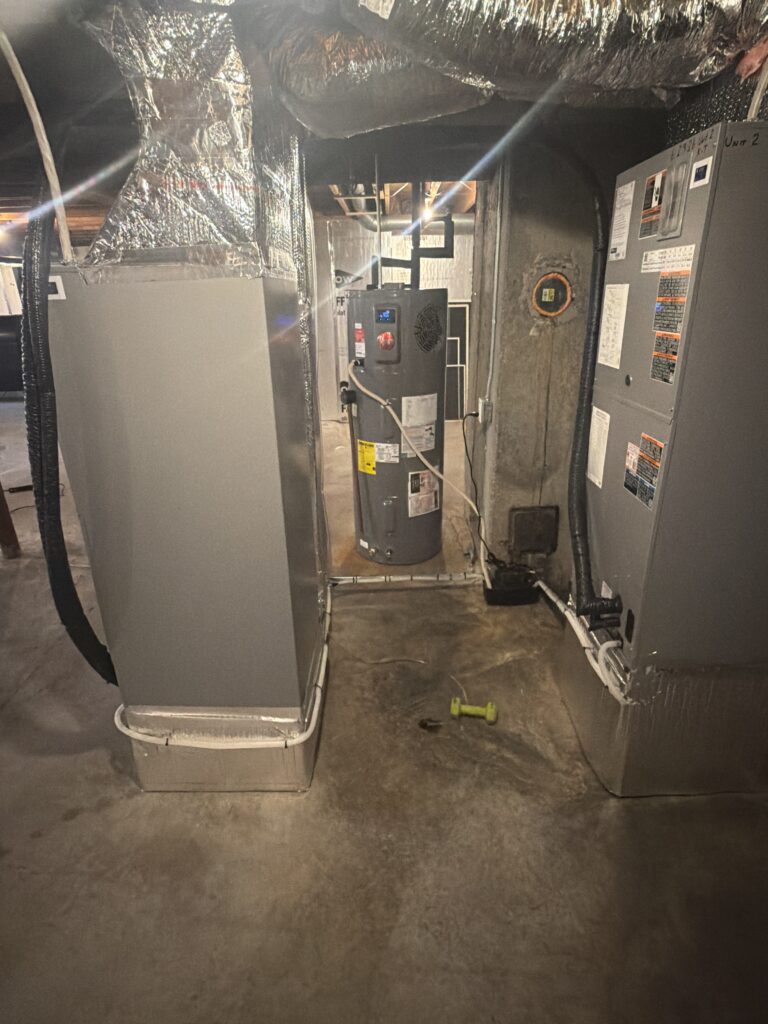
Ludlow grew up around its mills, and most of the housing that followed the same pattern has stuck around: forced-air oil furnaces tucked into unfinished basements, ductwork built to push heat and nothing else, and whatever window units get hauled out every June to fight the humidity. If any of that sounds like your house, you already have most of what a heat pump installation needs to take over cooling for the summer and a meaningful share of the heating load for the rest of the year.
- Powers Air HVAC, based in Granby, MA
Heat Pump Installation in Ludlow
Some pockets of town have natural gas service, but a lot of the housing stock here, especially the ranches and capes built through the 1950s and 60s on the town’s edges, was built and heated on delivered oil or propane. That matters more than people think when they start pricing out a heat pump. A homeowner on gas is usually comparing a heat pump to a furnace burning fuel at a few dollars per therm. A homeowner here burning oil or propane is comparing it to fuel that gets more expensive by the winter and shows up by truck. The math on electrification looks different, and in a lot of cases it looks better, once you’re not on gas.
The other thing almost every Ludlow house we look at has in common is forced-air ductwork with no air conditioning attached to it. The furnace moves heat through the trunk lines in January, and in July those same ducts sit idle while a couple of window units labor in the bedrooms. That’s the textbook case for a ducted heat pump retrofit: the distribution is already there, so the job is mostly about sizing the right outdoor unit, confirming the ductwork can handle it, and tying in a coil or air handler that can run both directions. Where the ductwork doesn’t exist, or it’s the kind of pinched, undersized trunk you find in some of the older housing near the center of town, a ductless system solves the same problem without tearing open walls.
What Ludlow Homes Are Working With
Every quote starts with a load calculation, not a nameplate number copied off your old furnace. A Manual J looks at your actual insulation, window area, air leakage and square footage room by room, and it tells us how much heating and cooling capacity the house really needs. That number is almost always smaller than what the existing furnace was rated for, because furnaces have been oversized by habit for decades.
Oversizing is the single most common mistake in this trade, and it’s worse with heat pumps than it ever was with furnaces. An oversized system short-cycles: it blasts the space, shuts off before it dehumidifies or evens out the temperature, and then runs again twenty minutes later. That’s harder on the compressor, it’s worse for comfort, and it throws off the efficiency numbers that assume the equipment runs the way it was designed to. A heat pump sized correctly runs longer, lower, and quieter, and that’s what actually keeps a house comfortable.
A legitimate quote tells you the calculated heating and cooling load, the equipment’s cold-climate rating and capacity at low outdoor temperatures, how backup or auxiliary heat is handled below that point, the line set length and refrigerant charge, and what happens to your electrical service when the new equipment gets added. If a bid shows up with just a model number and a price, there’s no sizing behind it, and that’s worth asking about before you sign anything.
How We Size and Specify the System
A straightforward heat pump installation in a Ludlow home usually runs somewhere between {PRICE_LOW} and {PRICE_HIGH}, and the real number depends on a handful of specifics rather than the square footage of the house. A single-zone ductless system in a small addition or converted space costs a lot less than a whole-house ducted retrofit or a multi-zone ductless system covering several rooms. Line set length matters, since a longer run between the outdoor unit and the farthest indoor head means more refrigerant, more labor, and sometimes a larger line set diameter. If your electrical panel is already tight on capacity, adding a heat pump circuit might mean panel work before the heat pump work, which is its own project with its own cost. Access matters too: a straightforward basement-to-attic run is a different job than one that has to route around finished space. We walk through all of that with you before we give you a number, not after.
What the Work Involves
Massachusetts runs the Mass Save program, and it does offer incentives tied to heat pump installations, though the amounts, income tiers and equipment requirements change often enough that we’d rather point you to the current rules than repeat a figure that might be stale by the time you read this. What we can do is help you understand what your specific house and equipment choice might qualify for, and how that fits into the overall cost of the project. Check Mass Save’s website [EXTERNAL LINK: official program site for current heat pump rebate details and eligibility] for the current program details, and see our page on Mass Save heat pump rebates for a general walkthrough of how the process works.
- A load calculation and walkthrough to confirm zone locations
- Mounting the outdoor condenser and indoor units
- Running refrigerant line sets within the manufacturer's length and elevation limits
- Setting up a proper condensate drain
- Dedicated electrical circuits, including a check on panel capacity
- Commissioning the system and a walkthrough of the controls
Get a quote
If you’re trying to figure out whether a heat pump makes sense for your Ludlow house, the fastest way to get a real answer is to have someone look at the house itself: the ductwork, the panel, the fuel you’re on now, and what you actually want out of it. That’s Drew, every time, not a sales rep reading off a script. Call {PHONE} or send us the details of your house and we’ll tell you honestly what we’d do in your position, including if that answer is “keep the oil furnace for another few years.”
What it costs
Permits and Inspection
Get a Quote
frequently asked questions
Do heat pumps actually work in a Massachusetts winter?
Yes, and this is the question worth answering honestly instead of with a sales pitch. Cold-climate heat pumps are rated and tested down to around 5°F and often colder, and the good ones still deliver real heating capacity well below that, though output does drop as the temperature drops. The <a href="/cold-climate-heat-pump-performance">cold-climate performance numbers</a> on a spec sheet, like HSPF2 and capacity at 5°F, tell you how a given unit actually performs in our winters, not just on a mild day. Where it gets honest is backup heat: on the coldest nights, a lot of systems here either run alongside existing oil or propane heat or use electric resistance backup to cover the last few degrees. That's not a failure of the technology, it's how the system is designed to work, and we size and plan for it up front rather than discovering it in January.
Do I need to keep my existing furnace or boiler as backup?
Not always, but it's often the right call in this area, at least at first. If you're on oil or propane already, keeping that system as backup for the coldest stretches of winter gives you a safety net while you see how the heat pump performs, and it costs nothing extra to leave it in place. Some homeowners remove it a year or two later once they're confident in the setup, others keep it indefinitely as a secondary source. We'll walk through what makes sense for your specific equipment and how old it is.
Can a heat pump use my existing ductwork?
Often yes, with some conditions. Existing ductwork sized for a forced-air furnace can usually handle a heat pump's airflow, but we check static pressure and duct sizing as part of the load calculation, because heat pumps are more sensitive to restricted airflow than a furnace is. If the ductwork is undersized or leaky, we'll tell you, and sometimes the fix is sealing and balancing rather than replacing anything.
Will adding a heat pump mean upgrading my electrical panel?
Sometimes. A single ductless head usually fits on most panels without issue. A whole-house ducted system, multiple zones, or a house that's already near its electrical capacity is a different story. We check the panel's available capacity as part of every quote, and if it needs work, we handle the panel upgrade ourselves rather than sending you to find a separate electrician, since the panel work and the heat pump wiring are usually easier to plan together anyway.
How long does a typical installation take?
A single-zone or multi-zone ductless installation is usually a one to two day job. A ducted retrofit tied into existing ductwork, or one that includes panel work, can run longer depending on what we find once we're into the walls and the electrical service. We'll give you a realistic timeline once we've seen the house, not a generic number before we've looked at anything.