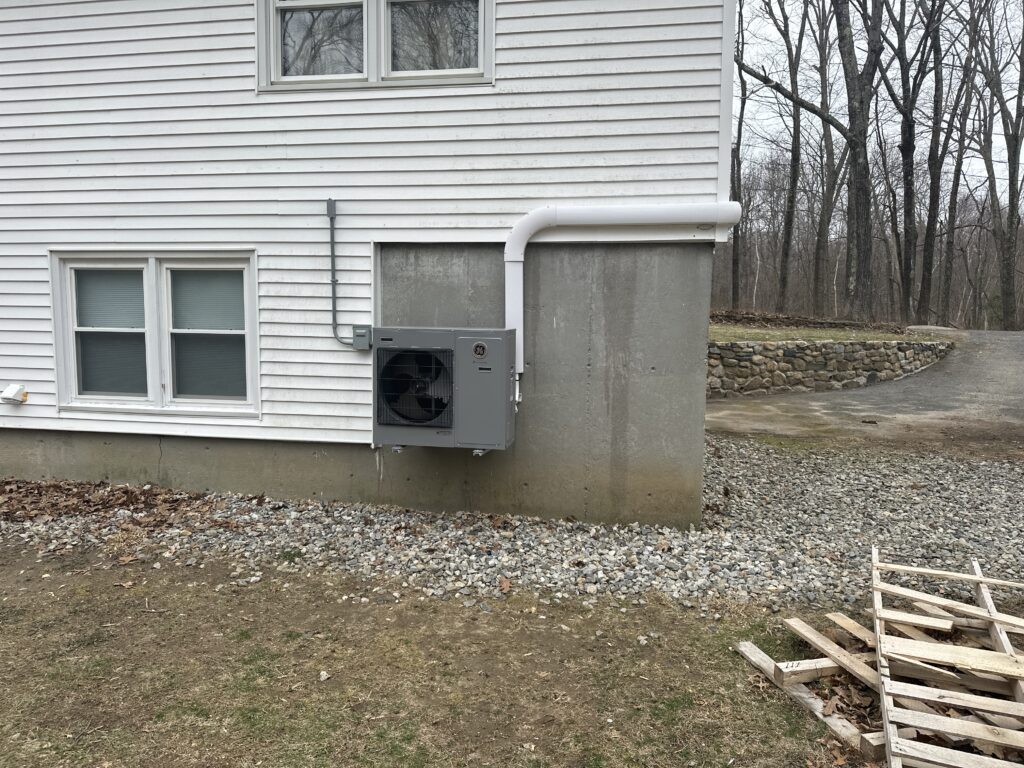
Heat Pump Installation
- Powers Air HVAC, based in Granby, MA
What Heat Pump Installation Involves
A heat pump doesn’t burn fuel to make heat. It moves heat, pulling it from the outside air even in cold weather and moving it indoors, then running the process in reverse for cooling in the summer. That single piece of equipment replaces both your furnace or boiler and your central air system, which is a large part of why it’s worth understanding even if you’re not sure yet.
Installation covers a few distinct pieces of work, and skipping any one of them is how a system ends up underperforming:
- A proper load calculation for the house, not a guess based on square footage
- Selecting equipment rated for cold-climate performance, not a standard heat pump pulled off a shelf
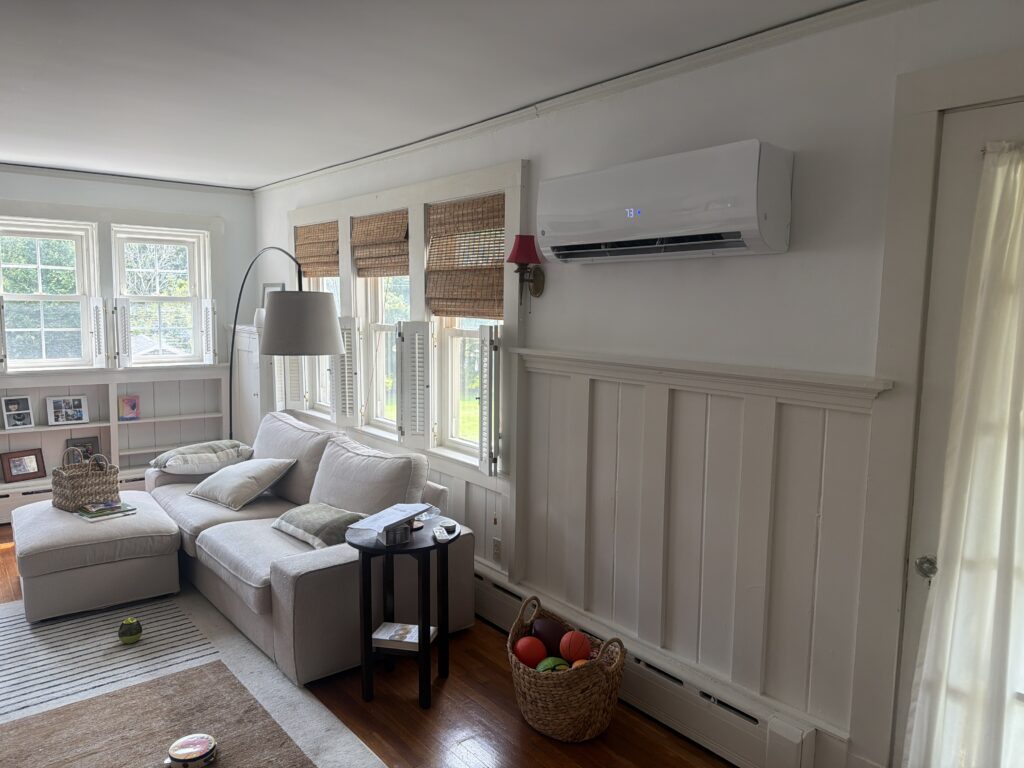
- Placement and sizing of the outdoor condenser and indoor units, whether that's ducted, ductless, or a mix of both
- Line set runs sized and routed correctly between outdoor and indoor equipment
- Electrical work to support the new equipment, sized to the unit's actual draw
- A decision on backup or auxiliary heat for the coldest stretches of the year
- Commissioning and testing once the system is in, confirming it runs the way it was specified to run
Does a Heat Pump Actually Work in a Massachusetts Winter
This is the question almost every homeowner in this territory asks, and it deserves a straight answer instead of a brochure line.
Modern cold-climate heat pumps are rated to keep producing meaningful heat well below zero degrees Fahrenheit. That’s not a marketing claim, it’s a function of the compressor technology in current equipment, and it’s a real change from the heat pumps of ten or fifteen years ago that genuinely struggled in New England cold. The rating that matters here is HSPF2, along with the manufacturer’s published capacity curve, which tells you how much heating output the unit retains as the outdoor temperature drops.
Here’s the honest part: capacity does drop as it gets colder, even with the best equipment. On the coldest nights of the year, a correctly sized cold-climate heat pump is still doing real work, but some homes benefit from backup heat to cover those extremes, whether that’s the existing furnace or boiler staying in place as a second stage, or electric resistance backup built into the system. Whether you need that backup, and how it’s set up, depends on your house’s heat loss, your insulation, and how you want the system to behave on the ten or so coldest nights of a typical winter. That’s a sizing conversation, not a guess.
When It Is the Right Answer and When It Is Not
A heat pump is a strong fit for a lot of homes in this territory. It is not automatically the right call for every one of them, and saying otherwise would be selling you equipment, not solving your problem.
A heat pump usually makes sense when:
- Your home heats with delivered oil or propane, which is common across a lot of this territory since much of it has no natural gas distribution. That changes the economics of switching in a way that doesn't apply in a town with gas service, and it's often the strongest reason to look at a heat pump seriously
- Your existing system is aging out and you're facing a replacement decision anyway
- You want central air and you don't currently have it, since a heat pump gives you both heating and cooling from one piece of equipment
- You have a home with no ductwork at all, which is common in the older housing stock and mill cities in this area, where steam or hot water radiators were the original heat source. A ductless heat pump is often the most practical way to add real cooling and efficient heat to a house like that
- You want to reduce reliance on delivered fuel and you're comfortable with electric-based heating as the primary or supplemental source
- Your existing furnace or boiler and ductwork are in good condition and there's no cost or comfort problem driving a change
- Your electrical panel doesn't have the capacity to support the new equipment without an upgrade, which is a separate cost to plan for up front rather than discover partway through
- You're looking for the lowest possible upfront cost with no interest in the efficiency or fuel-switching benefits
- The home's insulation and air sealing are poor enough that any heating system, heat pump or otherwise, is going to struggle to keep the house comfortable until that's addressed first
How We Size and Specify
Sizing is where most heat pump installations go wrong, and it’s almost never the equipment’s fault. A system sized off square footage alone tends to come out oversized, and an oversized heat pump short cycles, meaning it runs in quick bursts instead of long, steady cycles. Short cycling wastes efficiency, wears equipment down faster, and does a worse job of holding a steady, comfortable temperature than a correctly sized system running longer at lower output.
A real load calculation, a Manual J, accounts for square footage, insulation levels, window count and orientation, ceiling height, and how the specific house holds or loses heat. That number, not the size of the house alone, is what determines the equipment.
For the equipment itself, we’re looking closely at HSPF2 and SEER2 ratings, the manufacturer’s cold-climate capacity curve, and whether backup heat makes sense for your situation. For homes keeping existing ductwork, we also check static pressure in that ductwork before assuming it can handle the new equipment. Old ducts sized for an old system can restrict a new one, and that shows up later as noise, weak airflow to certain rooms, and a system that never performs to its rating. Line set length matters too, since a run that’s too long between outdoor and indoor equipment loses efficiency and can create refrigerant charge issues down the line.
Equipment and What Actually Differs Between Systems
- Ducted heat pumps tie into existing ductwork and work well when that ductwork is in good condition and correctly sized for the new equipment
- Ductless mini-split heat pumps use individual indoor heads with no ductwork required, which makes them the practical answer for the many older homes in this territory that never had ducts installed
- Single-zone systems condition one room or area well. Multi-zone systems run several indoor heads off one outdoor condenser, but each zone still needs to be sized on its own rather than divided evenly across the total load
- Ducted mini-splits can serve a single addition or a section of a house without conditioning the whole home through one system, which is useful for additions or partial renovations
- Variable-speed compressors run longer at lower output, holding a steadier temperature and controlling humidity better than a single-stage system that's either fully on or fully off
- Indoor head style, wall-mounted, ceiling cassette, or floor-mounted, is a real decision based on the room's layout and where the line set can practically run, not just a look
What the Work Looks Like Start to Finish
It starts with a conversation about your current heating and cooling situation, your house, and what you’re hoping to get out of a change. From there, we walk the house, take real measurements, and run a load calculation rather than pricing off square footage over the phone.
Once we have the numbers, we’ll go over what we’d recommend and why, including the tradeoffs of ducted versus ductless, backup heat or not, and single-zone versus multi-zone if that applies. You’ll get a real quote based on your house, not a range pulled from a brochure.
On installation day, outdoor and indoor equipment go in, line sets are run and pressure tested, electrical connections are made to code, and any backup heat integration is wired in. Refrigerant work is handled under federal certification requirements. Once everything is in place, we commission the system, meaning we run it through both heating and cooling modes, check airflow and temperatures, and confirm it’s performing the way it was specified to before we call the job finished. We walk you through the thermostat and controls before we leave, and we clean up after ourselves.
What it costs
- Whether the project is ducted, ductless, single-zone, or multi-zone
- The size and number of zones the load calculation calls for
- Whether existing ductwork can be reused or needs modification
- Whether your electrical panel has capacity for the new equipment or needs an upgrade first
- Backup heat integration, if the sizing conversation calls for it
- Site-specific factors like line set length and equipment placement
Rebates and Incentives
Where We Work