
Electrical Panel Upgrades and Change-Outs in Palmer, MA
Electrical panel upgrades in Palmer
Palmer isn’t really one electrical landscape, it’s four. Three Rivers, Thorndike, Bondsville and Palmer proper each grew up around their own mill, and the housing in each village still reflects the era it was built in, which means the service sizes tend to cluster differently from one village to the next. A lot of what we find when we open a panel in this town was sized for a house that had a stove, a water heater, and not much else pulling current at once.
- Powers Air HVAC, based in Granby, MA
Powers Air does electrical panel upgrades and change-outs as in-house licensed work, not as a referral to someone else. That matters here more than it does in a lot of towns, because the honest answer on a Palmer service call is often more nuanced than “you need a new panel.” We’ll walk you through what your panel can actually carry, what a load calculation says you need, and whether a change-out is the right move or an expensive overcorrection.
What Palmer homes have for service today
The oldest services in our territory tend to be in the eastern end, and Palmer’s mill villages are a good example of why. Three Rivers and Bondsville both have a concentration of two- and three-family housing built around turn-of-the-century mill employment, and a lot of those buildings run on meter banks, one meter and service per unit, sometimes fed from a single overhead drop that was never sized with modern appliance loads in mind. Palmer proper and the strip along Route 20 skew newer and more commercial, with larger services and, in some cases, three-phase equipment feeding the businesses rather than the kind of single-family panel most homeowners are dealing with.
Across all four villages we see the same pattern that shows up anywhere with this much older housing stock: a 100 amp service that started life serving a modest single-family home, then picked up a subpanel in the basement when it was finished, another circuit when someone added central air, and maybe a third small subpanel when a garage got wired. Nobody did anything wrong adding those pieces one at a time, but the result is a service that’s carrying more than its original design intended, with spaces used up on a panel that may or may not have the amperage behind it to match. Whether you own and live in the house or own it as a rental changes the conversation too, since a landlord juggling multiple units’ worth of aging service is solving a different problem than a homeowner adding one heat pump.
How we work out what the house actually needs
We don’t quote a panel upgrade off the square footage of the house or the number printed on the existing panel door. We do a load calculation under the Massachusetts Electrical Code that accounts for what’s actually connected: the water heater, the range, the dryer, the HVAC equipment, and anything else drawing meaningful current, run against the diversity factors the code allows for things that don’t all run flat out at the same time. That number tells us what the house genuinely needs, which is frequently a different answer than what the panel label suggests.
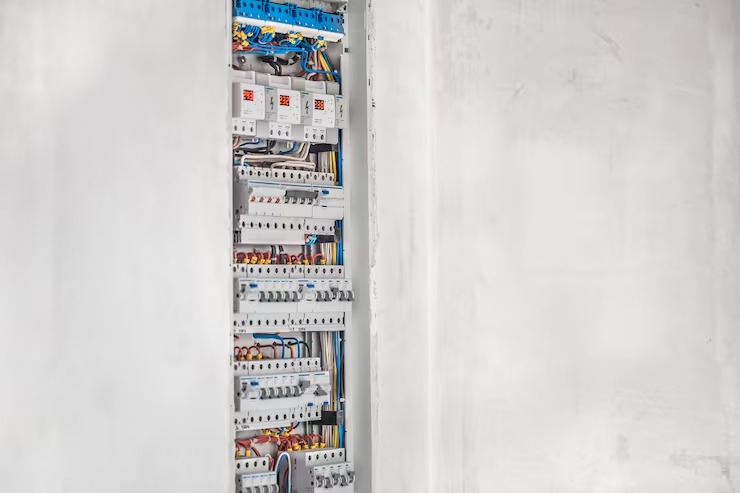
There are two separate questions buried in every one of these jobs, and conflating them is where a lot of quotes go wrong. One is amperage: what is the service itself rated to deliver. The other is breaker spaces: whether the panel has room left to add circuits, regardless of how much amperage is available. A panel can be maxed out on spaces while sitting well under its amperage capacity, and the fix for that is not the same fix as a service that’s genuinely undersized. A real quote tells you which problem you actually have, shows the load calculation, and specifies the exact service size going in. If someone quotes a panel change-out without opening the panel first, that’s worth asking about before you sign anything.
When you do not need a new panel
This is the section most companies skip, and it’s the one that matters most. A load calculation on a Palmer house frequently comes back showing the existing service has room left in it, and in that case a full change-out is money spent solving a problem that doesn’t exist. There are three real alternatives worth understanding before you assume a new panel is the answer.
The first is matching the appliance to the house instead of the house to the appliance. A cold-climate heat pump sized correctly for the space draws a predictable, modest load, and on some panels that’s simply absorbed without issue. The second is a load management device, which sheds one circuit automatically when another is drawing power, so an EV charger and an electric range, say, never actually overlap on the service at the same moment, letting two loads coexist on a service that couldn’t carry both running flat out simultaneously. The third is a subpanel, which solves a breaker-space problem for a fraction of what a full service upgrade costs, when the amperage was never actually the issue. A homeowner who hears honestly that they don’t need a $12,000 service change is the homeowner who calls back for the $2,000 subpanel that actually solves their problem, and for the next job after that.
- A better-matched appliance. A heat pump water heater or a mini-split system sized correctly for the actual load draws less than a straight replacement sized off habit, and sometimes that difference is what keeps the existing panel adequate.
- A load management device. These devices let two loads, an EV charger and an electric dryer for example, share the same available capacity by stepping one down when the other is running, instead of requiring enough headroom for both to run flat out at once.
- A subpanel. When the real problem is breaker spaces rather than total service capacity, adding a subpanel solves it for a fraction of what a full change-out costs, without touching the main service at all.
We’d rather tell you the panel is fine and sell you the smaller job than talk you into a change-out you don’t need. That’s a deliberate choice, not a sales script, and it’s the same reasoning we apply on the HVAC side when a system doesn’t need to be oversized to feel adequate.
What the work involves
When a change-out is genuinely the right call, the job involves replacing the main panel and, depending on what the load calculation requires, upgrading the service conductors running from the meter, the meter socket itself, and in some cases the weatherhead or mast where an overhead drop attaches to the house. This work involves the service conductors ahead of the main breaker, which are live any time the utility’s drop is connected, and that’s a scope of work handled by a licensed electrician, not a homeowner project under any circumstances. We coordinate with the utility to schedule the disconnect, do the physical replacement, and arrange the reconnection and inspection once the new service is in place. That coordination is part of why timing on these jobs depends partly on the utility’s schedule and not only on ours.
What it costs
A panel upgrade in Palmer generally runs {PRICE_LOW} to {PRICE_HIGH}, and where a given job lands in that range depends on a handful of specific factors. The target service size matters, since moving to 200 amps costs more than staying at 150. Overhead versus underground service changes the labor involved substantially, since underground work means trenching. Whether the meter socket and mast need replacing alongside the panel, how far the panel is physically located from the meter, and whether the utility needs to schedule a disconnect window all move the number. Pairing the panel work with other equipment, like a cold-climate heat pump or a heat pump water heater installed in the same visit, can also change the total since some of the labor overlaps. Palmer doesn’t currently have a dedicated EV charger installation page, largely because limited off-street parking in the village cores makes charger placement a house-by-house conversation rather than a standard job, but if a charger is part of what’s driving your load calculation, that’s exactly the kind of load a service upgrade needs to account for up front rather than as an afterthought.
- The size of service going in. Jumping from 100 to 200 amps costs less than sizing up further for a multifamily building.
- Overhead versus underground service. Underground runs cost more because they involve trenching.
- Whether the meter socket and mast also need replacing, which is common on older services.
- How far the panel is from the meter, since a longer conductor run adds cost.
- The utility's disconnect scheduling, which is outside our control and can add time even to a straightforward job.
- Whether the work is done alongside other equipment, such as a heat pump or an EV charger, which can share some labor.
We never quote a fixed number before seeing the panel and running the calculation. Anyone who does is guessing, and a guess on a job involving your home’s main electrical service isn’t the kind of guess you want to be paying for.
Permits and inspection
Every panel upgrade we do in Palmer, and everywhere else in our territory, is permitted through the town and inspected before it’s signed off. That’s not optional and it’s not a line item we add later, it’s built into the quote from the start. A permit means an inspector who doesn’t work for us confirms the installation meets code before the job is considered finished, which is exactly the kind of check you want on work involving your home’s main electrical service. If a quote you’ve received doesn’t mention a permit, ask why, because skipping it is usually how a lower number gets to that number. [EXTERNAL LINK: Massachusetts Electrical Code as adopted, for homeowners who want to see the standard the inspection is measured against]
Get a quote
If you’re in Three Rivers, Thorndike, Bondsville or Palmer proper and you’re trying to figure out whether your panel can carry a heat pump, a heat pump water heater, or just more of what your house already needs, call Powers Air at {PHONE}. We’ll look at what’s actually on the panel, run the calculation, and tell you straight whether you need a change-out, a subpanel, or nothing at all.
frequently asked questions
Does a 100 amp panel always need to be upgraded for a heat pump?
No. A heat pump load is smaller than most people assume, and a load calculation on a 100 amp service with a gas or oil-fired water heater and no electric range often has room to spare. The panel label is a starting point, not the answer. We only recommend a change-out when the math says the existing service cannot carry what you want to add.
Can you tell me what I need over the phone?
Not responsibly. A load calculation requires knowing what is actually connected to the panel, the condition of the service conductors, and the panel's physical breaker spaces. We can give a general sense of what's common in a Palmer village, but a real answer means someone looking at the panel in person.
What's the difference between a subpanel and a full service upgrade?
A subpanel adds breaker spaces fed from your existing service and solves a 'no room in the box' problem without touching your service size. A full change-out replaces the main panel and often the service conductors or meter equipment to increase the total amperage available to the house. They solve different problems and cost very differently.
Do you handle the permit and inspection, or is that on me?
We pull the permit and schedule the inspection as part of the job. It's included in the quote, not an add-on, and it's one of the ways you can tell a quote is complete before work starts.
How long does a panel change-out take?
The work itself is usually a single day, though the house will be without power for part of that day while the old service is disconnected and the new one is connected and inspected. Scheduling around the utility's disconnect can add time depending on their availability.