
Mini-Split Repair and Service
- Powers Air HVAC, based in Granby, MA
What Mini-Split Repair and Service Involves
built with steam or hot water radiators and never had ductwork installed at all. Mini-splits are how those homes get real cooling and efficient supplemental or primary heat without tearing into walls to add ducts. That popularity also means there’s a growing number of mini-split systems out there now old enough, or installed poorly enough to begin with, to be showing problems.
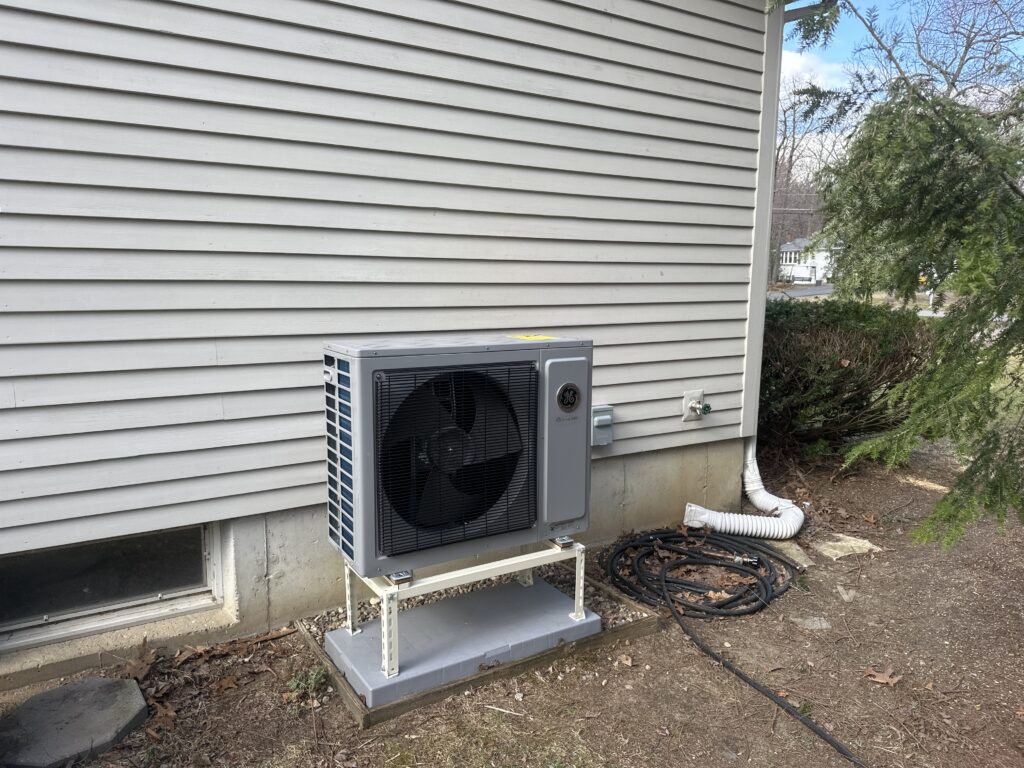
Mini-split repair and service covers the full system: the outdoor condenser, the indoor head or heads, the line set connecting them, the condensate drain, and the electrical and control components that tie it together. Common issues include:
- A refrigerant leak, often at a line set connection or flare fitting
- A failed capacitor, contactor, or control board
- A condensate line that's clogged or draining incorrectly, leaking water into the wall or onto the floor
- A dirty or frozen indoor coil restricting airflow
- An outdoor unit that's iced over or short cycling
- An indoor head that runs constantly but never reaches the set temperature
- Wiring or communication faults between the indoor head and outdoor condenser, especially on multi-zone systems
- Remote or control board issues that leave a unit unresponsive or stuck in one mode
When It Is the Right Answer and When It Is Not
Most mini-split problems are repairable, and repair is usually the right first call. It isn’t the right call in every situation, and pretending otherwise just delays a bigger decision.
Repair usually makes sense when:
- The failure is isolated to one component, like a capacitor, control board, or a fan motor
- A refrigerant leak is small and locatable, not a sign of a failing coil or compressor
- The system is a common brand with parts that are reasonably available
- The unit is still within a reasonable span of its expected service life and hasn't had repeat failures
- The rest of the installation, meaning line set condition and indoor head placement, was done correctly to begin with
- The compressor in the outdoor unit has failed
- This is the second or third repair call on the same unit in a short span of time
- The original installation was undersized or oversized for the space, meaning the unit has never performed correctly regardless of repairs
- The line set was run too long or poorly insulated at installation, which creates ongoing efficiency and reliability problems no repair fully resolves
- The system uses an older refrigerant that's become expensive or difficult to source
- You're adding zones or square footage and the existing outdoor unit doesn't have the capacity to take on more indoor heads
There’s a specific failure pattern worth naming honestly: a mini-split that was installed cheaply, with a line set run longer than it should have been or a system sized off a rough guess instead of an actual load calculation, tends to keep failing in the same ways no matter how many individual parts get replaced. In that situation, repair becomes a pattern of patching rather than a fix, and it’s worth having a real conversation about whether the original installation is the actual problem.
How We Size and Specify
Sizing comes into the repair conversation more often than homeowners expect. When a component needs replacing, matching it correctly to the rest of the system matters, since a mismatched capacitor, board, or refrigerant charge can cause a repair to fail again within months. When repair turns into a replacement conversation, sizing becomes the whole ballgame.
A system sized off square footage alone, without a real Manual J load calculation, tends to run oversized. An oversized unit cools fast, shuts off, and short cycles, meaning it never runs long enough to pull humidity out of the air, so the room feels clammy even at the set temperature. That’s one of the most common reasons a mini-split “never worked right” from day one, independent of any actual mechanical failure.
For any replacement work, we account for square footage, insulation, window count and orientation, ceiling height, and how the specific room or zone holds heat. Line set length is checked against manufacturer limits, since a run that’s too long loses efficiency and creates the exact kind of refrigerant charge issues that lead to repeat service calls. For heating-mode performance, we also look at the equipment’s HSPF2 rating and cold-climate capacity curve, since not every mini-split on the market is built for a real Massachusetts winter.
Equipment and What Actually Differs Between Systems
- Single-zone systems run one indoor head off one outdoor condenser. Failures tend to be easier to isolate since there's only one path for refrigerant and one set of controls
- Multi-zone systems run several indoor heads off one outdoor condenser, which means a problem in one zone can sometimes point back to the outdoor unit or the shared refrigerant circuit rather than the indoor head itself
- Line set length and routing matter more than most homeowners realize. A run installed too long, with too many bends, or without correct insulation creates ongoing efficiency loss and refrigerant charge problems that show up as repeat failures
- Indoor head style, wall-mounted, ceiling cassette, or floor-mounted, affects how accessible components are for service and how airflow and condensate drainage are set up
- Cold-climate rated equipment is built to maintain heating capacity at low outdoor temperatures. Standard mini-splits not rated for cold climates tend to lose meaningful capacity, or fail outright, well before a cold-climate unit would
- Variable-speed compressors run longer at lower output rather than cycling fully on and off, which affects both comfort and the kind of wear patterns we see over time
What the Work Looks Like Start to Finish
You call and describe what the system is doing, when it started, and what kind of unit you have, which helps us show up with the right tools and likely parts on the truck. For multi-zone systems, we’ll ask which specific head or heads are affected.
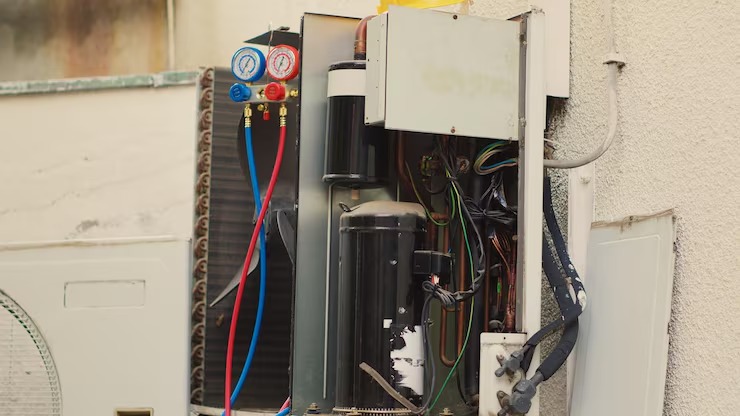
Onsite, we diagnose with gauges and an electrical meter rather than swapping parts to see what sticks. We’ll walk you through what we found before doing anything further, including what it will take to fix it and what your options are if it points toward something bigger than a straightforward repair.
If the part is on the truck, most repairs finish that same visit. If it needs to be ordered, we’ll tell you honestly how long that takes and get it scheduled. Refrigerant work is handled under federal certification requirements, not as a shortcut. Once the repair is complete, we run the system through a full cycle, heating and cooling depending on the season, to confirm the fix actually holds before calling the job finished, and we clean up after ourselves.
What It Costs
- Whether the failed part is common or a specialty item that has to be sourced
- Whether it's a single, isolated failure or a symptom pointing toward a bigger problem, like a failing compressor or a poorly installed line set
- Whether the system is single-zone or multi-zone, and whether a fault on one zone involves the shared outdoor unit
- How accessible the indoor head and outdoor condenser are for service
- Whether the brand and model are common in this area or a less common line with a longer wait on parts
Rebates and Incentives
Where We Work
Get a Quote
If your mini-split isn’t performing the way it used to, call 413-339-3194. You’ll talk to Drew directly about what’s going on, get a straight answer about whether it’s a repair or a bigger issue, and know what it’s going to take before any work beyond the diagnosis begins.