
Electrical Panel Upgrades and Change-Outs in Springfield, MA
Electrical panel upgrades in Springfield
A lot of Springfield’s triple-deckers and older multifamily buildings were wired for a house that didn’t have central air, let alone a car charger or a heat pump water heater in the basement. The service that was correct in 1955, or even in a 1985 renovation, is frequently the thing standing between you and the equipment you actually want installed now.
Drew pulls the panel, runs the numbers, and tells you straight whether you need a new service or whether what’s there can be made to work. This is licensed electrical work performed in-house, permitted and inspected the same as it would be anywhere else in the territory, not a job handed off to a sub he’s never met.
- Powers Air HVAC, based in Granby, MA
Springfield is big enough that the answer to “what panel do I need” genuinely depends on which part of the city you’re in. A Six Corners triple-decker, a Sixteen Acres single family, and a Forest Park two-family don’t have the same electrical history, and they don’t need the same fix.
What Springfield homes have for service today
The housing stock here splits a few different ways, and each one changes the job. The triple-deckers and older multifamily buildings in the denser neighborhoods typically have a meter bank with three separate services feeding one building, often added to or re-fed in pieces over decades as units changed hands or got rewired unit by unit. It’s common to find a 100 amp service per unit, sometimes less, and it’s common to find a subpanel stacked on top of an original panel from a finished basement or an added unit that nobody updated the main service to support.
The single family neighborhoods further out, around Sixteen Acres, East Forest Park, and the newer pockets of the city, tend to have larger single services, more often 150 or 200 amp, and fewer surprises when you open the can. Overhead drops are still the norm across most of the older parts of the city; underground service shows up more in newer construction and some of the commercial and institutional buildings downtown. Who owns the building matters too. An owner-occupant usually wants the job done right and is thinking about an EV or a heat pump down the line. A landlord with a tenant-occupied triple-decker is usually trying to solve one problem at the lowest responsible cost, and that changes what we recommend, not whether we do the work honestly.
How we work out what the house actually needs
The starting point is a load calculation done under the Massachusetts Electrical Code, which means counting what’s actually connected and planned, not estimating from square footage and not reading a number off a dusty panel label and assuming it’s accurate. The panel label tells you what the panel is rated to hold. It doesn’t tell you what the service conductors coming in from the meter are actually sized for, and those are two different limits that get confused constantly.
There’s also a difference between running out of amps and running out of spaces. A panel can have full breaker slots and still have plenty of capacity on the service, in which case a subpanel solves the problem. Or a panel can have open slots and still be maxed out on amperage, in which case adding one more breaker is the wrong move regardless of how much room looks available. We figure out which problem you actually have before we quote anything.
A real quote reflects a load calculation that accounted for your existing electric range, dryer, water heater, any mini-split or central air condensing units, and whatever you’re planning to add, whether that’s a heat pump, a heat pump water heater, or an EV charger. If someone quotes you a panel upgrade without opening the panel and without asking what’s on it, that’s a quote built on a guess, and it usually shows up later as a change order.
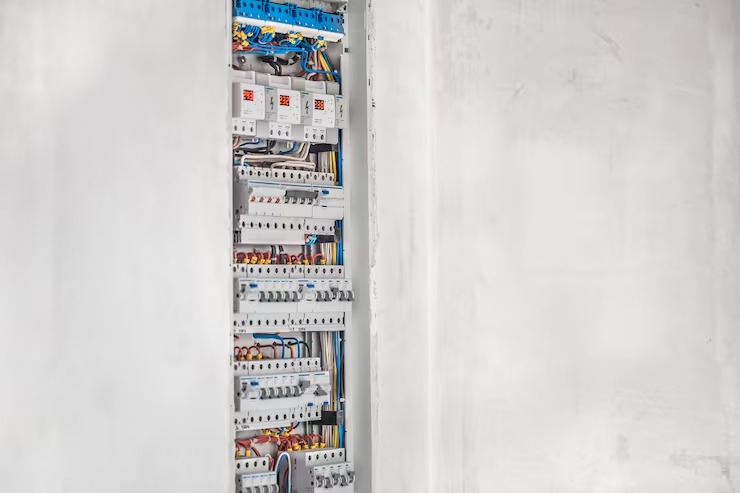
When you do not need a new panel
This is the section most electrical contractors skip, because a change-out is the bigger job and the bigger number. But the honest answer, often enough to matter, is that your existing service is fine and the real problem is something smaller and cheaper.
Three situations come up constantly. First, the equipment itself can be the fix: a cold-climate heat pump sized correctly through a Manual J load calculation often draws less than people assume, and matching the right-sized unit to the house can keep you comfortably inside your existing service where an oversized, mismatched system would have pushed you over. Second, a load management device can let two large loads share one service without either one ever actually running at the same time at full draw, which is a common and far cheaper answer when the issue is an EV charger landing on top of an already-loaded 100 amp panel. Third, if your actual problem is that you’re out of physical breaker spaces but the service itself has room, a subpanel in the basement or garage solves that for a fraction of a full service change-out.
A homeowner who hears this from us and learns they don’t need a new panel is exactly the homeowner who calls us back for the EV charger install or the mini-split circuit they do need. That’s the relationship we’re after, not a bigger invoice today.
- A better-matched appliance. A heat pump water heater or a mini-split system sized correctly for the actual load draws less than a straight replacement sized off habit, and sometimes that difference is what keeps the existing panel adequate.
- A load management device. These devices let two loads, an EV charger and an electric dryer for example, share the same available capacity by stepping one down when the other is running, instead of requiring enough headroom for both to run flat out at once.
- A subpanel. When the real problem is breaker spaces rather than total service capacity, adding a subpanel solves it for a fraction of what a full change-out costs, without touching the main service at all.
When a change-out is genuinely the answer, here’s what that work actually involves and what it tends to cost in this part of the city.
What the work involves
A real service upgrade means coordinating the utility, replacing the meter socket and panel, and in many cases the mast and weatherhead, then having the work inspected before it’s energized. The service conductors ahead of the main breaker are live until the utility disconnects power at the pole or transformer, which is why this is licensed work with a scheduled utility shutdown, not a DIY panel swap with the power just shut off at the breaker. We handle that coordination as part of the job. Your job is deciding what size service you want and what you’re building toward, not any part of the physical work.
For multifamily buildings, there’s an added layer: the meter bank itself may need attention if the individual unit services were tapped off it informally over the years, and we’ll flag that during the assessment rather than discover it mid-job.
What it costs
A straightforward panel change-out on an existing single family service, same amperage going in roughly as what’s there, typically runs {PRICE_LOW} to {PRICE_HIGH}. What moves that number: whether you’re going to 150 or 200 amp service versus staying at 100, whether the drop is overhead or underground, whether the meter socket and mast need replacing along with the panel, how far the panel sits from the meter inside the building, and whether the utility needs to schedule a disconnect versus doing it same-day. Multifamily meter bank work adds complexity and cost because of the number of services involved.
If you’re planning an EV charger alongside the panel work, it’s worth pricing both together since the load calculation and any new circuit run are more efficient done once. See our EV charger installation in Springfield page for what that adds to the job. We never quote a fixed price before opening the panel, because anyone who does is guessing.
- The size of service going in. Jumping from 100 to 200 amps costs less than sizing up further for a multifamily building.
- Overhead versus underground service. Underground runs cost more because they involve trenching.
- Whether the meter socket and mast also need replacing, which is common on older services.
- How far the panel is from the meter, since a longer conductor run adds cost.
- The utility's disconnect scheduling, which is outside our control and can add time even to a straightforward job.
- Whether the work is done alongside other equipment, such as a heat pump or an EV charger, which can share some labor.
None of this work happens without the paperwork, and that’s intentional.
Permits and inspection
Every panel upgrade and service change-out we do in Springfield is permitted with the city and inspected before it’s energized. That’s not optional and it’s not a Powers Air policy, it’s the law, and it’s also the clearest signal of whether a contractor is doing this right. A quote that doesn’t include the permit is a quote that’s either planning to skip it or hasn’t told you the real cost. Our quotes include it. [EXTERNAL LINK: Massachusetts Electrical Code (527 CMR 12) as adopted, for homeowners who want the underlying requirements]
Get a quote
If you’re not sure whether Springfield’s older service in your building can carry a heat pump, a heat pump water heater, and an EV charger, that’s exactly the question to bring to us before you buy any of it. Drew will look at what’s on the panel now, run the load calculation, and tell you honestly whether you need a change-out, a subpanel, or nothing at all. Call {PHONE} to get it scheduled.
frequently asked questions
Is a 100 amp service enough for a heat pump in Springfield?
Often, yes, especially if it's the only major addition and the rest of the panel has headroom. It depends on what else is already connected and what the load calculation shows. We've told plenty of Springfield homeowners their 100 amp service is fine for one cold-climate heat pump; adding a heat pump water heater and an EV charger on top of it is a different question.
Do triple-deckers in Springfield usually need a full service upgrade?
Not always. Many have adequate per-unit service and the real issue is breaker spaces, which a subpanel solves. We assess each unit's actual service and load rather than assuming the building needs a wholesale rebuild.
How long does a panel upgrade take in Springfield?
The electrical work itself is usually a single day once the utility coordinates the disconnect and reconnect. Permitting and inspection scheduling with the city adds time on the front and back end, which is why we build that into the project timeline up front.
Can I just add a subpanel instead of replacing my whole service?
If your load calculation shows the service has amperage to spare and your real problem is running out of breaker spaces, a subpanel is the correct and cheaper fix. We won't sell you a full change-out when a subpanel solves it.
Does Powers Air do the electrical work itself or hand it off?
Drew holds the electrical licensing for this work and it's performed in-house, not referred out to a separate contractor. The same person assessing your panel is doing or overseeing the install.