
Ductless Mini-Split Installation in Northampton, MA
Walk through the center of Northampton and you’re mostly looking at houses built before 1930, a lot of them before 1900, heated originally by coal and later converted to oil-fired steam or hot water. There was never a duct run cut into those walls, and there still isn’t. If you’ve added a sunroom, finished the attic, or converted the barn out back into an office, you already know the old system has no way to reach it.
- Powers Air HVAC, based in Granby, MA
That’s the exact problem ductless mini-splits were built to solve, and it’s the reason they’ve become the fastest-growing part of what we install across this part of the Valley. One or more wall-mounted or ceiling-cassette indoor heads, connected by a refrigerant line set to an outdoor condenser, delivering heating and cooling to a room or a whole house with no ductwork required anywhere in the process.
- Additions and bump-outs that were never tied into the main heating system
- Finished attics and basements that run twenty degrees off the rest of the house
- Whole houses with radiators or baseboard and no ducts to tap into at all
- Individual units in a converted multifamily, where each tenant needs their own zone and their own thermostat, not a shared system nobody controls
- Rooms at the far end of an existing duct run that never got enough air to begin with
Drew Powers runs Powers Air out of Granby and handles the sizing and the installation himself rather than handing you off to a sales rep with a brochure and a canned number of tons per square foot. In a market as competitive and as well-informed as Northampton’s, that’s not a slogan, it’s the only way to compete on anything other than price.
What Northampton homes are working with
Northampton sits outside most of the natural gas distribution network that serves towns closer to Springfield, which means a large share of the housing stock here runs on delivered oil or propane for heat. That changes the math on a heat pump conversion in a way it doesn’t in a gas town. You’re not comparing electric heat against a cheap, already-piped fuel. You’re comparing it against fuel oil delivered by truck or propane billed by the gallon, both of which have gotten more expensive and less predictable, and a cold-climate heat pump starts looking like the better bet on cost alone before you even factor in air conditioning you didn’t have before.
The building stock itself is the other variable. Northampton’s center, Florence, and the older neighborhoods off King Street are dense with Victorian, Colonial, and early 20th-century two- and three-family houses, many of them owner-occupied but plenty operating as rentals with the landlord footing the equipment bill and the tenant paying the utility. Lot sizes are small, houses are tight to each other, and a lot of the basements and attics have already been converted to living space without ever getting a heating source of their own. That’s the house we see constantly: hot water radiators doing an adequate job on the main floors, and a finished third floor or converted attic running a space heater because nothing else reaches it.
How we size and specify the system
Every quote starts with a Manual J load calculation, not a guess based on square footage. We look at insulation levels, window count and orientation, ceiling height, air leakage, and how the rooms are actually used, because a 19th-century house with plaster walls and old double-hungs loses heat differently than a 1980s addition on the same lot. That calculation tells us how much heating and cooling capacity the space actually needs, zone by zone.
Oversizing is the single most common mistake we see from other installers, and it doesn’t make a house more comfortable, it makes it less comfortable. An oversized unit satisfies the thermostat fast and shuts off, which means it never runs long enough to pull humidity out of the air in summer or to settle into the steady, even output that makes a heat pump feel good in winter. It also cycles more, which wears the compressor harder over the life of the equipment. A quote that doesn’t reference a load calculation, and just quotes a unit size based on square footage, is a quote you should be skeptical of.
A proper quote specifies the indoor unit type for each room, the outdoor unit’s cold-climate rating and HSPF2 performance, the line set routing and length, and what backup heat looks like if any exists. For more on how that cold-weather performance actually holds up once temperatures drop into the teens and below, see our cold climate heat pump performance guide.
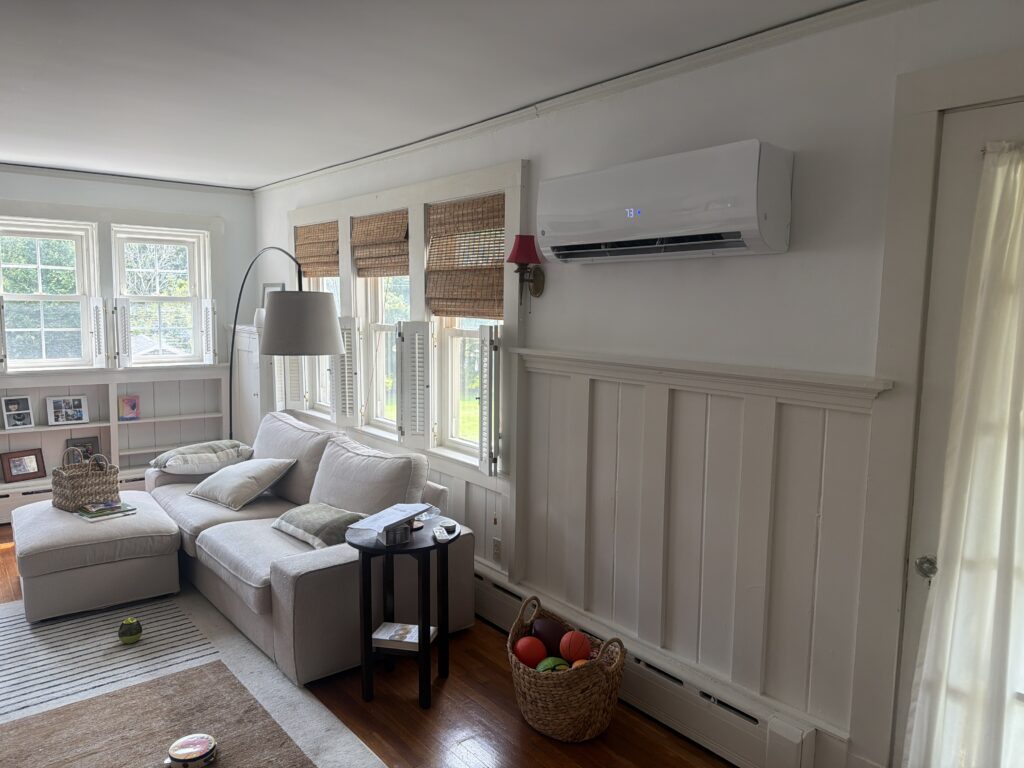
If you’re trying to figure out whether a single zone covers your addition or a multi-zone system is the better call for a whole floor, that’s a conversation worth having before anyone talks about equipment brands. The answer depends on how the rooms connect, where you spend time, and whether you want one thermostat or independent control room to room.
- The load calculation the sizing is based on, room by room or zone by zone
- Which cold-climate rated equipment is being specified and why, including its rated capacity at low outdoor temperatures, not just at 47°F
- Whether the design accounts for backup or auxiliary heat on the coldest days, and what that backup source is
- Line set length and routing, since refrigerant line runs have real limits before performance and warranty coverage are affected
- Where condensate goes and how it drains
We also check your electrical panel capacity as part of the quote, not as an afterthought. A multi-zone system draws real amperage, and if your panel is already near its limit, that’s a conversation we have up front, including whether a panel upgrade makes sense to do at the same time since we handle that work in-house as well.
What the work involves
Installation day starts with mounting the indoor unit or units at the height and location we spec’d during the quote, running the line set through an exterior wall penetration, and setting the outdoor condenser on a pad or wall bracket where it has clearance for airflow and service access. We run the electrical circuit, connect and pressure-test the refrigerant lines, and set up condensate drainage so moisture has somewhere to go that isn’t your siding or your foundation.
On a lot of Northampton’s older houses, line set length and routing is the part that takes the most planning, since walls can be plaster over brick or balloon-framed in ways that limit where you can run a line cleanly. We account for refrigerant line length limits during the quote stage so there are no surprises on install day. Once the system is in, we commission it, confirm refrigerant charge, and walk you through the controls before we leave.
- Walk-through and load calculation to confirm zones, unit placement, and equipment sizing
- Electrical assessment: dedicated circuits for each indoor and outdoor unit, and whether the panel has capacity for them
- Line set routing between condenser and each indoor head, sized and insulated to spec
- Indoor unit mounting (wall-mounted, ceiling cassette, or slim ducted) and outdoor condenser placement
- Condensate management, inside and out
- Permitting and inspection on both the mechanical and electrical work
- Commissioning: refrigerant charge, airflow, and control operation verified before we call it done
Most single-zone installs are a one-day job. Multi-zone systems covering several rooms or a whole floor typically take two days depending on how many indoor heads and how much line set routing is involved.
What it costs
A single-zone mini-split covering one room or an addition typically runs in the {PRICE_LOW} to {PRICE_HIGH} range installed, and multi-zone systems covering a whole floor or house run higher depending on how many indoor units you need. What actually moves the number is the count of zones, whether you’re installing wall-mounted heads or the less visible ceiling cassette or floor-mounted units, how far the line sets have to travel, whether your electrical panel has room for the new circuit or needs work first, and how accessible the install locations are in your particular house. We’ll never quote you a single number without walking the specific rooms first. For a closer look at what drives the price up or down on a Western Mass install, see our mini-split cost guide.
- Number of zones and indoor units
- Indoor unit type: wall-mounted, ceiling cassette, or slim ducted, which vary in cost and complexity
- Line set length between condenser and indoor units
- Electrical capacity, and whether the panel needs additional circuits or a change-out
- Access: attic runs, exterior penetrations, distance from condenser to units
We’d rather tell you a job isn’t a good fit than install something undersized to hit a price point or oversized to make a sale. If a house needs more zones than you were hoping to pay for, we’ll say so.
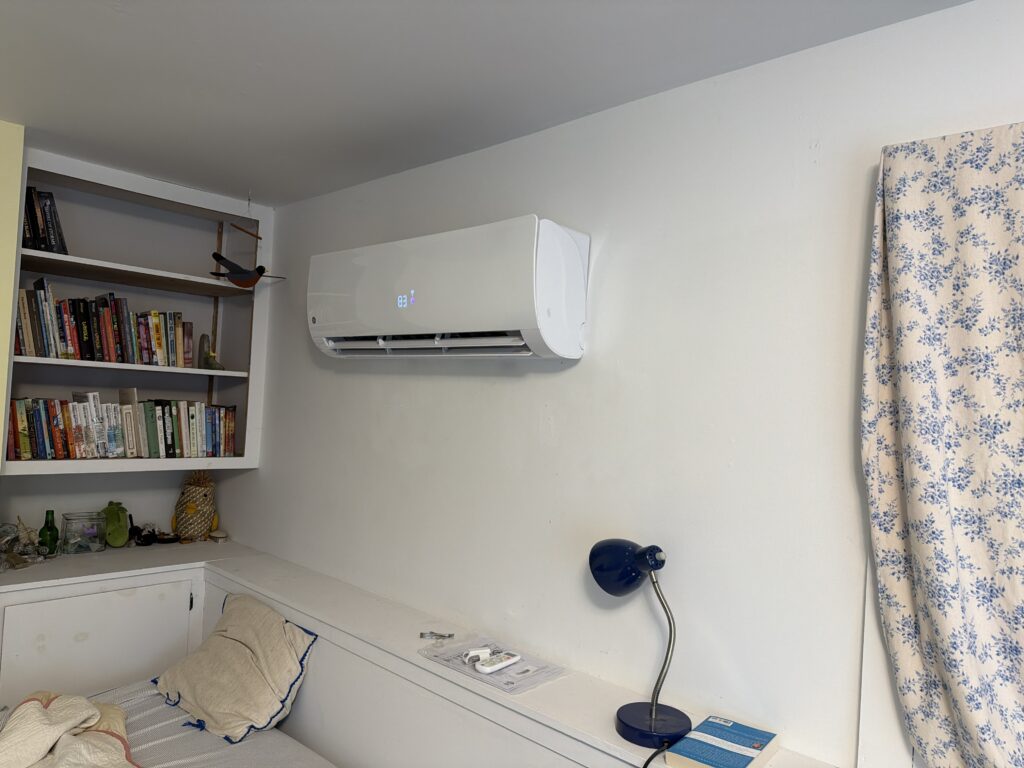
Rebates and incentives
Mass Save offers incentives for qualifying heat pump installations, and it’s a program worth understanding before you finalize a system, since eligibility and amounts depend on your specific equipment and your home’s current heating setup. We’re not going to quote you a dollar figure here because the rules change and your house determines what actually applies. [EXTERNAL LINK: masssave.com – official Mass Save program site for current heat pump incentive details] has the current program details, and our Mass Save heat pump rebates page walks through how the program generally works. We can help you understand what might apply to your specific house once we’ve done the load calculation and know what system you actually need.
Get a Quote
If you’re in Northampton or anywhere around it and you’ve got a room the old system never reached, or you’re looking at a heat pump as a real alternative to oil or propane, call {PHONE} and talk to Drew directly. No sales appointment, no call center, just a conversation about your house and what it actually needs. You can also see our full ductless mini-split installation services or check out what we do elsewhere around the Northampton, MA area.
frequently asked questions
Can a mini-split really heat a Northampton house through a cold Western Mass winter?
A properly sized cold-climate mini-split is rated to produce usable heat well below zero, though capacity does drop as temperatures fall. We spec the system and any backup heat based on your actual design temperature, not a brochure number, so you know what to expect on the coldest nights of the year.
Do I need ductwork for a mini-split install?
No. That's the entire point of a ductless system. The indoor units connect to the outdoor condenser through a small refrigerant line set run through a wall penetration, not through ducts, which is why mini-splits work in older Northampton houses that were never built with any ductwork at all.
How many zones does my house actually need?
It depends on your layout, not a rule of thumb. A small addition or single converted room often needs just one zone. A whole floor or house with several rooms usually needs a multi-zone system. We size this during the load calculation rather than guessing from square footage.
Will a mini-split replace my oil or propane heat entirely?
For a lot of houses it can serve as the primary heat source with the existing system as backup for the coldest stretches, and for some it replaces oil or propane entirely. Which one makes sense for you depends on your home's insulation, the system we spec, and how you want to handle backup heat. We'll give you a straight answer once we've seen the house.
Does my electrical panel need to be upgraded for a mini-split?
Sometimes, depending on your panel's existing capacity and how many zones you're installing. We check this during the quote. If a panel upgrade is needed, we handle that work in-house as a licensed and permitted job rather than sending you to a separate electrician.