
Electrical Panel Upgrades and Change-Outs in Hadley, MA
Electrical panel upgrades in Hadley
Hadley has working farms with outbuildings wired decades apart from the main house, farmhouses with two or three additions stacked onto a service that was sized for a kitchen and some lights, and a Route 9 retail corridor with its own mix of old and new construction. Few towns in this territory throw up as many genuinely unusual panel configurations in a single afternoon of calls, which means the generic answer does not work here nearly as often as it does elsewhere.
Powers Air performs electrical panel upgrades and change-outs as licensed in-house work under {ELECTRICAL_LICENCE}, permitted and inspected, from Granby. Drew looks at the panel himself before anyone talks about replacing it.
- Powers Air HVAC, based in Granby, MA
A panel upgrade is not a product you add to a house. It is the answer to a specific question: can the existing electrical service carry what you want to run, now and reasonably soon. Sometimes the answer is no and a change-out is the right call. Sometimes the answer is yes and the money is better spent elsewhere. This page walks through how we figure out which one you are.
What Hadley homes have for service today
The service size you have in Hadley tracks the build era more than almost anything else. Older farmhouses, many built before mid-century and added onto since, frequently still run on 100 amp service, sometimes fed overhead from a pole at the road and sometimes with a drop that has been there since before anyone currently living in the house bought it. Newer construction along the retail corridor and in more recently built residential pockets tends to come in at 150 or 200 amp, which gives more room to work with before anything has to change.
What complicates Hadley specifically is the farm layout. A property with a barn, a shop, or a second dwelling on the same lot often has separate service equipment feeding those structures, sometimes metered separately and sometimes not, and that equipment was usually sized for whatever that building needed decades ago, not for what it might carry today. Additions and converted spaces on the house itself frequently show subpanels fed from the original panel, installed when someone needed a few more circuits rather than more capacity, and those subpanels do not always tell you anything about what the main service can actually hold. Whether you own and occupy the property or hold it as a rental changes the conversation too, since a landlord weighing a panel upgrade is usually timing it against other capital work rather than against a heat pump or a charger they want this winter.
How we work out what the house actually needs
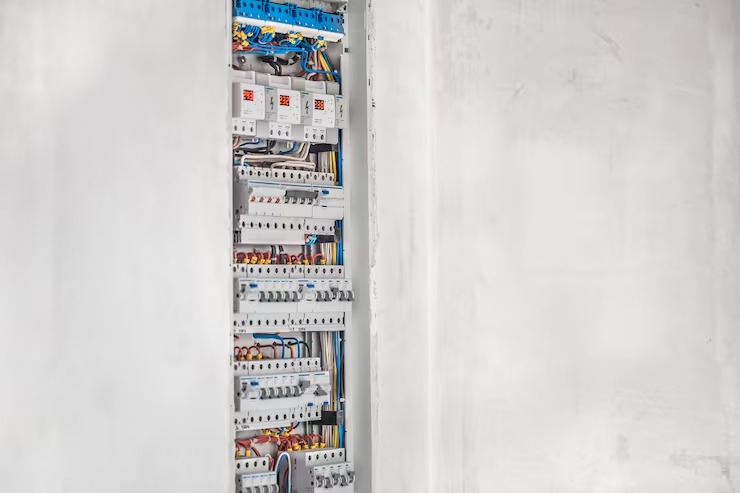
We do a load calculation under the Massachusetts Electrical Code, which means counting what is actually connected to the panel today, not estimating from square footage and not reading the number stamped on the panel cover as if it settles anything. A label tells you what the panel was rated for when it went in. It does not tell you what is drawing power off it now, and it does not tell you what that service can safely carry with a heat pump, a heat pump water heater, and an EV charger added to the mix.
There are two separate problems that get confused constantly, and they have different fixes. One is service capacity, meaning the amperage coming into the house from the utility. The other is breaker spaces, meaning whether there is physical room in the panel for more circuits. A panel can be full of slots and still have plenty of capacity left, in which case a subpanel is the answer. Or it can have open slots and no capacity left, in which case more slots do not help you at all. We tell you which problem you actually have before we price anything.
A real quote for this work includes the load calculation, the service size going in, what has to happen at the meter and the mast, and whether the utility needs to schedule a disconnect. If someone quotes a panel change-out without ever opening the panel, that is worth noticing. The number they gave you was a guess.
When you do not need a new panel
This is the section most electrical contractors skip, and it is the one that matters most. A load calculation on a Hadley property often shows the existing service is adequate for what the homeowner actually wants to add, and there are three real alternatives to a full change-out worth understanding before you spend money on one.
- A right-sized appliance. A heat pump or heat pump water heater selected to match the house, rather than oversized out of habit, draws less than people assume, and the correct equipment choice sometimes closes the gap on its own.
- A load management device. This hardware sheds or limits one load automatically when another is running, which lets an EV charger and a heat pump coexist on a service that could not otherwise carry both running flat out at the same time. It is a fraction of the cost of a service upgrade and it is the right answer more often than people expect.
- A subpanel. Where the actual constraint is breaker spaces rather than amperage, adding a subpanel solves the space problem without touching the service at all.
If your panel can carry what you are asking of it, we will tell you that and price the smaller fix. A homeowner who hears that from us is the homeowner who calls back when a panel upgrade is actually the right answer, and that is a better outcome for both of us than selling work that was not needed.
- A better-matched appliance. A heat pump water heater or a mini-split system sized correctly for the actual load draws less than a straight replacement sized off habit, and sometimes that difference is what keeps the existing panel adequate.
- A load management device. These devices let two loads, an EV charger and an electric dryer for example, share the same available capacity by stepping one down when the other is running, instead of requiring enough headroom for both to run flat out at once.
- A subpanel. When the real problem is breaker spaces rather than total service capacity, adding a subpanel solves it for a fraction of what a full change-out costs, without touching the main service at all.
None of this gets decided by looking at the outside of the panel or guessing from a utility bill. It gets decided by opening the panel, reading what is actually inside it, and running the numbers against the Massachusetts Electrical Code. That is the whole method.
What the work involves
A genuine service change-out touches the conductors that bring power into the house ahead of the main breaker, which is live equipment and not something any homeowner should attempt or be walked through attempting. The utility typically has to schedule a disconnect so the service can be safely worked on, the existing panel, meter socket, and sometimes the mast are replaced with equipment sized correctly for the new service, and everything is tested and closed up before power is restored and the inspection is scheduled. Farm properties with separate outbuilding feeds get evaluated as part of the same job, since a change at the main panel can affect how those feeds are configured depending on the setup.
What we will not do is describe this as a project you handle any part of yourself. There is no safely hedged version of working on live service conductors, and any page or video that walks you through it is leaving something out.
What it costs
A panel upgrade or change-out in Hadley generally runs between {PRICE_LOW} and {PRICE_HIGH}, and where you land in that range depends on several things: the amperage of the new service, whether the drop is overhead or underground, whether the meter socket and mast need to be replaced along with the panel, how far the panel sits from the meter, whether the utility has to schedule a disconnect and how far out that scheduling runs, and whether the panel work is happening on its own or alongside other equipment such as a heat pump or an EV charger install. Farm properties with a separate outbuilding feed can also add scope, since that feed may need to be evaluated or reconfigured as part of the same job.
If you are weighing a panel upgrade against adding an EV charger, it is worth reading how we size for both together before deciding which comes first. We never quote a fixed number before we have done the load calculation, because a number given before that step is a guess, not a quote.
- The size of service going in. Jumping from 100 to 200 amps costs less than sizing up further for a multifamily building.
- Overhead versus underground service. Underground runs cost more because they involve trenching.
- Whether the meter socket and mast also need replacing, which is common on older services.
- How far the panel is from the meter, since a longer conductor run adds cost.
- The utility's disconnect scheduling, which is outside our control and can add time even to a straightforward job.
- Whether the work is done alongside other equipment, such as a heat pump or an EV charger, which can share some labor.
The honest range above is wide because the variables are real, not because we want room to negotiate later. Once we have opened the panel and run the calculation, the number tightens up fast.
Permits and Inspection
Every panel upgrade and change-out we perform in Hadley is permitted and inspected, no exceptions. That is not an extra line item, it is part of what the quote covers from the start. If a bid you are comparing against ours does not mention a permit, that is the detail to ask about before anything else, because skipping it is usually how the cheaper number gets reached. You can review the Massachusetts Electrical Code as adopted for the technical requirements behind the inspection standard [EXTERNAL LINK: Mass.gov page for the Massachusetts Electrical Code as currently adopted].
Get a Quote
If you are not sure whether your Hadley property needs a panel upgrade, a subpanel, or nothing at all, that uncertainty is exactly what the load calculation is for. Call {PHONE} and describe what is on the panel now and what you are trying to add, whether that is a heat pump, an EV charger, a heat pump water heater, or a farm outbuilding that finally needs its own real service. Drew will tell you straight whether the panel is the actual problem before anyone talks about replacing it.
frequently asked questions
How do I know if my panel in Hadley needs to be upgraded or just reorganized?
That depends on whether the limitation is capacity or space. If the service itself is rated too low for what you want to run, a load calculation will show it and a change-out is the real answer. If the panel has enough capacity but no open breaker slots, a subpanel often solves it for less. We will not know which one you have until we open the panel and do the math, not before.
I have a farm property with an outbuilding on its own feed. Does that change the work?
Often, yes. A barn or shop fed separately from the house has its own service equipment and its own load picture, and the house panel can sometimes carry more than it looks like because part of the farm's draw never touches it. We look at the whole property, not just the main panel, before we tell you what needs to change.
Will a heat pump and a car charger both fit on my current 100 amp service?
Sometimes. It depends on what else is already on the panel, how the heat pump is sized, and whether the charger runs on a schedule or a load management device that backs it off when other big loads are running. We run the numbers before we quote anything, and in a fair number of Hadley homes the honest answer is that the existing service holds up.
Do you handle the permit and inspection, or is that on me?
It is on us. A permitted, inspected panel change-out is part of the job, not an add-on, and it is included in every quote we write.
What if my house was converted from a two-family back to a single or has an old second meter?
That shows up more often in Hadley's older farmhouses with additions than you would expect, and it usually means there is abandoned or orphaned service equipment that needs to be accounted for before any new work goes in. We will find it and deal with it rather than build around it.