
Electrical Panel Upgrades and Change-Outs in Belchertown, MA
Electrical panel upgrades in Belchertown
Belchertown has two very different electrical starting points depending on when the house was built, and it matters more than most homeowners realize. A lot of the subdivisions off Route 9 and out toward the reservoir went up in the 1990s and 2000s with 200 amp service and an attached garage already wired – that’s the easy case. The center village and the older farmhouses scattered through town are a different story, often sitting on 100 amp service that was adequate for a 1960s kitchen and nothing more. Before you spend money on a new panel, you want to know which house you actually have.
- Powers Air HVAC, based in Granby, MA
Powers Air does panel upgrades and change-outs as licensed in-house electrical work, under {ELECTRICAL_LICENCE}, not as a referral to someone else’s subcontractor. That matters because the person who looks at your panel, runs the load calculation, and tells you what you need is the same person doing the work – not a call center reading a script and not a sales rep hitting a quota. If the honest answer is that your panel is fine, that’s what you’ll hear.
What Belchertown homes have for service today
The newer construction here – the subdivisions built from the 1990s onward around Bay Road, Federal Street, and the newer developments toward Belchertown – typically came with 200 amp service, a single-family meter with no shared bank, and an attached garage that makes an EV charger run straightforward. These are the friendliest houses in the territory for electrical work: open panel spaces, a clean path from panel to garage, and service capacity that usually has room for a heat pump, a heat pump water heater, and a charger without a fight.
The older housing – farmhouses, converted homes near the town common, and anything built before the 1980s – tends to tell a different story. Many of these are still on 100 amp service, some with an overhead drop that’s decades old, and more than a few have had a subpanel bolted on at some point to handle an addition, a finished basement, or a garage conversion. If you’re a landlord with one of the older two-family conversions, you may also be dealing with a meter bank and shared service that complicates things further. None of this means a change-out is automatic – it means the panel needs an actual look before anyone quotes you anything.
How we work out what the house actually needs
We run a load calculation under the Massachusetts Electrical Code, which means counting what’s actually connected to your panel – the range, the dryer, the water heater, the existing heating system, any existing electric baseboard, the well pump if you have one – not estimating from square footage and not reading a number off the panel label and calling it done. A panel’s label tells you what it’s rated for. It doesn’t tell you what’s already using that capacity or what’s left over.
There are two separate questions here, and they get confused constantly: how much amperage is coming into the house, and how many breaker spaces are open in the panel. A full panel with plenty of service capacity left needs a subpanel, not a new service. A panel with open spaces but a maxed-out service needs the opposite. A quote that doesn’t distinguish between these two things, or one written without anyone physically opening the panel to look, is not a quote you should trust. A real quote tells you the existing service size, the calculated load with your new equipment added, and which of those two problems – or both – you actually have.
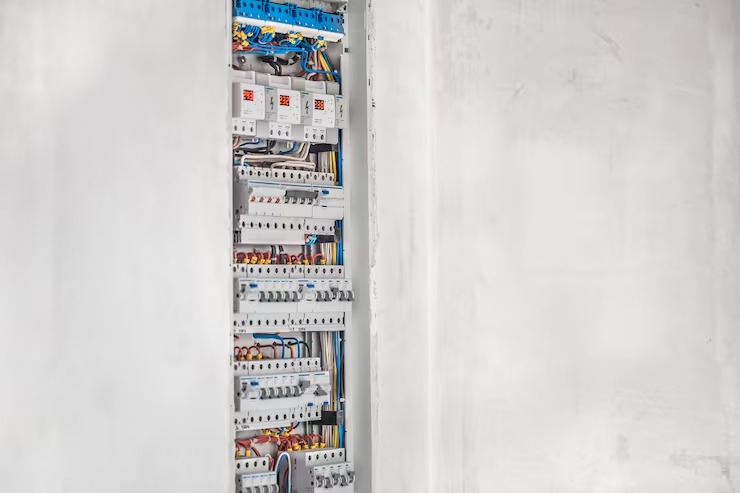
When you do not need a new panel
This is the section most electrical contractors skip, and it’s the one that matters most. A load calculation frequently shows the existing service is adequate for what you want to add, and there are three real alternatives to a full change-out worth understanding before you agree to one.
First, a right-sized appliance. A correctly sized cold-climate heat pump, matched to the house through a proper load calculation rather than oversized out of habit, draws less than people assume, and pairing it with efficient equipment elsewhere can keep you under a panel’s ceiling. Second, a load management device, which sheds one circuit when another is drawing hard – it lets a car charger and a heat pump water heater share a panel that couldn’t support both running flat out at the same time, without touching the service at all. Third, a subpanel, which is the right answer when the problem is breaker spaces rather than amperage – it’s a smaller job, a smaller bill, and it solves the actual problem instead of the assumed one.
A homeowner who learns from us that they don’t need a service upgrade is the homeowner who calls us for the work they actually do need, whether that’s the subpanel, the load management device, or nothing electrical at all. That’s a better outcome for both of us than selling a change-out a house doesn’t require.
- A better-matched appliance. A heat pump water heater or a mini-split system sized correctly for the actual load draws less than a straight replacement sized off habit, and sometimes that difference is what keeps the existing panel adequate.
- A load management device. These devices let two loads, an EV charger and an electric dryer for example, share the same available capacity by stepping one down when the other is running, instead of requiring enough headroom for both to run flat out at once.
- A subpanel. When the real problem is breaker spaces rather than total service capacity, adding a subpanel solves it for a fraction of what a full change-out costs, without touching the main service at all.
What the work involves
When a load calculation does show the existing service is undersized for what you’re adding, a change-out replaces the panel and the service conductors feeding it with equipment rated for the higher amperage, usually stepping a 100 amp service up to 200 amps. This involves the conductors between the meter and the main breaker, which carry power regardless of whether any breaker in the panel is on – that’s why this is licensed work with a scheduled utility disconnect, not a project with a safe do-it-yourself version. We coordinate that disconnect, handle the physical change-out, and get it reconnected and inspected with the house down for power for as short a window as the job allows.
Depending on what we find, the meter socket and the weatherhead or mast may need replacing too, particularly on older overhead services where the equipment has aged along with the panel. We’ll know that before the job starts, not after.
What it costs
A straightforward 100 to 200 amp panel upgrade in Belchertown generally runs {PRICE_LOW} to {PRICE_HIGH}, and several things move that number. Overhead service is usually simpler and less expensive to upgrade than underground, which may require trenching. If the meter socket or mast also needs replacing, that adds to the job. Distance between the meter and the panel location matters, as does whether the utility needs extra lead time to schedule the disconnect. Doing the panel work alongside a heat pump installation or an EV charger often costs less combined than scheduling them as separate jobs, since some of the labor and permitting overlaps. If an EV charger is part of what’s driving the conversation, it’s worth seeing that written up on its own terms too.
What it costs
None of these numbers are fixed before we’ve looked at the panel and run the calculation. Anyone quoting a panel upgrade over the phone without that step is guessing, and a guess is a bad foundation for a job involving your home’s main electrical service.
- The size of service going in. Jumping from 100 to 200 amps costs less than sizing up further for a multifamily building.
- Overhead versus underground service. Underground runs cost more because they involve trenching.
- Whether the meter socket and mast also need replacing, which is common on older services.
- How far the panel is from the meter, since a longer conductor run adds cost.
- The utility's disconnect scheduling, which is outside our control and can add time even to a straightforward job.
- Whether the work is done alongside other equipment, such as a heat pump or an EV charger, which can share some labor.
Permits and Inspection
A service change-out is permitted and inspected work in Belchertown, same as every town in our territory. That’s not optional and it’s not a step a reasonable contractor skips to save you money – it’s the step that confirms the work was done to code and that your insurance and your future buyer’s inspector won’t have questions about it. Any quote you receive from us has the permit and inspection built in from the start. If a competing quote doesn’t mention it, ask why, because the gap is usually where the lower price came from. [EXTERNAL LINK: Massachusetts Electrical Code as adopted, for homeowners who want to read the underlying standard themselves]
Get a Quote
If you’re trying to figure out whether a Belchertown panel can handle a heat pump, a charger, or both, the first step is a look at the panel and a real load calculation, not a guess over the phone. Call {PHONE} and you’ll talk to Drew directly about what your house has and what it actually needs – including, when that’s the honest answer, that you don’t need the upgrade at all.
Signs Your Panel Is Falling Behind
Belchertown homeowners often notice trouble before they think to blame the panel: breakers that trip for no clear reason, warm cover plates, flickering lights when the dryer kicks on. These are signs the panel is straining under demand it wasn’t built for.
- Frequent breaker trips
- Flickering or dimming lights
- Warm panel or outlets
- Burning smell near the panel
frequently asked questions
I have 100 amp service in Belchertown. Does that mean I need a panel upgrade for a heat pump?
Not automatically. A 100 amp service can often carry a single cold-climate heat pump without issue, especially in a house that doesn't already have electric heat, a range, and a dryer all drawing on the same panel. The only way to know is a load calculation that counts what's actually connected to that panel right now. We've told plenty of Belchertown homeowners their existing service is fine for the equipment they want.
What's the difference between a subpanel and a full panel upgrade?
A subpanel adds breaker spaces fed from your existing service – it solves a spaces problem, not a capacity problem. A full panel upgrade (or service upgrade) increases the actual amperage coming into the house, which means new service conductors, usually a new meter socket, and coordination with the utility. If your panel is full but your service has headroom, a subpanel is the cheaper and faster answer.
Can I add an EV charger without upgrading my panel?
Often yes, particularly in Belchertown's newer subdivisions where 200 amp service is standard. Whether it works depends on what else is on the panel and whether there's a clean breaker space and run to the garage. A load management device is also an option if the service is tight – it limits the charger's draw when something else demanding is running, so you get the charger without the service upgrade.
How long does a panel change-out take once it's scheduled?
The work itself is typically a single day, but you should plan for a scheduled power outage during that day, and depending on the utility, there may be a lead time to coordinate the disconnect and reconnect at the meter. We handle that coordination as part of the job.
Do I need a permit for a panel upgrade in Belchertown?
Yes. A service change-out is inspected work in every town in our territory, Belchertown included. Any quote you get should already have the permit built into it – if it doesn't, ask why.