
Does a Heat Pump Need an Electrical Panel Upgrade
- Powers Air HVAC, based in Granby, MA
The short answer
No, a heat pump does not automatically need a new panel. A well-matched system on a house with oil or propane heat often fits on 100 amp service. Some houses do need more capacity, and the load calculation tells you which.
That calculation can be done before you sign anything. If it was not, the quote you are holding is a guess.
What a heat pump actually draws
- Running draw is what the unit pulls from your panel at a given moment. It changes with outdoor temperature, how hard the system is working, and how many indoor units are calling. A cold-climate unit on a mild October day may draw only a few amps. On a design-temperature night in January, it works much harder.
- The nameplate is the label on the outdoor unit. It lists the minimum circuit ampacity and the maximum overcurrent protection. Those figures size the wire and the breaker. They assume worst-case operation and include a safety margin, so they are not what the unit pulls on a normal day. Read the label on your actual model, because a single-zone unit and a large multi-zone unit are very different.
- Calculated load is the number that decides whether your panel is adequate. It is what the electrical code says you must add to the service when you attach this equipment to this house. It is neither the nameplate nor the running draw.
Sizing a panel from the nameplate alone leads to a panel replacement you did not need. Ignoring the nameplate leads to a circuit that cannot carry the unit. The right answer comes from doing the calculation.
Electric backup heat is where the amps are
A compressor is efficient. Resistance heat is not. If the system includes electric auxiliary or strip heat, that is where the large numbers come from. At 240 volts, 5 kilowatts of strip heat draws about 21 amps, and 10 kilowatts draws about 42. A modest ductless system with no strip heat and a ducted system with a 10 kW strip kit are very different electrical projects.
This is one reason sizing matters twice. A properly sized cold-climate system needs less backup, and a smaller backup means a smaller load on the panel. Our heat pump sizing page covers how the load calculation on the heating side works.
How the code counts the load already in your house
- Calculating the house from scratch. The optional method for existing dwellings in section 220.83 counts the general lighting and appliance load, then adds the new heating and cooling equipment at set percentages. It is a tool the code gives an installer. It does not replace measuring the actual house.
- Using measured demand. Section 220.87 lets the existing load be established from recorded demand, either 12 months of utility demand data or a 30 day recording on the service. The code then takes 125 percent of that peak and adds the new load on top. A household that has run on a 100 amp service for twenty years without trouble often has a much lower real peak than a worst-case paper calculation assumes. Ordinary residential bills show energy used, not peak demand, so a recording is often how this gets done.
When 100 amp service will not carry it, and when it will
A 100 amp service at 240 volts is 24,000 volt-amps. A 200 amp service is 48,000. The question is how much of that 24,000 is already spoken for.
100 amp usually works when:
- The house heats with oil, propane or wood, so there is no large electric heating load already on the panel.
- The system is sized to the house with a Manual J, so the compressor load is modest.
- Any electric backup is small, or there is none because the existing oil or propane furnace stays as the backup.
- The house is not also carrying a hot tub, electric vehicle charger, electric range, electric dryer and electric water heater all at once.
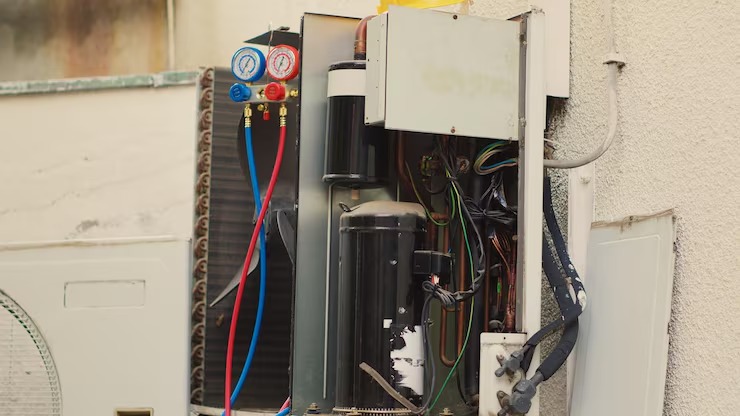
100 amp often falls short when:
- The house already has electric baseboard or an electric furnace on the panel.
- The plan is a ducted system with a large strip heat kit.
- You are adding a heat pump, an EV charger and a heat pump water heater in the same year.
- The existing load is already near the limit.
Slots are not the same as capacity
Why homeowners here are looking at heat pumps
Three ways out that are not a full change-out
A better-matched system
Often the cheapest fix is to change the equipment. A system sized correctly to the house load may have a lower circuit requirement than the one first quoted. Keeping the existing furnace as the backup instead of adding strip heat removes the largest electrical load from the plan. Moving from one large outdoor unit to separate smaller zones can also change how the circuits are laid out.
A load management device
An energy management system limits how much of the service can be in use at once. If the house will rarely run everything together, a device can prevent the combined load from exceeding the service rating. The code recognises this approach in Article 750, and it is also how EV chargers are often installed on tight panels.
The trade-off is real. In a rare overlap, something gets limited or paused, so it only suits a house where that is acceptable. Acceptance can also vary with the inspector and the utility, so it is worth confirming before you commit to it.
A subpanel
A subpanel solves a shortage of breaker spaces. It does not create new service capacity. If your service has headroom and the main panel is simply full, a subpanel can be the right and much cheaper answer. If the service itself is the limit, a subpanel does not fix it, and anyone suggesting otherwise should show you the calculation.
When a full change-out is the right call
Sometimes it is. If the calculated load exceeds the service rating and none of the options above close the gap, upgrading the service is the honest answer. The same goes for a panel that is damaged or has known reliability problems, which is a reason to replace it regardless of the heat pump.
A full upgrade usually involves the utility as well as the electrician, and lead times can depend on them. We will explain the decision and the timeline. How the work is done is not something to attempt yourself, and we do not write it up for that reason.
Permitted and inspected
Panel work and service changes need a permit and an inspection by the town wiring inspector. Powers Air does this electrical work in-house under Massachusetts electrical licence. It is not referred out; the permit is pulled, and the inspection is scheduled as part of the job.
This matters because the cheaper quote is often the one that skips the permit. That shortcut can surface later in an insurance claim or when the house is sold. Ask any contractor who quotes panel work whether the permit is included and who pulls it.
What it costs
Get a Quote
Why homeowners here are looking at heat pumps
The process point
An installer who finds the panel problem after the contract is signed did not do the work up front.
The panel is the first thing a careful contractor looks at. A walkthrough should include opening the panel cover, noting the service size and the available spaces, and running at least a rough load calculation before a price is written. If the first sign of trouble comes after the deposit, one of two things happened. They did not check, or they checked and priced the job low to win it.
Either way, the new cost is now yours to argue about. Ask for these before you sign:
- The load calculation, in writing, with the method named.
- Whether the quote assumes the existing panel stays or goes, and why.
- Who pulls the electrical permit.
- What happens to the price if the panel turns out to need work.