
Electrical Panel Upgrades and Change-Outs in Holyoke, MA
Electrical panel upgrades in Holyoke
A lot of Holyoke’s housing stock went up around the mills, as single-family cottages and triple-deckers built for the workforce that ran them, and a good share of that stock is still running on service sized for a house with a refrigerator, a furnace blower, and not much else. Add a cold-climate heat pump, a heat pump water heater, and sometimes an EV charger to that same 100 amp panel and you find out fast what the service can and cannot carry.
Powers Air does electrical panel upgrades and change-outs as licensed in-house work. Drew holds the electrical licensing for this (license {ELECTRICAL_LICENCE}), and the work is permitted and inspected the same way it would be anywhere else in the territory. This page is about how we figure out whether you actually need a new panel, because a fair number of homes we look at do not.
- Powers Air HVAC, based in Granby, MA
If you’re reading this because a mini-split or heat pump quote came back with “you’ll need a panel upgrade” attached, slow down for a minute. That can be true. It’s also the easiest line in the world to add to a quote without doing the math first, and we’ve seen it done both ways in this same neighborhood.
What Holyoke homes have for service today
The variation in Holyoke’s service size tracks the variation in its housing stock pretty closely. The triple-deckers and converted multifamily buildings near the canals and in the Flats and Churchill neighborhoods often have a meter bank with three separate services feeding one building, sometimes original, sometimes upgraded piecemeal as units turned over. It’s common to find one unit on 100 amps, another on 60 amps from an earlier era that never got touched, and a third with a subpanel stacked on top of the original service from when someone finished a basement or added a unit.
Single-family homes, particularly in the Highlands and up toward the Westfield line, tend to be more consistent, but build era still matters. A house wired in the 1950s or 60s likely came in at 100 amps and may never have needed more until now. Overhead drops are still common on older streets; underground service is more typical where lots were developed or redeveloped later. And whether you’re the owner-occupant or a landlord changes the calculus too — a landlord weighing a panel upgrade against a tenant’s immediate needs is solving a different problem than someone upgrading their own house for a heat pump and a water heater at the same time.
How we work out what the house actually needs
We don’t start from a guess based on square footage, and we don’t take the number printed on the panel label at face value either. What a service is rated for and what’s actually safe to add to it are two different questions, and the only way to answer the second one is a load calculation done under the Massachusetts Electrical Code — adding up what’s actually connected to the house, not what might theoretically be there.
That calculation accounts for existing loads like the electric range, water heater, dryer, and any existing heating equipment, then adds in whatever you’re proposing — a heat pump’s compressor and backup heat strip, a heat pump water heater, a charger if you’re planning one down the road. The result tells us whether the existing service has headroom or whether it’s already tight before you add anything.
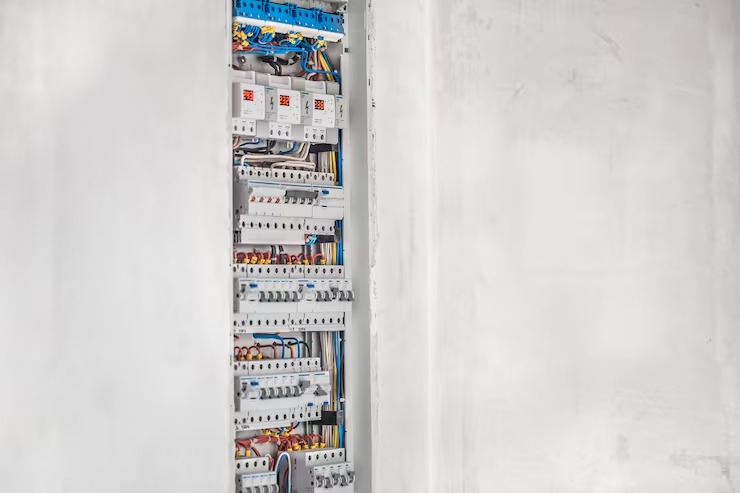
There’s a second question that’s separate from capacity: how many open breaker spaces does the panel physically have. A 100 amp service with plenty of amperage left can still be maxed out on spaces if it’s an old 20-circuit panel that’s already full. That’s a different problem with a different fix, and it matters because a quote that doesn’t distinguish between the two isn’t a real quote. If someone gives you a number for panel work without opening the panel and looking at what’s actually in it, that’s worth being skeptical of.
When you do not need a new panel
This is the part most companies skip, and it’s the part that actually matters. A load calculation frequently comes back showing the existing service is adequate, or close enough that a change-out isn’t the right first move. There are three real alternatives worth understanding before you spend money on a new service:
- A better-matched appliance. A smaller or more efficient heat pump, or a heat pump water heater with a lower-amperage element option, can sometimes bring the total load back under what the panel can handle without touching the service at all.
- A load management device. These devices monitor total demand and shed or limit one circuit when another is drawing hard — commonly used to let a car charger and an electric range or heat pump coexist on a service that couldn’t otherwise support both running at once. It’s a fraction of the cost of a service upgrade and it solves a real capacity conflict without replacing anything upstream.
- A subpanel. If the problem is breaker spaces and not amperage — a full panel on a service with capacity to spare — a subpanel fed from the existing service solves it for far less than a full change-out.
We’d rather tell a homeowner they don’t need the work than sell it to them anyway. If you don’t need a new panel, the honest answer is the one that gets you the equipment that actually solves the problem.
- A better-matched appliance. A heat pump water heater or a mini-split system sized correctly for the actual load draws less than a straight replacement sized off habit, and sometimes that difference is what keeps the existing panel adequate.
- A load management device. These devices let two loads, an EV charger and an electric dryer for example, share the same available capacity by stepping one down when the other is running, instead of requiring enough headroom for both to run flat out at once.
- A subpanel. When the real problem is breaker spaces rather than total service capacity, adding a subpanel solves it for a fraction of what a full change-out costs, without touching the main service at all.
None of this is guesswork done from the driveway. It takes opening the panel, reading what’s actually installed, and running the numbers — which is also why we don’t quote panel work sight unseen.
What the work involves
When a change-out is genuinely the right call, the job replaces the service entrance equipment — the panel itself and, depending on condition, the meter socket and service mast — and increases the service capacity to match what the load calculation shows the house needs. This involves the conductors that carry power into the house ahead of the main breaker, which is live equipment that only a licensed electrician should be working on, and it’s not something we’re going to walk through step by step here. Your job is understanding the decision, not the procedure. Ours is doing the work correctly and safely.
Depending on the scope, the utility may need to coordinate or schedule a disconnect, and the work is inspected by the local wiring inspector before it’s energized. We handle that coordination as part of the job.
What it costs
A straightforward panel change-out on a single-family home typically falls between {PRICE_LOW} and {PRICE_HIGH}, and we’ll give you a real number only after we’ve opened the panel and run a load calculation. What moves the price inside that range: the amperage of the new service (100 amp replacements cost less than a jump to 200 amp), whether the drop is overhead or underground, whether the meter socket and mast need replacing alongside the panel, how far the panel is physically from the meter, whether the utility has to schedule a disconnect before we can start, and whether the panel work is happening alongside a heat pump, water heater, or EV charger install that can share some of the labor. Multifamily buildings with a meter bank add coordination with each unit, which also factors in. We don’t quote a flat number before seeing the equipment, and anyone who does hasn’t actually looked at what they’re pricing.
- The size of service going in. Jumping from 100 to 200 amps costs less than sizing up further for a multifamily building.
- Overhead versus underground service. Underground runs cost more because they involve trenching.
- Whether the meter socket and mast also need replacing, which is common on older services.
- How far the panel is from the meter, since a longer conductor run adds cost.
- The utility's disconnect scheduling, which is outside our control and can add time even to a straightforward job.
- Whether the work is done alongside other equipment, such as a heat pump or an EV charger, which can share some labor.
If you’re weighing a panel upgrade against a heat pump install that triggered the question in the first place, it’s worth having both conversations at once. Sometimes the right-sized heat pump avoids the upgrade entirely.
Permits and inspection
Panel upgrades and service change-outs are permitted work in Holyoke, as they are everywhere in the territory we serve, and the finished job is inspected by the local wiring inspector before it goes live. That’s not optional and it’s not paperwork we skip to save you money. A quote that doesn’t include the permit is a quote that’s going to cost you more later, either when you go to sell the house or when something goes wrong and the insurance company asks for the inspection record that doesn’t exist. Ours includes it. [EXTERNAL LINK: Massachusetts Electrical Code as adopted, for homeowners who want the underlying requirements]
One note specific to Holyoke: Holyoke Gas and Electric operates as a municipal utility rather than an investor-owned one, which means its service upgrade process and any incentive programs that touch electrical work run differently than they do in surrounding towns. We’re not going to guess at specifics here until that process is confirmed on our end — when we scope your job, we’ll walk you through exactly what HG&E requires for your situation.
Get a quote
If you’re not sure whether your Holyoke home needs a new panel or something smaller, that’s exactly the question to bring to us before anyone sells you equipment. We’ll open the panel, run the load calculation, and tell you straight whether a change-out, a subpanel, or a load management device is the right fix. Call Powers Air at {PHONE} or reach out through the site to get a real answer, not a guess based on your square footage.
frequently asked questions
How do I know if my Holyoke home needs a panel upgrade?
The only reliable way is a load calculation that adds up everything actually connected to the house plus whatever you're planning to add. A panel's amperage rating and a full load calculation often tell different stories, which is why we open the panel and run the numbers instead of guessing from square footage or the label.
Is 100 amp service enough for a heat pump?
Sometimes. It depends on what else is already on that service — electric range, water heater, dryer, existing heating — and how big a heat pump and backup heat the house needs. Plenty of 100 amp Holyoke homes can take a right-sized heat pump with no panel work at all.
What's the difference between needing more amperage and needing more breaker spaces?
Amperage is how much total power the service can carry. Breaker spaces are physical slots in the panel for circuits. A service can have plenty of capacity left but a full panel, in which case a subpanel solves it for far less than a full service change-out.
Does Powers Air do the electrical work itself or refer it out?
We do it in-house. Drew holds the electrical licensing for panel upgrades, change-outs, and related work, and it's performed and inspected the same as any licensed electrical job in Massachusetts.
Is this work permitted and inspected in Holyoke?
Yes. Panel upgrades and service change-outs require a permit and a final inspection by the local wiring inspector before the work is energized. That's included as part of the quote, not an add-on.