
Furnace Repair and Heating Service in Amherst, MA
Furnace Repair and Heating Service in Amherst
- Powers Air HVAC, based in Granby, MA
What Amherst homes are working with
We handle furnace installation and replacement as licensed work, not a side job bundled in with duct cleaning or a filter subscription. That means a load calculation before a proposal, equipment sized to the house rather than to the failure that just happened, and permitted, inspected work whenever the job involves a gas or oil combustion appliance. See our full approach to furnace installation and replacement, which is the same standard everywhere we work.
What Amherst homes are working with
The first thing that changes the advice is the fuel. Some streets here have natural gas service, while many houses, especially on the outer edges of town, run on delivered oil or propane. That matters for heat pump economics. A heat pump replacing an oil furnace displaces a fuel that costs more per unit of heat than gas, which is why the payback conversation here often looks better than it does in a gas town. We check what a house actually burns before we say anything about savings.
The second thing is the distribution system. Older houses near the center often have hot water or steam radiators and no ductwork behind the walls. Those homes are usually strong candidates for ductless heat pumps, which run a small line set through the wall rather than requiring a duct system. In houses that do have ductwork, the question becomes whether the existing ducts can move the air a heat pump needs, which depends on static pressure and duct size, not on how the ducts look.
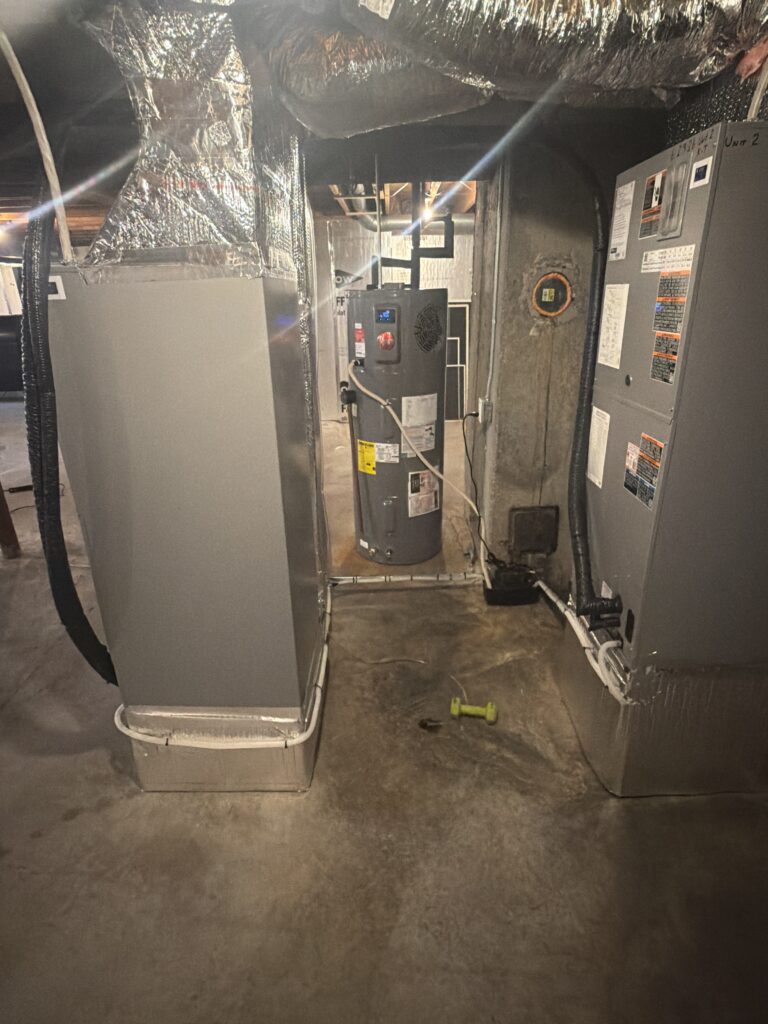
The rental and multifamily stock changes who is asking. Landlords and property managers often make zone-by-zone decisions on buildings that were carved into units over decades, with heating systems that never quite followed the floor plan. We work with those owners the same way we work with homeowners: one unit at a time, with a clear reason for each decision.
The variables that decide the recommendation:
- Gas service, or oil and propane
- Existing ductwork, radiators, or nothing at all
- Build era and how the house has been altered since
- House size, lot exposure, and insulation
- Owner occupied or rented, and how many units
How we size and specify the system
Every recommendation starts with a Manual J load calculation. It estimates how much heat a specific house loses on a design day, based on its walls, windows, air leakage, orientation, and insulation. Without that number, a contractor is guessing, and guessing is where most bad installs begin.
Oversizing is the most common failure we see in other people’s work. A unit that is too large short-cycles, runs in bursts, and never dehumidifies the house properly. The rooms closest to the unit feel hot, the rooms farthest away stay cold, and the equipment wears out sooner. Bigger is not safer. It is just less comfortable.
Cold-climate performance matters here too. A heat pump’s capacity drops as outdoor temperatures fall, so we look at HSPF2 and cold-climate capacity ratings, not just the headline efficiency number, and we plan for backup or auxiliary heat on the coldest nights when a system needs it.
A proper quote should include:
- The load calculation, or a clear reason it was not needed
- Equipment model, capacity at design temperature, and efficiency ratings
- Line set length and route, condensate drainage, and mounting locations
- Electrical requirements, and whether the panel needs work
- Warranty terms, and who performs the labour
A bid with no load calculation behind it is a warning sign. It means the number came from square footage or a guess, and you should ask why.
What the work involves
Repair calls start with a diagnosis of the actual fault rather than a parts swap. Most furnace failures come down to a short list: ignition, flame sensing, the blower motor or capacitor, a pressure switch, or a control board. We tell you what failed, what the fix would cost, and how long that fix is likely to last, then leave the decision with you.
When replacement is the right call, the work usually covers removing the old equipment, setting the outdoor and indoor units, running the line set, sealing the wall penetration, draining condensate correctly, and commissioning the system with charge and airflow checks. Plumbing work is handled by our trusted subcontractors. Electrical work, where it is needed, is done in-house under Powers Air’s own licensing, and it is permitted and inspected.
What it costs
- Number of zones and indoor units
- Indoor unit type, ducted or ductless
- Line set length and the route through the building
- Electrical service capacity, and whether the panel needs upgrading
- Access, including tight basements, upper floors, and exterior wall mounting