
Heat Pump Installation in South Hadley, MA
Walk the blocks around the Village Commons or up toward Mount Holyoke and you will find a lot of houses built before 1950 with no central air and, in a good number of cases, no ductwork of any kind – steam or hot water radiators doing the heating and window units limping through August. Beyond the old center, the post-war neighborhoods have forced-air systems but most of them are still paired with an oil or propane furnace, because South Hadley is not a gas town for large stretches of its footprint. Those two facts together are why heat pumps get asked about here more than almost anything else we install.
- Powers Air HVAC, based in Granby, MA
Heat Pump Installation in South Hadley
We install ducted and ductless heat pump systems across South Hadley, from single-zone mini-splits added to one problem room to full whole-house conversions that replace an oil furnace as the primary heat source. The work is done by Drew directly or under his direct oversight, not handed to a rotating crew, which matters most on jobs where the house has an unusual layout, a tight mechanical room, or a mix of radiant heat and forced air that needs a plan rather than a standard package.
South Hadley’s housing stock runs from 19th-century homes near the center and the college to ranches and split-levels built in the decades after, plus a real amount of rental and faculty-owned property. Each of those calls for a different approach to sizing, zoning, and where the outdoor equipment actually goes, and that is the conversation we have before any equipment gets specified.
What South Hadley Homes Are Working With
The single biggest variable in this town is what’s already in the basement or the closet doubling as a mechanical room. A lot of the older housing near the Village Commons and the college was built for steam or hot water radiators, which means there is no existing ductwork to tie into – that is the clearest case for a ductless system, because you are not paying to add duct runs through plaster walls and finished ceilings just to deliver air. Homes built from the 1950s onward generally do have ductwork, but it was almost always sized for a furnace and air conditioner, not a heat pump, and that affects static pressure and airflow decisions more than most quotes account for.
The second variable is fuel and ownership. A lot of South Hadley runs on delivered oil or propane rather than natural gas, which changes the math on a heat pump conversion in a way it would not in a gas-served town – you are comparing electricity against a fuel that is already expensive and gets delivered on a schedule you don’t control. And because South Hadley has a meaningful rental and faculty-housing market, we regularly spec jobs for landlords who are weighing upfront cost and tenant turnover differently than an owner-occupier planning to stay fifteen years. Those are two different conversations and we have both of them straight, without steering either one toward the bigger-ticket answer.
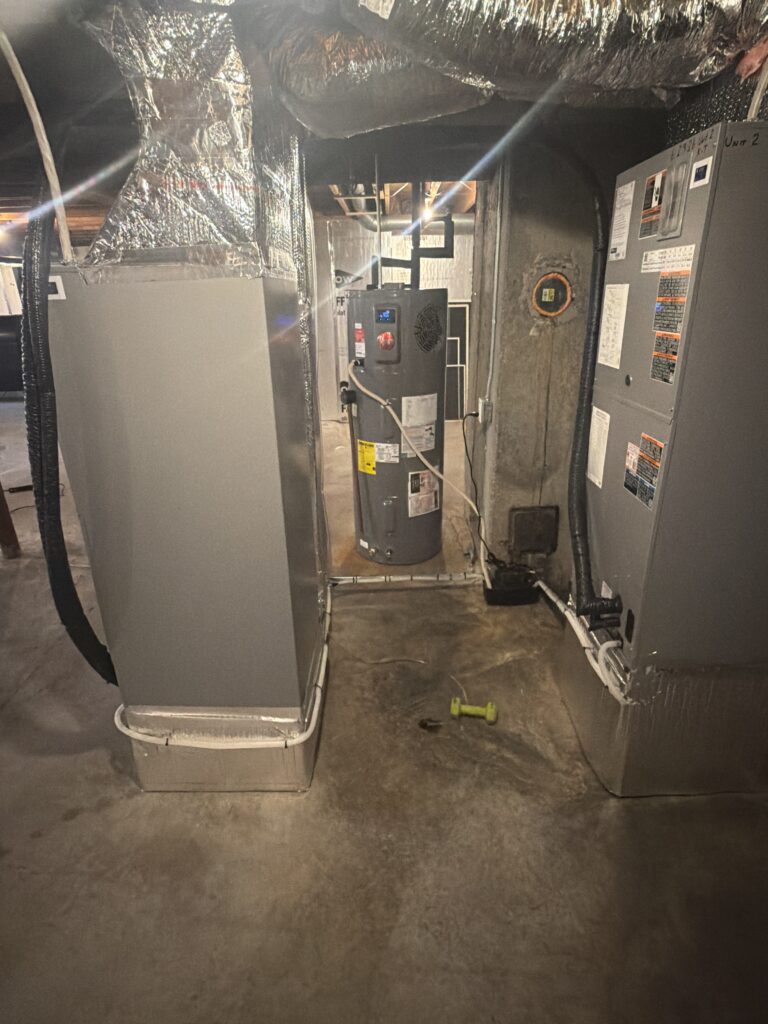
How We Size and Specify the System
Every job starts with a load calculation, not a tape measure and a guess. A Manual J calculation looks at your square footage, insulation, window area, orientation, and air leakage and tells us how much heating and cooling capacity the house actually needs, room by room if it’s zoned. That number is what drives equipment selection – not the size of the old furnace, not what a neighbor has, and not a rule of thumb based on square footage alone.
Oversizing is the single most common mistake in this industry and it does not make a house more comfortable – it makes it less so. An oversized heat pump short-cycles, meaning it blasts on, satisfies the thermostat fast, and shuts off before it has dehumidified the space or stabilized the temperature. That cycling wears on components and leaves rooms swinging between too warm and clammy. The right-sized system runs longer at lower output, which is exactly how these units are designed to perform and why the equipment ratings assume it.
Cold-climate performance is the other piece people genuinely worry about, and reasonably so if you’ve lived through a February here. Modern cold-climate heat pumps are rated using HSPF2 and have published capacity curves down to five degrees and below – they do not simply stop working at zero, but their output does decline as temperature drops, and a correctly sized system accounts for that decline rather than getting caught by it. For homes where we don’t want to bet the whole heating season on the heat pump alone, we spec backup or auxiliary heat – sometimes the existing furnace staying in place as backup, sometimes electric resistance strip heat – sized to cover the gap on the coldest nights. A quote that skips the load calculation and just names a unit size is a quote you should question, because there is no way to responsibly recommend equipment without that math behind it.
What the Work Involves
For a ductless installation, that means mounting indoor heads where they will actually move air through the room, running refrigerant line sets to the outdoor condenser within the manufacturer’s length and lift limits, setting a condensate drain that won’t freeze or back up, and locating the outdoor unit somewhere it can breathe and shed snow without you shoveling a path to it every storm. For a ducted or central heat pump replacing an oil furnace, we also evaluate the existing ductwork for static pressure and leakage, because old ducts sized for a furnace blower often restrict a heat pump’s airflow more than people expect.
If your electrical service is older or close to capacity, we look at that too, since heat pumps and backup heat strips both draw on the panel. Powers Air holds the electrical licensing to handle panel work directly – we don’t subcontract that out and hand you off to someone else’s schedule. Any electrical work tied to the installation is pulled under permit and inspected, which is also true of the mechanical permit for the heat pump itself. That’s not a formality we add on top of the job – it’s what separates a legitimate installation from the cheaper quote that skips it.
- A load calculation and walkthrough to confirm zone locations
- Mounting the outdoor condenser and indoor units
- Running refrigerant line sets within the manufacturer's length and elevation limits
- Setting up a proper condensate drain
- Dedicated electrical circuits, including a check on panel capacity
- Commissioning the system and a walkthrough of the controls
Permits and Inspection
South Hadley requires a mechanical permit for heat pump installation and, where applicable, an electrical permit for any panel or circuit work tied to it. Both get pulled before work starts and both get inspected before the job is called finished. Skipping that step is how homeowners end up with equipment that is hard to insure, hard to sell against, and occasionally hard to even get serviced by a second contractor who won’t touch unpermitted electrical work. We build the permit timeline into the schedule we give you up front rather than treating it as an afterthought.
What It Costs
Most heat pump installations in South Hadley land between {PRICE_LOW} and {PRICE_HIGH}, and where a given job falls in that range depends on specifics, not guesswork. A single-zone mini-split in a small addition costs a lot less than a multi-zone system replacing whole-house oil heat. Line set run length and whether we’re routing them through finished walls or an open basement affects labor. Whether your electrical panel has capacity to spare or needs upgrading first is a real cost variable, and so is site access – a condenser location with easy clearance costs less to install than one requiring extra pad work or a tricky mounting spot. We give you a number after we’ve looked at the house and run the load calculation, not before.
Rebates and Incentives
Mass Save offers incentives for qualifying heat pump installations, and the program is genuinely worth understanding before you finalize a system, because the rules and amounts change and eligibility depends on the specifics of your home and equipment. We’re glad to walk through what applies to your situation as part of the quote. For current program details, see masssave.com [EXTERNAL LINK: official Mass Save program site for current rebate rules and eligibility] or our own overview at Mass Save heat pump rebates.
Get a Quote
If you’re trying to figure out whether a ductless system makes sense for a house with no ducts, whether your existing ductwork can handle a heat pump, or what backup heat should look like for a Western Mass winter, that’s the conversation to have before any equipment gets ordered. Call {PHONE} to set up a visit, or reach out through the site. You’ll be talking with Drew, not a call center reading from a script.
frequently asked questions
Do heat pumps actually work in a Massachusetts winter?
Yes, provided the system is a cold-climate rated unit and sized correctly. Modern cold-climate heat pumps carry published capacity ratings well below zero degrees, and a load calculation accounts for the capacity drop at low temperatures rather than ignoring it. Where it makes sense, we spec backup heat to cover the coldest stretches so you're never relying on a single thin margin.
My house has radiators and no ductwork. Can I still get a heat pump?
That's the most common situation we run into near South Hadley's older center and the college, and it's exactly the case ductless mini-splits are built for. We run refrigerant line sets to wall or ceiling-mounted indoor units instead of retrofitting duct runs through plaster and finished spaces.
Is a heat pump worth it if I'm on oil or propane, not gas?
For a lot of South Hadley this is where the economics genuinely favor electrification, since you're comparing an electric heat pump against delivered fuel that's already priced higher and scheduled on someone else's timeline rather than against cheap natural gas. The specific comparison depends on your current usage and your electric rate, which we can walk through.
Will Powers Air handle the rebate paperwork?
We'll help you understand what Mass Save incentives might apply to your project and make sure the equipment and installation meet program requirements, but the rebate program itself is run through the utility sponsors, not through us. Current rules and amounts are on masssave.com.
I'm a landlord with a rental property here. Does the sizing conversation change?
It does, somewhat. Landlords are often weighing upfront cost against tenant turnover and maintenance calls differently than an owner who plans to stay long term, and that can affect zone count and equipment tier. The load calculation and the permit requirements don't change either way.