
Electrical Panel Upgrades and Change-Outs in Easthampton, MA
Electrical panel upgrades in Easthampton
Easthampton has two electrical personalities living on the same streets. There are the older single and two family homes where the service has not been touched since it was converted from fuses to breakers decades ago, and there are the converted mill buildings where a single large commercial service now feeds a stack of residential units that were never part of its original design. Both situations run into the same wall once a homeowner wants a cold-climate heat pump, a heat pump water heater, and an EV charger on the same property.
Drew handles this work directly, under his own electrical licensing ({ELECTRICAL_LICENCE}), not as something Powers Air farms out to someone else and hopes turns out well. That matters here because the honest answer is not always a new panel, and you want the person answering that question to be the same person who would do the work if the answer were yes.
- Powers Air HVAC, based in Granby, MA
This page walks through how we figure out what a given Easthampton property can actually carry, when a panel change-out is the real answer, and when it is not. It also covers what the work involves in plain terms, what it costs, and what permitting and inspection look like, because all of that should be part of the conversation before any wrench touches anything.
What Easthampton homes have for service today
A lot of Easthampton’s single-family housing stock dates to a period when 100 amp service was standard and nobody was planning for a heat pump water heater or a Level 2 charger in the garage. That 100 amp panel was adequate for the electric range, dryer, and lighting load it was designed around. It gets tested the moment you start adding appliances that were not part of the original plan, and the test is not about whether the panel looks full, it is about whether the math behind it still works.
The other half of the picture is the converted mill properties, where a building that was wired for industrial or commercial use now carries residential units off a service and distribution system sized for a completely different purpose. These buildings often have meter banks feeding individual unit subpanels that were added at different times by different people, which means the paper trail on what is actually connected where is not always reliable. We also see a fair number of properties where additions and basement conversions stacked a second subpanel onto an original service without anyone recalculating whether the service itself could support it. Whether you occupy the house yourself or you are a landlord weighing a tenant’s request for EV charging changes the priority but not the diagnosis. The diagnosis comes first either way.
How we work out what the house actually needs
The Massachusetts Electrical Code has a defined method for figuring out what a service needs to support, and it is called a load calculation. It is not a guess based on square footage and it is not a number copied off the panel label. It counts the general lighting and receptacle load, the fixed appliances actually installed, the HVAC equipment, and anything else drawing power from that panel, and it applies the demand factors the code allows for how those loads realistically overlap. That number tells you what the house needs. It is a different number from what the existing service is rated to deliver, and a different number again from how many physical breaker spaces are open in the panel.
Those three things get conflated constantly, and it is worth being precise about them. A panel can have plenty of open breaker spaces and still be undersized for new load, because capacity is about the service rating, not the slots. Conversely a panel can be completely full and still have room on the service, in which case a subpanel is the fix, not an upgrade. A quote that proposes a panel change-out without anyone having opened the panel, counted what is on it, and run the numbers is not a quote you should trust. That is the warning sign worth remembering from this whole page.
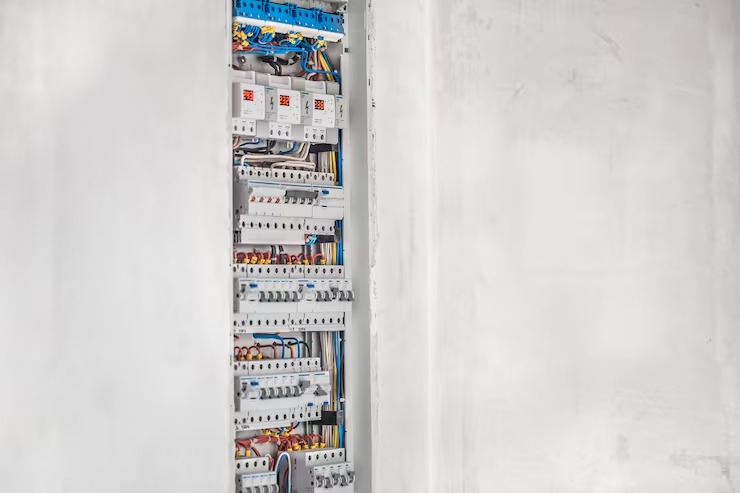
When you do not need a new panel
This is the section most electrical contractors skip, and it is the one that matters most. A load calculation on an Easthampton property frequently comes back showing the existing service is adequate for what the homeowner actually wants to add. When that happens, there are three real alternatives to a full change-out, and all three cost less than replacing the service.
The first is matching the appliance to the house instead of the house to the appliance. A right-sized heat pump water heater or a heat pump system selected with its actual electrical draw in mind can often fit within existing capacity where an oversized or poorly matched unit would not. The second is a load management device, which allows something like an EV charger and an electric range or a heat pump to share capacity by shedding one load automatically when another is running, rather than requiring the service to support both at full draw simultaneously. The third is a subpanel, which solves a spaces problem rather than a capacity problem. If the service has room but the panel itself is full, adding a subpanel gets you the breaker space you need without touching the service at all.
A homeowner who calls expecting a panel change-out and learns they only need a load management device or a subpanel has just saved real money, and that is the kind of call we would rather make correctly than pad.
- A better-matched appliance. A heat pump water heater or a mini-split system sized correctly for the actual load draws less than a straight replacement sized off habit, and sometimes that difference is what keeps the existing panel adequate.
- A load management device. These devices let two loads, an EV charger and an electric dryer for example, share the same available capacity by stepping one down when the other is running, instead of requiring enough headroom for both to run flat out at once.
- A subpanel. When the real problem is breaker spaces rather than total service capacity, adding a subpanel solves it for a fraction of what a full change-out costs, without touching the main service at all.
When the load calculation does show the service itself is the constraint, that is when a change-out is the honest recommendation, not before.
What the work involves
A service change-out replaces the equipment that brings power into the house and distributes it, up to and including the main panel, and in many cases the meter socket. This work involves the service conductors that remain energized up to the main breaker even when that breaker is off, which is why it is performed only by a licensed electrician and always coordinated with the utility for the disconnect and reconnect. We are not going to walk through the procedure here, because there is no responsible, hedged version of that explanation for a homeowner to follow. Your job in this decision is understanding what gets replaced and why, not the mechanics of doing it.
What you should expect to understand is the plan: the new service size, whether the meter location and mast are staying or moving, how the new panel will be laid out and labeled, and what inspection will confirm before anything is energized for normal use.
What it costs
A straightforward panel change-out on a single-family Easthampton home typically runs in the range of {PRICE_LOW} to {PRICE_HIGH}, and several things move that number in either direction. The size of service going in matters, since jumping from 100 amp to 200 amp is a bigger job than a like-for-like replacement. Overhead versus underground service changes the labor involved, and underground work usually costs more. Whether the meter socket and mast need replacing alongside the panel adds to the job, as does the distance between the meter and the panel location inside the house. The utility’s scheduling for the disconnect and reconnect is outside our control and can affect timeline more than cost. And if the panel work is happening alongside other equipment, like a heat pump installation or EV charger installation, bundling the electrical scope often makes more sense than doing it in two separate visits.
We will not give you a number without seeing the panel and running the calculation first. Anyone who quotes a service change-out over the phone without that step is quoting a guess.
- The size of service going in. Jumping from 100 to 200 amps costs less than sizing up further for a multifamily building.
- Overhead versus underground service. Underground runs cost more because they involve trenching.
- Whether the meter socket and mast also need replacing, which is common on older services.
- How far the panel is from the meter, since a longer conductor run adds cost.
- The utility's disconnect scheduling, which is outside our control and can add time even to a straightforward job.
- Whether the work is done alongside other equipment, such as a heat pump or an EV charger, which can share some labor.
Permits and inspection
A service change-out requires a permit and a wiring inspection in Easthampton, as it does everywhere in our service territory, and that is not paperwork for its own sake. Inspection confirms the work meets code before the utility reconnects permanent power and before you are living on it. Any quote you get for this work should already include the permit and inspection as part of the job, not as a separate line item you have to ask about. If it does not mention either one, ask why.
For the specifics of what the Massachusetts code requires on service equipment and conductor sizing, the [EXTERNAL LINK: Massachusetts Electrical Code as adopted by the Board of State Examiners of Electricians, for homeowners who want the underlying code requirements] is the primary source.
Get a quote
If you are planning a heat pump, a heat pump water heater, an EV charger, or a renovation that is going to open up walls anyway, the panel conversation is worth having early rather than after the fact. Call Powers Air at {PHONE} and we will walk through what your Easthampton property has today, run the load calculation, and tell you honestly whether you need a new panel, a subpanel, a load management device, or nothing at all. See our full electrical panel upgrade services or the broader list of Easthampton services we provide.
Ready to Move Forward in Easthampton
Thinking about a panel upgrade for your Easthampton home? We’ll walk the property, look at your current service, and give you a straight answer about what’s actually needed. No pressure toward a bigger job than the house calls for.
- On-site evaluation of your existing panel
- Clear explanation of options and next steps
- Honest advice before any work begins
frequently asked questions
How do I know if my Easthampton home needs a panel upgrade or just a subpanel?
It comes down to whether the limit is capacity or spaces. If the main service can carry the additional load but the panel is physically full, a subpanel solves it. If the service itself is maxed out, you need a change-out. A load calculation tells you which problem you actually have, and it is usually worth doing that math before assuming the bigger job is required.
Can a 100 amp panel run a heat pump, a heat pump water heater, and a car charger?
Sometimes, depending on what else is already connected and how those loads are managed. A load calculation that accounts for everything on the panel, not just a square footage guess, is the only honest way to answer that for a specific house. We have seen 100 amp services handle all three with a load management device, and we have seen them need an upgrade.
Do mill building conversions in Easthampton have different electrical issues?
Often yes. A lot of these buildings carry commercial-scale service equipment feeding what are now residential units, and the original distribution was not designed around individual unit loads like heat pumps or EV charging. Each unit needs to be evaluated on its own service, not assumed to match a typical single-family house.
Is panel work during a renovation cheaper than doing it separately?
It is usually more efficient, not necessarily cheaper line for line, because walls are already open and access that would otherwise require extra labor is already there. If you are planning renovation work, it is worth having the electrical conversation before the walls close, not after.
Will the utility need to be involved in my panel upgrade?
For most service upgrades, yes, because the utility owns the drop and the meter equipment ahead of your panel, and disconnecting and reconnecting service requires their scheduling. That coordination should be part of what your contractor handles and part of what is reflected in your timeline.