
Furnace Installation and Replacement in Amherst, MA
- Powers Air HVAC, based in Granby, MA
Furnace Installation and Replacement in Amherst
What Amherst homes are working with
Amherst’s housing stock splits pretty cleanly into two eras. There’s the older center of town and the neighborhoods around it, originally steam or hot water heat, much of it later converted to forced hot water with a cast iron boiler and never touched by a furnace at all. Then there’s the postwar and later construction with actual ductwork already built into the walls, usually an oil-fired furnace in the basement, or a propane unit where the lot never got gas service. A meaningful share of this territory has no natural gas main running down the street, so the fuel decision is delivered oil, propane, or electric, not a simple like-for-like furnace swap.
The other variable is who’s actually making the call. A large rental and multifamily stock means a good share of our furnace calls come from property managers and landlords deciding zone by zone, often in buildings that were carved into two or three units decades ago with a heating system that never quite followed the new walls. On the other side there’s a well-off owner-occupier segment in older homes with a genuine interest in getting off oil, sometimes as a straight furnace replacement, sometimes as part of a longer conversation about a heat pump doing most of the work with the furnace kept on as backup for the coldest days. Both buyers need the same thing from us: a straight answer about what the building can actually support, not a stock recommendation.
How we size and specify the system
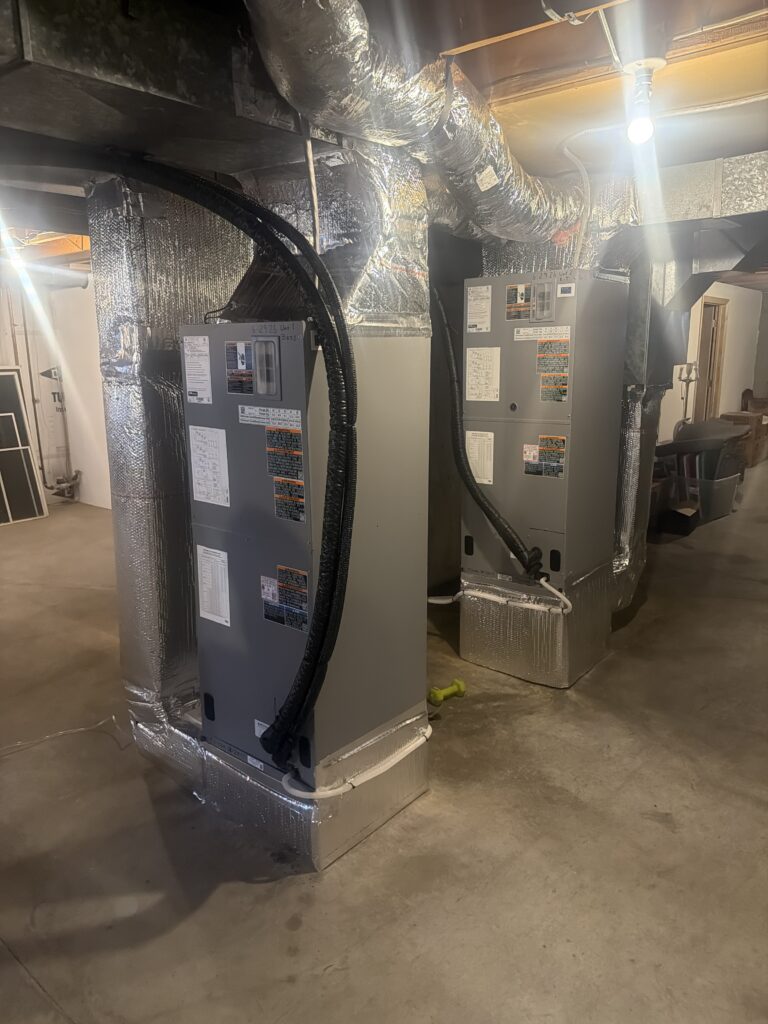
Every furnace we install starts with a Manual J load calculation, room by room, not a rule of thumb based on square footage or what the old unit happened to be rated at. Oversizing is the single most common mistake in this trade, and it doesn’t make a house more comfortable, it makes it less comfortable. A furnace that’s too big short-cycles: it fires, satisfies the thermostat fast, and shuts off before it’s actually distributed even heat through the house or run long enough to manage humidity. That shows up as hot and cold rooms, more noise, more wear on the blower and igniter from constant starts and stops, and a shorter equipment life even though the unit looks brand new. For more on how this works, our guide to load calculations and sizing walks through the math.
A proposal that skips the load calculation and just names a BTU number is a warning sign, not a shortcut. A quote worth trusting should include the calculated heating load for the house, the specific make and model with its AFUE rating, the venting type (direct vent versus a lined chimney), whether the existing ductwork can handle the static pressure of the new equipment or needs modification, and what permits and inspections are included. If a bid doesn’t show its work, ask why.
What the work involves
- Removing and disposing of the old furnace, along with any associated oil tank or gas line modifications
- Sizing and, where needed, modifying supply and return ductwork so static pressure matches the new equipment
- Installing proper combustion air and venting: direct vent PVC for a high-efficiency condensing furnace, or a lined chimney for a conventional one
- Setting up condensate drainage for high-efficiency furnaces, which produce acidic condensate that needs to go somewhere specific, not just the nearest floor drain
- Pulling permits and scheduling the required inspections
- Commissioning the system: verifying gas pressure or oil nozzle sizing, airflow, and temperature rise against manufacturer specs before we call the job done
What it costs
- Whether it's a straight swap or a fuel conversion, oil to gas, oil to propane, or adding a heat pump into the mix as primary or backup heat
- Ductwork condition, and whether the existing supply and return can handle the new unit or need rework
- Venting type, direct vent versus relining an existing chimney
- Electrical service, since some high-efficiency furnaces and any accompanying heat pump equipment need panel capacity that older services don't have
- Access: basement height, oil tank removal, and how far the equipment has to travel from the truck
Permits and Inspection
Get a Quote
If you’re weighing a repair against a replacement, or trying to figure out whether your next furnace should be the last fossil fuel appliance you buy for this house, call 413-339-3194 and we’ll come look at it in person, whether you’re in Amherst proper or one of the surrounding towns. A quote worth trusting starts with someone walking the basement and running the numbers, not a price quoted sight unseen over the phone. See our Amherst service page for everything else we handle in town.