
Electrical Panel Upgrades and Change-Outs in Chicopee, MA
Electrical panel upgrades in Chicopee
A lot of Chicopee’s housing stock, from the triple-deckers near the river to the post-war capes further out, was wired for a 100 amp service at a time when nobody was running a heat pump, a heat pump water heater and an EV charger off the same panel. That combination is common now, and a 100 amp service often cannot carry all three without some intervention. The question is what kind of intervention, and that is a different answer for almost every house we look at.
Powers Air does panel upgrades and change-outs as in-house, licensed electrical work under {ELECTRICAL_LICENCE}, not as something we hand off to a subcontractor and manage from a distance. Drew is the person who pulls the permit, opens the job, and signs off on it with the inspector. If you’re in Chicopee and trying to figure out whether your panel can carry what you want to add, that’s the conversation we’re set up to have.
- Powers Air HVAC, based in Granby, MA
This page is written to answer the question honestly before it tries to sell you anything. A good number of the calls we get about panel upgrades end with us telling the homeowner they don’t need one. That’s not a bad outcome for us. It’s the reason people call us back when they do need the work.
What Chicopee homes have for service today
Chicopee’s electrical service sizes track its building eras pretty closely. The mill-era two and three families along the Chicopee River and through Chicopee Center were often built or rewired in the 60 to 100 amp range, frequently with a meter bank serving multiple units off one service drop, or occasionally with each unit metered separately but sharing a tight electrical room. Post-war single-family neighborhoods built in the 1950s and 60s tend to sit at 100 amps, upgraded piecemeal over the decades as owners added central air or a hot tub or a garage subpanel. Newer construction and recent full renovations are more likely to already be at 150 or 200 amps.
The recurring technical problem in Chicopee specifically is the two and three family configuration. When a triple-decker has one service feeding three units, or three services feeding one structure with a shared mast, adding a heat pump system to one unit or a car charger to the owner’s unit changes the load picture for the whole building, not just the unit in question. We also see a fair number of properties where an addition or a converted attic picked up a subpanel fed from an already-strained main, and nobody re-ran the numbers when it went in. Whether you occupy the building or rent it out changes the urgency but not the physics. A landlord adding central air to one unit still has to answer for what the service as a whole can carry.
How we work out what the house actually needs
We don’t quote a panel upgrade off a square footage number or a guess at what’s probably on the circuit list. We do a load calculation under the Massachusetts Electrical Code, which means adding up what’s actually connected to the house: the heating and cooling equipment, the water heater, the range, the dryer, and anything else drawing meaningful current, then applying the demand factors the code allows for things that don’t run simultaneously. That number gets compared against what the existing service is rated for, which is a different question from what the panel can physically hold.
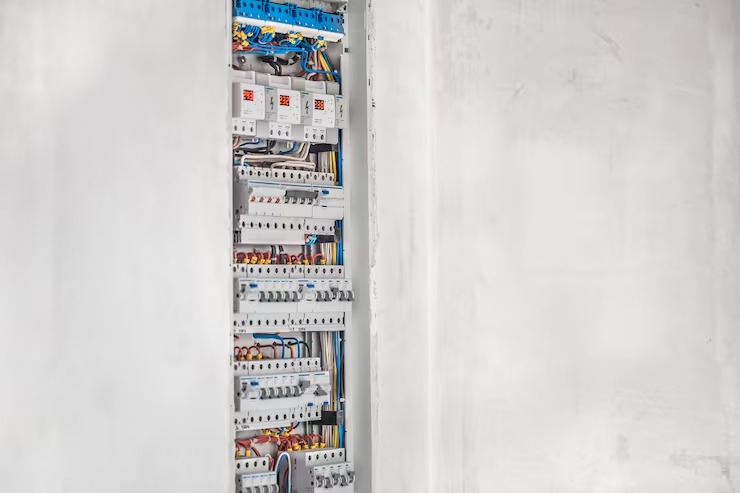
Those are two separate problems and they have two separate fixes. A service rated at 100 amps has a hard ceiling on how much current can come into the house regardless of what’s in the panel. A panel that’s full of breakers but sitting on a 200 amp service has a spaces problem, not a capacity problem, and that’s a subpanel conversation, not a service upgrade conversation. A lot of quotes we see written for Chicopee homes don’t distinguish between the two, because they were written without anyone opening the panel to look. That’s a warning sign. A real quote tells you the existing service size, the calculated demand load, and which of the two problems you actually have.
When you do not need a new panel
This is the section most companies skip, and it’s the one that matters most. A load calculation on a Chicopee house frequently comes back showing the existing 100 amp service has room for what you want to add, once you account for demand factors correctly. In that case, there are three honest alternatives to a full change-out, and we’ll walk through all three before we talk about replacing the service.
The first is matching the appliance to the service instead of the other way around. A correctly sized cold-climate heat pump for a tight 1,400 square foot unit draws a lot less than an oversized one picked off a brochure, and a smaller, better-matched heat pump water heater can close a gap that a bigger one would blow through. The second is a load management device, which sheds or limits one circuit when another is running so two large loads never pull at once. These are a fraction of the cost of a service upgrade and they are a legitimate, code-recognized answer to a capacity problem in a lot of houses. The third is a subpanel, which solves a spaces problem (not enough open breaker slots) without touching the service size at all. If your issue is that the panel is full rather than that the service is small, a subpanel is the right fix and a new 200 amp service is an expensive way to solve the wrong problem.
- A better-matched appliance. A heat pump water heater or a mini-split system sized correctly for the actual load draws less than a straight replacement sized off habit, and sometimes that difference is what keeps the existing panel adequate.
- A load management device. These devices let two loads, an EV charger and an electric dryer for example, share the same available capacity by stepping one down when the other is running, instead of requiring enough headroom for both to run flat out at once.
- A subpanel. When the real problem is breaker spaces rather than total service capacity, adding a subpanel solves it for a fraction of what a full change-out costs, without touching the main service at all.
We’d rather tell a Chicopee homeowner that their 100 amp service has room for a ductless heat pump with a load management device at the water heater than sell a change-out they didn’t need. The next job on that house, whether it’s a charger or an addition, is a lot easier to plan for when the first recommendation was the right one.
What the work involves
When a change-out is genuinely the answer, here’s what you’re signing up for, described at the level you need to make the decision, not at the level of doing it yourself. The work involves disconnecting and replacing the existing panel and often the meter socket, sizing new conductors for the upgraded service, and in some cases replacing the mast and service drop hardware if it’s not rated for the new load. Any work on the conductors ahead of the main breaker is live until the utility disconnects power at the meter, which is why this is licensed work with a scheduled utility shutdown, not a weekend project. We coordinate that disconnect, do the physical change-out, and get the new service energized and inspected before we close the job out.
For a two or three family in Chicopee with a shared meter bank, this often means coordinating a disconnect that affects every unit in the building, not just the one being upgraded, and scheduling that around tenants. We flag that during the quote stage, not the week of the job.
What it costs
A panel upgrade in Chicopee typically runs {PRICE_LOW} to {PRICE_HIGH}, and the honest answer is that the number moves a lot depending on specifics. The target service size matters: jumping to 150 amps costs less than jumping to 200. Overhead versus underground service matters, since underground runs usually mean trenching that overhead runs don’t. Whether the meter socket and mast need replacing alongside the panel adds to the job, as does the physical distance between the meter and where the panel sits inside the house. Utility scheduling for the disconnect can add time even when it doesn’t add much cost. And if the upgrade is happening alongside new equipment, like a cold-climate heat pump system or an EV charger, doing both as one coordinated job is usually cheaper than two separate visits.
If you’re weighing a panel upgrade specifically because you want to add a heat pump system, our heat pump panel upgrade page walks through that pairing in more detail. If an EV charger is part of what’s driving the decision, that’s worth figuring into the load calculation up front rather than as an afterthought once the panel’s already in.
- The size of service going in. Jumping from 100 to 200 amps costs less than sizing up further for a multifamily building.
- Overhead versus underground service. Underground runs cost more because they involve trenching.
- Whether the meter socket and mast also need replacing, which is common on older services.
- How far the panel is from the meter, since a longer conductor run adds cost.
- The utility's disconnect scheduling, which is outside our control and can add time even to a straightforward job.
- Whether the work is done alongside other equipment, such as a heat pump or an EV charger, which can share some labor.
We won’t quote a panel job without opening the panel first. Anyone who will is guessing, and a guess on a service upgrade is a guess you pay for twice: once for the wrong work, and again when it turns out you needed something else.
Permits and Inspection
Every panel upgrade and service change-out we do in Chicopee is permitted through the city and inspected before the job is signed off. This isn’t an upsell item on the quote, it’s part of the quote, because it’s required and because it’s the difference between work that’s done right and work that’s done cheap. A permit pulled on a service upgrade means an inspector checks the grounding, the bonding, the conductor sizing, and the panel labeling before anyone calls the job finished. If a quote you’re comparing doesn’t mention a permit, ask why.
For reference on what the code actually requires, the [EXTERNAL LINK: Massachusetts Electrical Code as adopted, for homeowners who want to see the underlying requirements] is publicly available.
Get a Quote
If you’re in Chicopee and trying to figure out whether your panel can carry a heat pump, a water heater, a charger, or all three, call {PHONE} and we’ll talk through what’s actually on the service now before we talk about what it would cost to change it. If the answer is that you don’t need the upgrade, you’ll hear that first. For the full picture on panel work across the territory, see the electrical panel upgrades hub, or visit the Chicopee HVAC and electrical page for everything we do in town.
frequently asked questions
Do most Chicopee homes actually need a panel upgrade?
Not always. A load calculation often shows the existing 100 amp service can carry what you want to add, especially with right-sized equipment or a load management device. We run the numbers before recommending a change-out.
How do I know if my electrical panel is on a 100 amp service?
The service size is usually marked on the main breaker or the meter base, but the label alone doesn't tell you what the panel can actually carry safely once everything connected to it is accounted for. That's what a load calculation is for.
I have a two or three family in Chicopee with a shared meter bank. Does that change the job?
Yes. Upgrading service on a building with a shared meter bank usually means the utility disconnect affects every unit, not just the one getting the work. We plan that scheduling with you up front.
Is a panel upgrade required to install a heat pump or EV charger?
Sometimes, but often a subpanel or a load management device solves the problem for less. We check the existing service and the panel's open spaces before recommending a full change-out.
Is the work permitted?
Yes. Every panel upgrade or change-out we do in Chicopee is permitted through the city and inspected before the job is closed out. That's included in the quote, not added after.