
HVAC Contractor in Hadley, MA
Hadley is a town of about 5,300 people with a Route 9 retail corridor that does more HVAC volume than a town that size usually sees, and a residential base that still includes working farms, old farmhouses with two or three additions stacked on over the decades, and the newer homes that have filled in around them. A lot of that older housing was built and heated long before ductwork was standard, and a lot of it sits on oil or propane because gas mains never made it out past the center.
- Powers Air HVAC, based in Granby, MA
That mix is exactly why Hadley gets its own page instead of a generic one. The right system for a 1920s farmhouse with a cold attic and no ducts is not the right system for a Route 9 storefront or the ranch house built in the 1970s next door to it. Powers Air is based in Granby and works this whole stretch of the valley, and the job on this page is the same no matter what you call it first: heating, cooling, ductwork, or the electrical work that often has to happen before any of it can go in.
- Ductless mini-split installation, single-zone and multi-zone
- Heat pump installation and replacement, cold-climate rated equipment
- Central air conditioning
- Furnace installation and replacement
- Ductwork and ventilation
- Electrical panel upgrades and change-outs, licensed and permitted, done in-house
- EV charger installation
What Hadley homes are working with
Start with the fuel. Most of Hadley outside the immediate center has never had gas distribution, so heat is coming from delivered oil or propane in a lot of these houses, sometimes both in the same system with an oil-fired boiler and a propane water heater. That changes the math on heat pumps in a way it would not in a gas-served town. You are not comparing electric heat against cheap gas. You are comparing it against fuel that gets delivered by truck and priced per gallon, which is a very different conversation and usually a more favorable one for ductless or whole-house heat pump equipment.
Then there is the housing stock itself. Hadley has genuine farmland properties and older farmhouses that picked up an addition, a sunporch, a converted barn, or a finished basement at some point without anyone running new ductwork to match. Steam and hot water radiators are common in the original sections of these houses, and radiators do not move cool air in the summer, which is usually the actual reason someone calls us. The newer construction along the edges of town, and the handful of ranches and colonials from the 1960s and 70s, are more likely to have ducts already, but those ducts are often undersized for a modern heat pump’s airflow needs and need to be checked, not just reused.
How we size and specify the system
Every recommendation starts with a load calculation, not a tape measure and a guess. A Manual J calculation accounts for your square footage, insulation, window area and orientation, ceiling height, and air leakage to figure out how much heating and cooling your house actually needs on the coldest and hottest days of the year. Skip that step and you are sizing on guesswork, and guesswork almost always goes big.
Oversizing is the most common mistake in this trade, and it does not make a house more comfortable, it makes it less comfortable. An oversized system satisfies the thermostat fast and then shuts off, which means it never runs long enough to pull humidity out of the air in summer or to settle into a steady, even heat in winter. You get a house that swings between too cold and too warm, short cycling equipment that wears out faster, and a bigger price tag than the smaller, correctly sized system would have carried. For cold-climate heat pumps specifically, we also look at the HSPF2 rating and the manufacturer’s capacity curve down to zero degrees and below, because a unit’s rated output and its real output at 5 degrees are two different numbers, and that gap is what determines whether you need backup heat and how often it will actually run.
A real quote should show your calculated heating and cooling load, the specific equipment proposed with its cold-weather performance data, line set length and routing, where condensate goes, and what it would take electrically to support it. If a bid shows up with just a price and a unit size and nothing behind it, that is worth questioning before you sign anything.
Electrical capacity is part of the sizing conversation now in a way it was not ten years ago. A heat pump, especially a multi-zone system, draws real amperage, and if you are also thinking about an EV charger or you are still on a 100-amp panel from the 1970s, that panel needs to be evaluated before equipment gets ordered, not after it is sitting in your driveway.
- A room-by-room load calculation, not a flat square-footage number
- Specific equipment model numbers, not just "a 2-ton system"
- Line set lengths and routing
- Confirmation the electrical service has capacity, or what it will take if it doesn't
- Permit and inspection included, not an add-on
- A written price, not a verbal estimate
Powers Air does panel upgrades and EV charger installs as our own licensed electrical work, not as something we hand off to someone else and hope gets scheduled. That work is permitted and inspected every time, which is the part a lower bid is usually skipping.
What the work involves
- Site visit and load calculation
- Written proposal with equipment, zones, and price
- Permit filed with the town
- Installation, typically one to three days depending on scope
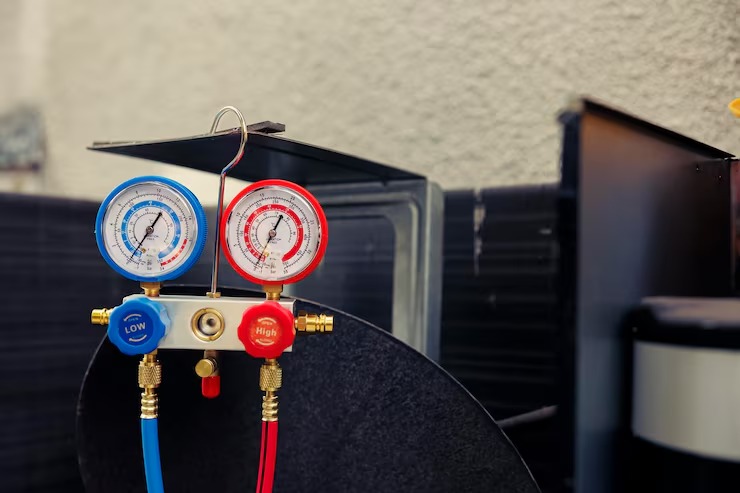
- Commissioning and system check, including refrigerant charge verification
- Inspection and walkthrough
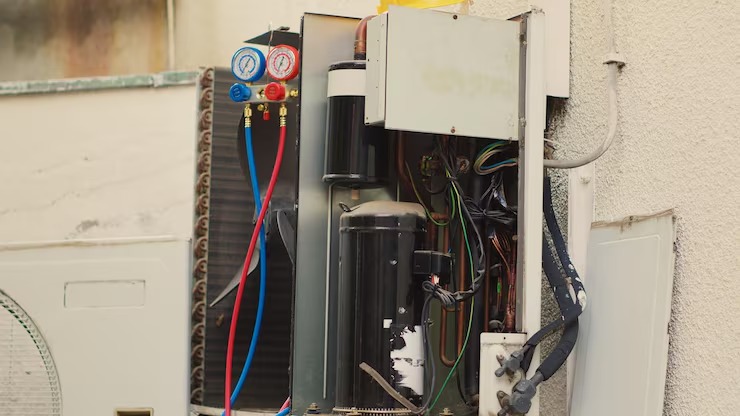
For a ductless install, that means running refrigerant line sets from outdoor condenser to indoor head, a condensate path that actually drains where it is supposed to, and electrical circuits sized to the equipment. For a ducted system, retrofit or new, we check static pressure in the existing ductwork before assuming it can handle a heat pump’s airflow, because undersized or leaky ducts will choke a new system’s performance no matter how good the equipment is. For central air added onto an existing oil or propane furnace, it is a matter of matching the coil and line set to the air handler already in the basement. For panel and charger work, that’s a full change-out or upgrade of the service, permitted and inspected the way it has to be, because that part of the house is not a place to cut corners.
What it costs
Most jobs in Hadley fall somewhere between {PRICE_LOW} and {PRICE_HIGH}, and where you land in that range depends on a handful of specific factors: how many zones you need, whether you want wall-mounted heads, ceiling cassettes, or ducted indoor units, how far the line sets have to run and what’s in the way, whether your electrical service can handle the new load as-is or needs panel work first, and how accessible the installation points are, a slab-on-grade farmhouse addition is a different job than a basement with easy joist bays. We’ll give you a real number once we’ve done the load calculation and looked at the house, not before.
Permits and Inspection
Any electrical panel work or EV charger install we do is permitted with the town and inspected before it’s closed up, and HVAC equipment changes that affect electrical circuits or venting get the same treatment. That is not optional and it is not a line item we skip to shave a number off a quote. It is also, frankly, the easiest way to tell a contractor who plans to be around for the long haul from one who is just trying to get in and out before anyone checks the work.
Rebates and incentives
Mass Save exists, it applies to a lot of heat pump and weatherization work in Massachusetts, and the specifics of what qualifies and what it’s worth change depending on your equipment, your utility, and your home’s current setup. We can walk through what might apply to your Hadley property as part of a quote, but the rules are detailed enough that you should see the actual program details rather than take anyone’s word for it. Start at [EXTERNAL LINK: masssave.com, the official Mass Save program site] for current program rules, and see our Mass Save heat pump rebates page for how this fits into a ductless or heat pump project here.
Get a quote
If you’re trying to figure out whether your Hadley farmhouse addition needs a mini-split, whether your panel can handle a heat pump and an EV charger, or whether it’s finally time to replace an aging oil furnace, call {PHONE} and you’ll get Drew, not a dispatcher reading from a script. We’ll talk through what your house is actually doing and what makes sense to fix first.
frequently asked questions
Does Hadley have natural gas service?
Most of Hadley outside the center runs on delivered oil or propane rather than gas mains, which changes the economics of switching to a heat pump compared to a gas-served town. We can go through the specific comparison for your house.
My farmhouse addition has no ductwork. What are my options?
Ductless mini-splits are built for exactly this situation, an addition or converted space with no existing ducts and no practical way to run them. One or two indoor heads can heat and cool that space without touching the rest of the house.
Can my electrical panel handle a heat pump and an EV charger?
That depends on your panel's current capacity and what else is drawing power in the house. We evaluate this as part of sizing the HVAC system, and if the panel needs an upgrade, we do that work ourselves as licensed, permitted electrical work.
Do I need to replace my ductwork to add central air?
Not always, but we check static pressure in the existing ducts before assuming they can handle the added airflow. Undersized or leaky ductwork will limit a new system's performance regardless of how good the equipment is.
How long does a typical ductless installation take?
A single-zone install is often a one-day job. Multi-zone systems or jobs that involve electrical panel work take longer, and we'll give you a realistic timeline once we've seen the house and the scope.