
HVAC Contractor in Palmer, MA
Palmer is really four villages wearing one town name. Three Rivers and Bondsville still have the mill-era triple deckers and workers’ cottages built before anyone thought about ductwork, Thorndike has its own mix of older frame houses, and Palmer proper carries the newer construction along with the Route 20 commercial strip. Walk into a basement in any of them and you are just as likely to find an oil tank or a propane line as a gas meter, because distribution gas does not reach every corner of this town the way it does closer to Springfield.
- Powers Air HVAC, based in Granby, MA
That mix is exactly why there is no single right system for Palmer. A ranch off Route 20 with existing ductwork is a different project than a Three Rivers two-family with cast iron radiators and zero duct runs. Powers Air HVAC is based in Granby, a few minutes down the road, and I show up to look at the actual house before I talk about equipment.
- Ductless mini-split installation, single-zone and multi-zone
- Heat pump installation and replacement, cold-climate rated equipment
- Central air conditioning
- Furnace installation and replacement
- Ductwork and ventilation
- Electrical panel upgrades and change-outs, licensed and permitted, done in-house
- EV charger installation
What Palmer homes are working with
The village housing stock in Three Rivers and Bondsville dates mostly to the mill era, built for steam or hot water heat with cast iron radiators and no duct chases anywhere in the structure. Retrofitting forced air into those houses means tearing into finished rooms, which is why ductless mini-splits do so much of the work here. You mount an indoor head per room or zone, run a small line set through an exterior wall, and skip the demolition entirely. For a lot of these owner-occupied two- and three-family homes, that is the difference between a project that happens this year and one that gets put off for a decade.
Palmer proper and the newer pockets off Thorndike Street run a different way. Some of these homes have ductwork from an older central air or oil furnace system, and the question becomes whether that ductwork is sized right for a heat pump’s airflow needs, not whether ductwork exists at all. Gas service is inconsistent across the town, so a lot of households are heating with oil or propane delivery, and that is the single biggest reason heat pump economics look different here than in a town with gas on every street. When your baseline heating cost is delivered fuel rather than piped gas, a cold-climate heat pump is competing against a more expensive status quo, and the math tends to favor it a lot faster.
How we size and specify the system
Every recommendation starts with a load calculation, not a sales pitch. A Manual J looks at your actual square footage, insulation, window area and orientation and tells you how much heating and cooling the house really needs room by room. Skip that step and you are guessing, and the guess almost always goes big, because an oversized unit sounds like a safer bet to someone who is not the one paying the power bill or living with the comfort problems.
An oversized heat pump or furnace short cycles. It blasts the space, hits the thermostat setpoint, and shuts off before it has run long enough to properly dehumidify or distribute heat evenly, so you get temperature swings and clammy air instead of steady comfort. It also wears out the compressor faster from all that stop-start cycling. Right-sized equipment runs longer at lower output, which is quieter, more efficient, and what actually keeps a house comfortable.
For heat pumps specifically, I look at the cold-climate rating and the HSPF2 number, because capacity drops as the outdoor temperature drops and not every unit handles a Western Mass January the same way. We talk through backup or auxiliary heat strategy for the coldest stretches, line set length since refrigerant lines have real distance and elevation limits, and condensate drainage before anything gets ordered. A quote that shows up with a price and no load calculation behind it is a quote you should be skeptical of.
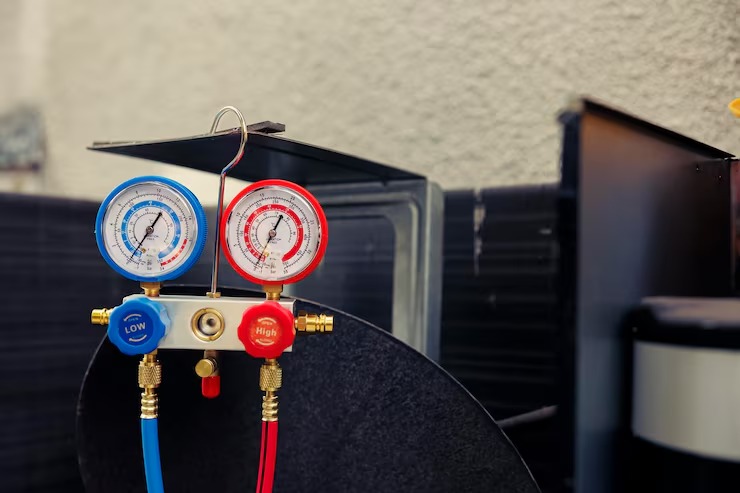
None of this changes whether the job is a single Bondsville bedroom addition or a full system replacement for a commercial space along Route 20. The process is the same because the physics is the same.
- A room-by-room load calculation, not a flat square-footage number
- Specific equipment model numbers, not just "a 2-ton system"
- Line set lengths and routing
- Confirmation the electrical service has capacity, or what it will take if it doesn't
- Permit and inspection included, not an add-on
- A written price, not a verbal estimate
What changes is scope, and that is where the next sections matter more than any brochure.
What the work involves
- Site visit and load calculation
- Written proposal with equipment, zones, and price
- Permit filed with the town
- Installation, typically one to three days depending on scope
- Commissioning and system check, including refrigerant charge verification
- Inspection and walkthrough
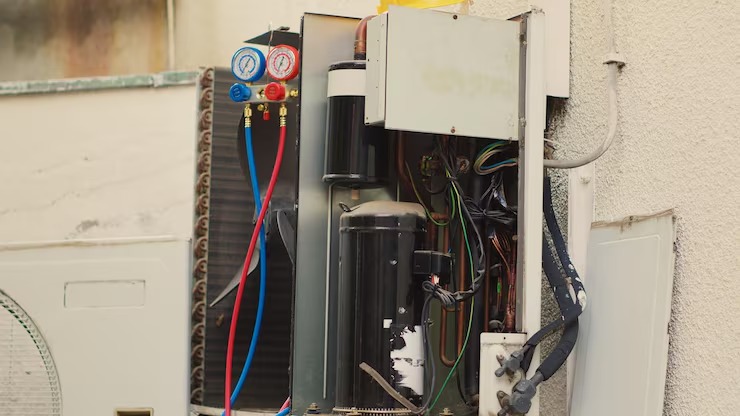
Ductless and heat pump installs involve mounting the outdoor condenser on a pad or bracket, running insulated line sets to each indoor head, a condensate path that actually drains where you want it to, and an electrical circuit sized for the equipment. If your existing panel is maxed out or outdated, that gets addressed as part of the project rather than ignored, because Powers Air handles panel upgrades and change-outs and EV charger installation as licensed in-house electrical work, not as a referral to someone else. Every one of those jobs is permitted and inspected, full stop.
Central air, furnace, and ductwork projects involve their own set of checks, including static pressure in the existing duct system, since adding higher-efficiency equipment to undersized or leaky ductwork just moves the inefficiency somewhere else. Commercial work along the Route 20 strip tends to involve rooftop or split systems with their own tonnage and zoning questions, which is still a load calculation problem before it is an equipment problem.
What it costs
Most residential heat pump and ductless projects in Palmer run somewhere between {PRICE_LOW} and {PRICE_HIGH}, and the spread exists because the variables actually matter. A single-zone bedroom install costs a lot less than a multi-zone system covering a whole two-family. Indoor unit type changes price, whether that is wall-mounted heads, ducted cassettes, or floor units. Line set length and the number of exterior wall penetrations add labor. Electrical capacity is a real cost driver too: if your panel can take the new circuit as-is, that is one project, and if the panel needs upgrading first, that is another, and we tell you which situation you are in before we quote anything, not after. Access also matters, since a second-floor condenser location or a tight mechanical closet adds time compared to an easy ground-level setup. There is no fixed price that applies to every house, and anyone quoting one without having looked at yours is quoting a number, not a project.
Rebates and incentives
Mass Save exists, the incentives change from year to year, and the rules depend on the specific equipment and the specific household, so there is no number worth repeating here that would still be accurate by the time you read it. [EXTERNAL LINK: masssave.com, for current program details and eligibility] What we can do is sit down with your house and your proposed system and work out what might apply, which is a more useful conversation than a dollar figure on a webpage. For the full rundown on how the heat pump rebate process generally works, see our Mass Save heat pump rebates page.
Permits and Inspection
Panel changes, new electrical circuits for HVAC equipment, and EV charger installs all get pulled as permits and get inspected, because that is what the work legally requires and because a quote that skips the permit is usually the same quote that skipped the load calculation. The inspection is not a formality to route around, it is a second set of eyes confirming the work was done to code, and that protects you whether you are selling the house in five years or just want to know the wiring behind your walls is sound.
Get a Quote
If you are in Palmer, Three Rivers, Thorndike, or Bondsville and trying to figure out whether your house needs ductless heads, a heat pump tied into existing ductwork, a furnace replacement, or an electrical panel upgrade to support any of it, call Powers Air HVAC at {PHONE}. You will talk to Drew, not a dispatcher, and the first conversation is about your house, not a sales script.
frequently asked questions
Does Palmer have natural gas service?
It is inconsistent. Some parts of Palmer proper have gas access while much of Three Rivers, Thorndike and Bondsville run on delivered oil or propane. That affects the economics of switching to a heat pump, usually in favor of it, since you are competing against a more expensive delivered fuel rather than piped gas.
Can older Three Rivers or Bondsville homes get central air without ductwork?
Yes, that is the case ductless mini-splits are built for. You get one indoor head per room or zone and a small line set through an exterior wall, with no duct chases or demolition required.
Do you handle commercial HVAC along Route 20?
Yes, we do commercial system sizing and installation alongside residential work, and the same load calculation approach applies regardless of building type.
Will I need an electrical panel upgrade for a heat pump or EV charger?
It depends on your panel's existing capacity. We check this before quoting the HVAC or EV charger project, and if an upgrade is needed, that work is done in-house, permitted, and inspected.
How do I know if a quote is legitimate?
Ask what the load calculation showed. A real quote is built from room-by-room heating and cooling needs, not a flat per-square-foot guess. If nobody mentions a load calculation, that is a warning sign.