
HVAC Contractor in Northampton, MA
Walk through a Northampton neighborhood near Main Street or up toward Elm and you’re mostly looking at houses built before 1930, a lot of them with a boiler in the basement feeding cast iron radiators and zero ductwork anywhere in the building. Some have gas service running down the street, some don’t, and that one fact changes the entire heating conversation before anyone talks about equipment.
- Powers Air HVAC, based in Granby, MA
Northampton is also the town in this territory where people actually want to talk about how a cold-climate heat pump performs at 5 degrees, not just what it costs. That’s a good thing, because it’s the right question. This page covers the full mix of what Powers Air does here, from mini-splits and central air to furnaces, ductwork, and the electrical work that increasingly comes with it.
- Ductless mini-split installation, single-zone and multi-zone
- Heat pump installation and replacement, cold-climate rated equipment
- Central air conditioning
- Furnace installation and replacement
- Ductwork and ventilation
- Electrical panel upgrades and change-outs, licensed and permitted, done in-house
- EV charger installation
What Northampton homes are working with
The housing stock in Northampton’s center and surrounding streets skews old, Victorian and earlier, with plaster walls, no chases for ductwork, and heating systems that were originally coal converted to oil or gas decades ago. A meaningful share of these houses still rely on delivered oil or propane rather than natural gas, especially outside the downtown core, which changes the math on electrification in a way it wouldn’t in a town fully served by gas. When oil is running four dollars a gallon and a cold-climate heat pump can cover most of the season, the ductless conversation isn’t theoretical, it’s a spreadsheet exercise that usually favors the heat pump.
The second thing that matters here is who owns the building. Northampton has a dense mix of owner-occupied single families, two and three-family houses, and a real rental stock near Smith College and downtown. A landlord weighing a mini-split install cares about different things than a homeowner does: unit cost per bedroom, tenant control of thermostats, and how fast a system pays back in reduced oil deliveries between tenants. We size and quote differently depending on which one you are, and we’ll ask.
How we size and specify the system
Every recommendation starts with a load calculation, a Manual J, not a rule of thumb based on square footage. A 1,900 square foot Victorian with plaster walls, old single-pane storms, and a stone foundation does not lose heat the same way a 1990s colonial does, and guessing at tonnage is how you end up with a system that’s wrong in both directions.
Oversizing is the most common mistake we see from other quotes, and it doesn’t make a house more comfortable, it makes it less so. An oversized heat pump or furnace short cycles, meaning it hits setpoint fast and shuts off before it’s dehumidified the air or evenly heated the rooms. It wears the compressor harder over its life and it wastes money on equipment you didn’t need. A correctly sized cold-climate system, matched to its HSPF2 rating and checked against its capacity curve down to design temperature, runs longer and steadier and keeps the house more even room to room.
A proper quote tells you the calculated heat loss, the equipment’s rated capacity at your design temperature, where the line sets run, what backup or auxiliary heat is doing when it gets cold, and what your existing electrical panel can support. If a bid shows up as a flat price with none of that behind it, that’s the sign to ask more questions before you sign anything.
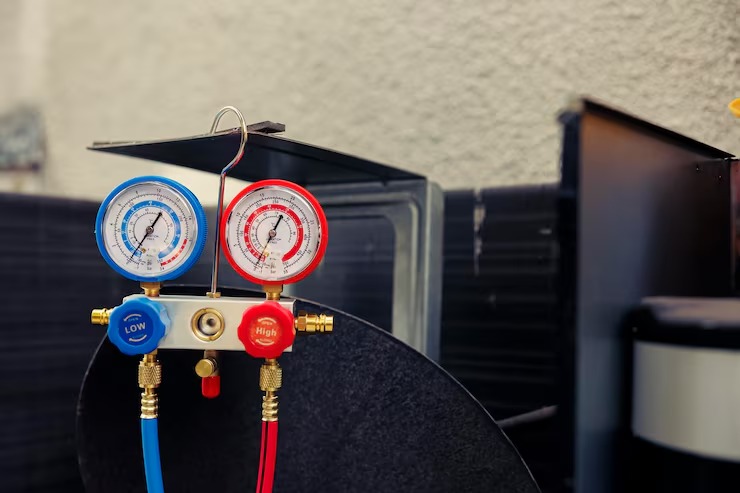
Because so much of Northampton’s older stock has no ducts, ductless is usually the starting point for any heat pump conversation here, but it isn’t automatic. Some houses have enough duct capacity from an old central air system to make a ducted heat pump retrofit make sense, and we’ll check static pressure in existing ductwork before recommending that path rather than defaulting to mini-splits because they’re easier to sell.
- A room-by-room load calculation, not a flat square-footage number
- Specific equipment model numbers, not just "a 2-ton system"
- Line set lengths and routing
- Confirmation the electrical service has capacity, or what it will take if it doesn't
- Permit and inspection included, not an add-on
- A written price, not a verbal estimate
We also get called into Northampton houses where the electrical panel is the actual bottleneck, not the heating equipment. A 100-amp service feeding an oil boiler, an electric water heater, and a dryer has very little headroom left for a cold-climate heat pump, let alone an EV charger down the road. That’s where our in-house electrical work comes in, rather than telling you to go find someone else and hope the timelines line up.
What the work involves
- Site visit and load calculation
- Written proposal with equipment, zones, and price
- Permit filed with the town
- Installation, typically one to three days depending on scope
- Commissioning and system check, including refrigerant charge verification
- Inspection and walkthrough
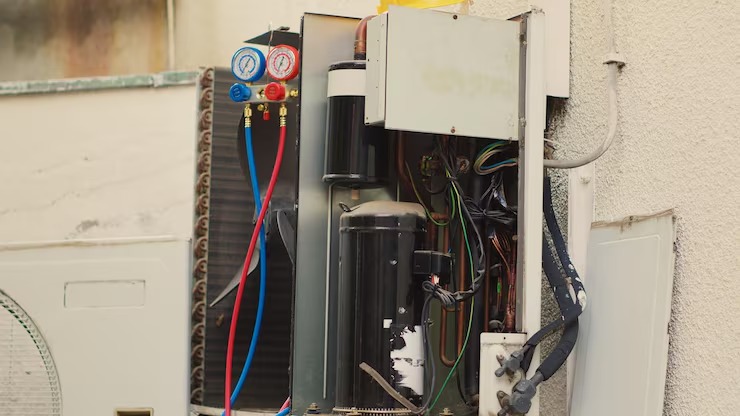
For a mini-split or ducted heat pump install, that means mounting indoor units, running refrigerant line sets within the manufacturer’s length and lift limits, setting the outdoor condenser on a proper pad or bracket clear of snow load, running condensate drainage, and commissioning the system with a vacuum and charge check rather than just flipping it on. For a furnace or central air swap, it means pulling the old equipment, correcting any duct issues we find rather than reconnecting to something undersized, and verifying combustion and airflow once it’s running.
On the electrical side, panel upgrades and change-outs and EV charger installs are performed as licensed work under {ELECTRICAL_LICENCE}, permitted and inspected the way Massachusetts code requires. That’s not paperwork for its own sake. The service conductors and the panel itself are not something a homeowner should be troubleshooting from a how-to video, and a contractor who skips the permit is usually the same one who skipped the load calculation.
What it costs
A straightforward single-zone mini-split install in Northampton generally runs between {PRICE_LOW} and {PRICE_HIGH}, with the range driven by how many zones you need, whether you’re using wall-mounted or ducted indoor units, how long the line set runs are and whether they cross a finished wall or ceiling, whether your panel has room for the new circuit or needs upgrading, and how accessible the install locations actually are in an older house with tight basements and finished attics. A whole-house system covering an un-ducted Victorian costs more than a single bedroom retrofit, and a central air or furnace replacement into existing ductwork is a different number entirely from a full ductwork redesign. We won’t give you a number worth trusting until we’ve seen the house.
Rebates and incentives
Mass Save exists, the rebate structure changes periodically, and it’s genuinely worth understanding before you commit to a system, because it can affect what equipment makes sense and when to schedule the work. We’re not going to quote you a dollar figure here because the numbers and rules shift and we’d rather you get the current ones from the source and from us directly once we know your project. See masssave.com for current program details, and our Mass Save heat pump rebates page for how to think through eligibility for a Northampton home.
Permits and Inspection
Every electrical panel upgrade, change-out, and EV charger install we do in Northampton is pulled under permit and inspected by the city before it’s considered finished work, not as an optional extra. HVAC equipment swaps that touch gas lines, flues, or refrigerant circuits also go through the permitting and inspection process required under Massachusetts code. If a quote doesn’t mention a permit, ask why, because the inspection step is exactly what gets skipped by whoever gave you the cheapest number.
Get a Quote
If you’re in Northampton and trying to figure out whether your old radiators and no-duct layout make sense for a heat pump, or whether your panel can handle one, call {PHONE}. You’ll talk to Drew, not a scheduler reading from a script, and if a job isn’t right for your house he’ll tell you that too.
frequently asked questions
Does my Northampton house need ductwork for a heat pump?
No. Most of the older housing stock in Northampton's center has no ductwork at all, and ductless mini-splits are built for exactly that situation. If you do have existing ducts in reasonable shape, a ducted heat pump retrofit can also work, but we check static pressure before recommending it rather than assuming.
Is a heat pump worth it if I'm on oil or propane instead of gas?
Often more so than in a gas-served house. A lot of Northampton's housing outside the downtown core runs on delivered oil or propane, and a cold-climate heat pump can cover most of a heating season at a lower running cost than oil, which changes the payback math compared to a town fully on natural gas.
Can Powers Air handle a panel upgrade if my electrical service can't support a new heat pump or EV charger?
Yes. Panel upgrades and change-outs are performed in-house as licensed electrical work under {ELECTRICAL_LICENCE}, fully permitted and inspected, not farmed out to a separate electrician on a different timeline.
What does a load calculation actually tell me?
It tells you how much heat your specific house loses at your local design temperature, room by room if needed, so the equipment we recommend is sized to the house rather than to a square footage rule of thumb. It's the difference between a system that runs efficiently and one that short cycles.
How much do Mass Save rebates cover for a Northampton install?
The amounts and eligibility rules change, so we won't quote a figure here. Check current details at masssave.com or ask us directly once we know your project, and we can help you work out what likely applies to your house.