
Furnace Repair and Heating Service in Ludlow, MA
Furnace Repair and Heating Service in Ludlow
A lot of Ludlow’s housing stock dates to the postwar boom years, when forced hot air furnaces went into new ranches and capes by the thousands, and that same equipment or its second or third replacement is still doing the job in a lot of those basements. Whether your furnace is wheezing through its last winter or just overdue for a tune-up, a working heating system in January isn’t optional, and figuring out whether to fix it or plan its replacement is the question most calls start with.
- Powers Air HVAC, based in Granby, MA
When your furnace short cycles, won’t fire, blows cold air, or just sounds wrong, you need someone who can tell you what’s actually happening inside the cabinet and what it’s going to take to fix it right. That’s the call here. Drew answers it, diagnoses it, and tells you straight whether it’s a repair or whether you’re better off putting that money toward a new system.
What Ludlow Homes Are Working With
Ludlow is a classic forced-air town in a lot of its mid-century and postwar neighborhoods. You’ve got ductwork already run through the basement and up into the walls, which means when a furnace does finally need replacing, it’s a straightforward swap rather than a full duct build-out. It also means these houses are strong candidates for adding central air through the existing trunk and branch system, or for a heat pump that uses that same ductwork and keeps the furnace as backup heat for the coldest stretches.
Fuel source matters a lot here. Parts of Ludlow have natural gas service, but plenty of homes, especially on the outskirts and in the newer development pushing out from the center, run on delivered oil or propane. If you’re one of those households, the furnace you’re repairing or replacing isn’t just a comfort decision, it’s tied directly to your fuel bill every single month, and that changes the math on whether a heat pump pays for itself faster than people expect. Ludlow also has a real mix of long-time owner-occupiers in older capes and colonials alongside newer construction at the edges of town, plus a commercial strip that brings in rooftop units and packaged systems we service too. The age and ownership mix means no two furnace calls in Ludlow look quite the same.
What Ludlow Homes Are Working With (Continued)
If you’re a longtime owner in one of the older sections of town, chances are you’ve already replaced a furnace once or twice and you know the drill. If you’re newer to a house here, or you bought a place with an aging system you inherited from the previous owner, the questions are different: how much life is left in it, is it sized right for the house, and would this be the moment to think about adding cooling at the same time since the ductwork’s already there. Both conversations happen on the same visit.
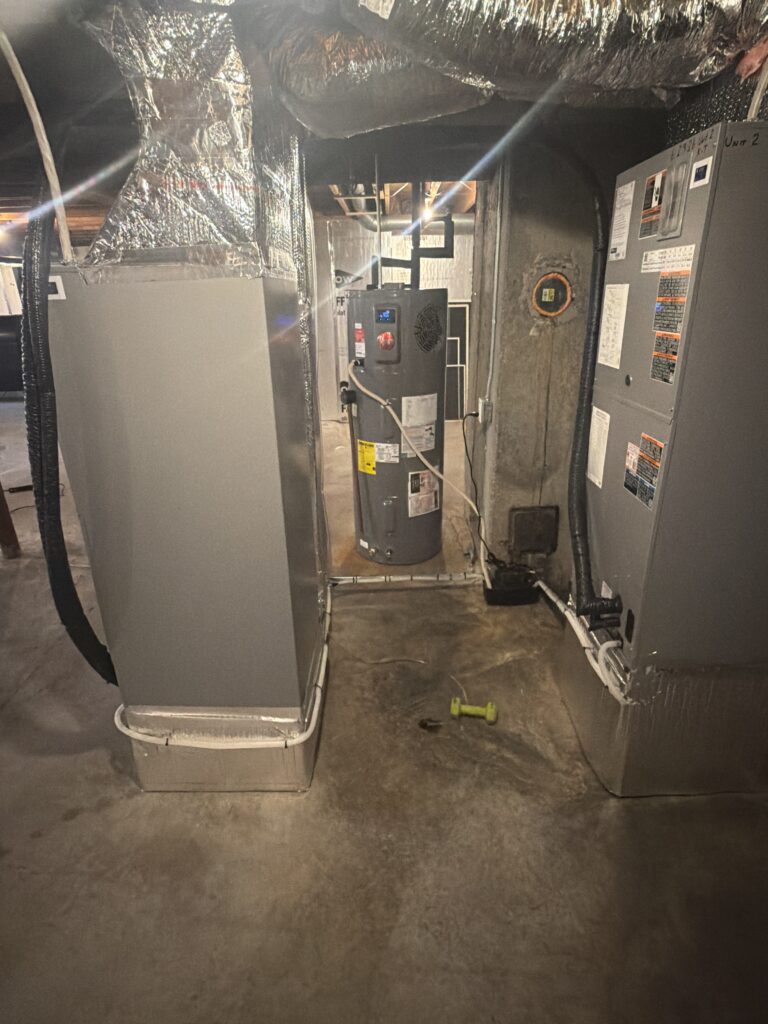
None of that gets sorted out over the phone with guesswork. It takes someone standing in front of the equipment, which is why every repair call starts with an honest look at what’s actually failing before anyone talks about next steps.
- Gas service, or oil and propane
- Existing ductwork, radiators, or nothing at all
- Build era and how the house has been altered since
- House size, lot exposure, and insulation
- Owner occupied or rented, and how many units
How We Size and Specify the System
If your furnace is at the point where repair isn’t worth it anymore, replacement sizing is where a lot of contractors cut corners and homeowners pay for it in comfort for the next fifteen years. The right way to do it is a Manual J load calculation based on your actual house: square footage, insulation, window count and orientation, ceiling heights, and how the existing ductwork is laid out. That number tells you what size furnace or heat pump your house actually needs, not what fits the truck or what the last guy sold the house down the street.
Oversizing is the most common mistake in this business, and it doesn’t make a house more comfortable, it makes it less comfortable. An oversized furnace short cycles, meaning it blasts hot air and shuts off before it’s evenly distributed the heat, which leaves cold spots and a system that wears out its components faster from constant starting and stopping. A system sized correctly runs longer, steadier cycles and actually holds a consistent temperature. If someone hands you a quote with a price and a unit size and no load calculation behind either one, that’s a sign to get a second opinion. A real quote spells out the sizing logic, the equipment specs, what happens to ductwork if anything needs modifying, and what backup heat looks like if a heat pump is part of the plan.
- The load calculation, or a clear reason it was not needed
- Equipment model, capacity at design temperature, and efficiency ratings
- Line set length and route, condensate drainage, and mounting locations
- Electrical requirements, and whether the panel needs work
- Warranty terms, and who performs the labour
That’s the same standard whether we’re talking about a straight furnace swap or a conversation about adding a heat pump to the system. The house tells us what it needs. We don’t start with the equipment and work backward.
What the Work Involves
A furnace repair call starts with diagnostics: checking the igniter or pilot assembly, the flame sensor, the blower motor and capacitor, the heat exchanger for cracks, airflow and static pressure in the ducts, and the thermostat wiring and control board. A lot of no-heat calls come down to something small, a failed igniter or a dirty flame sensor, and get fixed same visit. Others point to a cracked heat exchanger or a failing blower motor, which is a bigger decision about whether repair still makes financial sense on an older unit.
If it’s a full replacement, the work involves removing the old furnace, setting the new one, connecting it into the existing ductwork and venting, running gas or electrical connections depending on fuel type, and commissioning the system so it’s firing correctly and the airflow is balanced through the house. If we’re adding central air to that same ductwork while we’re in there, that’s an additional conversation about line set routing, condensate drainage, and where the outdoor unit goes.
What It Costs
Furnace repairs in Ludlow typically run on the lower end for straightforward parts fixes and climb from there depending on what failed. A full furnace replacement, or a furnace paired with a heat pump system, generally falls in the {PRICE_LOW} to {PRICE_HIGH} range installed. What moves that number: whether you need ductwork modifications, how many zones you’re conditioning, whether your electrical panel has the capacity for new equipment or needs upgrading first, indoor unit type if a heat pump is in the mix, and straightforward access versus a tight basement or crawlspace install. We never quote a number without seeing the house and running the numbers first.
- Number of zones and indoor units
- Indoor unit type, ducted or ductless
- Line set length and the route through the building
- Electrical service capacity, and whether the panel needs upgrading
- Access, including tight basements, upper floors, and exterior wall mounting
Rebates and Incentives
Mass Save offers incentives that can apply to heating system upgrades and heat pump installations, and the specifics change often enough that we’d rather walk you through what currently applies to your situation than repeat a number here that might be outdated by the time you read it. We can help you work out what your project qualifies for once we know the scope. For the current program details, [EXTERNAL LINK: masssave.com, the official Mass Save program site, for current rebate terms and eligibility] is the source to check, and our own Mass Save heat pump rebates page breaks down how the program generally works.
Permits and Inspection
Furnace replacement and any electrical work tied to it, including panel capacity checks for new equipment, gets permitted and inspected. That’s not a formality we skip to save you time or money. It protects you if there’s ever an insurance question, and it means the work gets a second set of eyes before it’s buried behind a wall or sealed in a cabinet. If a quote comes in noticeably lower because permitting isn’t included, ask why.
Get a Quote
If your furnace is struggling, making noise it shouldn’t, or just old enough that you’re wondering how much longer it’s got, call and talk it through. You’ll get Drew, not a dispatcher reading from a script, and a straight answer about whether this is a repair, a replacement, or something worth waiting on.
frequently asked questions
My furnace is blowing cold air. What's wrong?
This is usually an ignition problem, a dirty flame sensor, a tripped limit switch from restricted airflow, or a thermostat issue. It can also mean the burners aren't lighting at all and the blower is just circulating unheated air. Worth a diagnostic call before it gets colder outside.
How old is too old for a furnace repair to make sense?
Most furnaces are built to last 15 to 20 years. Past that, especially if you're looking at a major repair like a heat exchanger or blower motor replacement, it usually makes more sense to put that money toward a new system instead of extending the life of an old one.
Can I add central air to my existing ductwork in Ludlow?
In most cases, yes. A lot of Ludlow's forced-air homes have ductwork sized well enough to carry a central air system without major modification. We'd check static pressure and duct sizing during a visit to confirm it'll handle the added airflow.
Does Ludlow have natural gas, or am I on oil or propane?
It depends on where in town you are. Parts of Ludlow have gas service, but a meaningful share of homes, particularly toward the edges of town, run on delivered oil or propane. That fuel source matters for repair parts, replacement options, and whether a heat pump makes financial sense for your house.
Do you only fix the brand you installed?
No. We service and repair furnaces across brands and ages. If it's beyond repair or not worth fixing anymore, we'll tell you that too instead of patching something that needs replacing.