
Electrical Panel Upgrades and Change-Outs in Ludlow, MA
Electrical panel upgrades in Ludlow
A lot of Ludlow was built out in the decades after the war, and the panels that went in then were sized for a house with a furnace blower, a refrigerator, and maybe a window unit in August. Nobody was planning for a heat pump, a heat pump water heater, and a car charger on the same service, and that is exactly the combination we get called about now. This page is about figuring out what your panel can actually carry before anyone talks about replacing it.
- Powers Air HVAC, based in Granby, MA
Drew Powers runs the electrical side of Powers Air the same way he runs the heating side: he looks at the house first. The panel is a tool for delivering power safely, not a product to upsell. If the load calculation says your 100 amp service has room for what you want to add, that is what we tell you, and the job becomes smaller and cheaper. If it does not, you will know exactly why before any work starts.
What Ludlow homes have for service today
Ludlow’s housing stock leans heavily toward single-family capes, ranches, and colonials from the mill-town growth years and the post-war decades after, most of them owner-occupied and many still carrying the original 100 amp service that came with the house. That service was adequate for the appliance mix of its era and has simply never been touched since, because nothing forced the issue. A straight electric range, a well pump out by a detached garage, central air added in the eighties, maybe a sauna or a workshop circuit run off a smaller subpanel in the basement – that is the typical layering we find once we open things up.
Where it gets more complicated is in houses that have been added onto over the years, or converted from a single unit to two. A finished basement apartment, an in-law addition, or a garage turned into living space often means a second subpanel was stacked onto the original service at some point, sometimes by a licensed electrician doing it properly and sometimes not. Overhead drops are still common here, though newer construction and some rebuilt services run underground. None of that is a problem by itself. It just means we need to see what is actually there rather than assume, because the panel label only tells you the rating, not the real picture of what is drawing from it.
How we work out what the house actually needs
The only honest way to answer “do I need a new panel” is a load calculation done under the Massachusetts Electrical Code, which adds up what is actually connected to the house – heating and cooling equipment, water heating, the range, dryer, and every major fixed load – against what the service is rated to deliver. It is not a guess based on square footage, and it is not a guess based on what the panel label says it was rated for when it was installed thirty or forty years ago. We also separate two problems that get confused constantly: service capacity, which is how many amps the utility connection and main breaker can deliver, and breaker spaces, which is how many physical slots are open in the box. A panel can be maxed out on spaces while still having plenty of capacity left, or the reverse, and those two situations call for completely different fixes.
A real quote for this work only comes after someone has opened the panel, read the existing breakers and their ratings, and run the numbers against what you are planning to add, whether that is a heat pump, a heat pump water heater, an EV charger, or all three. If a contractor quotes a panel upgrade over the phone or off a photo without ever opening the box, that is a quote built on a guess, not a calculation, and it is usually the one that comes in cheap for a reason.
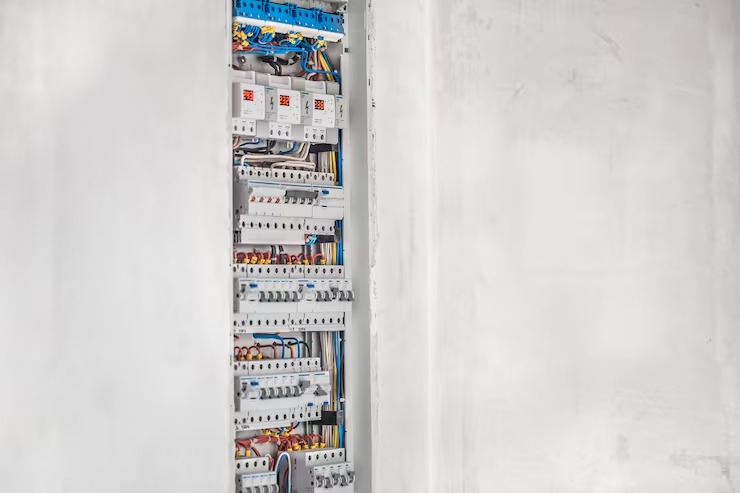
When you do not need a new panel
This is the section most electrical contractors skip, and it is the one that matters most. A load calculation frequently shows that the existing 100 amp service has enough room for what you actually want to add, and in that case a full change-out is money you do not need to spend. There are three real alternatives worth understanding before anyone proposes replacing your service.
First, the equipment itself can sometimes be matched better. A smaller or more efficient heat pump, or a heat pump water heater with a lower-amperage element option, can bring the load down enough to fit the existing service without any electrical work beyond a new circuit. Second, a load management device can share capacity between two loads that rarely run at full draw at the same time, most commonly an EV charger and a heat pump, by briefly stepping one back when the other is working hard. That hardware costs a fraction of a service upgrade and is a legitimate, code-recognized solution, not a workaround. Third, if the real problem is that you are out of breaker spaces rather than out of amps, a subpanel solves it directly and for far less than replacing the service. A homeowner who hears this from us is the one who trusts us with the upgrade when the calculation actually calls for it, and that is exactly why we lead with it.
- A better-matched appliance. A heat pump water heater or a mini-split system sized correctly for the actual load draws less than a straight replacement sized off habit, and sometimes that difference is what keeps the existing panel adequate.
- A load management device. These devices let two loads, an EV charger and an electric dryer for example, share the same available capacity by stepping one down when the other is running, instead of requiring enough headroom for both to run flat out at once.
- A subpanel. When the real problem is breaker spaces rather than total service capacity, adding a subpanel solves it for a fraction of what a full change-out costs, without touching the main service at all.
What the work involves
When the load calculation does show that a new service is the right call, the project means replacing the main panel, and typically the service conductors and often the meter socket, with equipment sized correctly for the amperage the house needs going forward, almost always 200 amps for a modern electrification plan. This is utility-coordinated work. The power to the house is disconnected for the changeover, the new equipment is installed and connected under permit, and the utility reconnects once the work passes inspection. We handle the coordination with the utility and the town so you are not the one making those calls or guessing at a timeline. What we will not do on this page, or on any job, is describe the internal steps of working on a live service, because there is no version of that work that is safe for anyone other than a licensed electrician to perform or attempt.
What it costs
A panel upgrade in Ludlow generally runs between {PRICE_LOW} and {PRICE_HIGH}, and where you land in that range depends on specifics that only show up once we have looked at the house. The size of the new service matters, since 200 amp equipment costs more than 150. Whether the drop is overhead or underground changes the labor significantly. If the meter socket or the mast also needs replacing, that adds to the job. Distance between the meter and the panel location affects how much new conductor and conduit are required. Utility scheduling for the disconnect and reconnect can add time, though not usually cost. And if you are planning the upgrade alongside new heat pump installation or an EV charger, doing both at once often saves money compared to two separate mobilizations. We will never hand you a flat number before the load calculation and the walk-through. Anyone who does is pricing blind.
What it costs
If a circuit for a car charger is part of what is driving this conversation, it is worth sizing that conversation correctly too, since a charger circuit’s amperage has its own effect on what the service needs to carry.
- The size of service going in. Jumping from 100 to 200 amps costs less than sizing up further for a multifamily building.
- Overhead versus underground service. Underground runs cost more because they involve trenching.
- Whether the meter socket and mast also need replacing, which is common on older services.
- How far the panel is from the meter, since a longer conductor run adds cost.
- The utility's disconnect scheduling, which is outside our control and can add time even to a straightforward job.
- Whether the work is done alongside other equipment, such as a heat pump or an EV charger, which can share some labor.
Permits and inspection
Every panel upgrade and service change-out we perform in Ludlow is done under permit and inspected by the town’s electrical inspector before the utility reconnects power. That is not an upsell line item, it is how this work is legally and safely done, and it is included in the quote you get from us. A contractor who proposes skipping the permit, or who quotes a price that only makes sense if the permit is skipped, is proposing a job that will cause problems the next time you sell the house or file an insurance claim. [EXTERNAL LINK: Massachusetts Electrical Code as adopted, for homeowners who want to read the underlying requirements themselves]
Get a quote
If you are planning a heat pump, a heat pump water heater, or an EV charger and you are not sure whether your Ludlow home’s panel can carry it, the place to start is a load calculation, not a sales pitch. Call Powers Air at {PHONE} and Drew will walk through what is on your panel now, what the code requires, and whether you actually need new service or something smaller will do the job. All panel and service work is performed under Drew’s electrical licensing {ELECTRICAL_LICENCE}, permitted and inspected in Ludlow from start to finish.
Panel issues worth a second look
Breakers that trip without an obvious reason, warm cover plates, or a panel still labeled with an old Ludlow address change are worth a look before they become bigger problems. An electrician can check connections and capacity, and tell you honestly if an upgrade is needed or if a smaller repair fixes it.
frequently asked questions
How do I know if my Ludlow house has 100 amp service?
The number is stamped on the main breaker at the top of the panel, usually 100, 150, or 200. If the panel is original to a mid-century build in Ludlow and no one has mentioned upgrading it, it is very likely 100 amp. That number tells you the ceiling, not whether you are anywhere near it, which is why a load calculation matters more than the label.
Can I just add a subpanel instead of upgrading my service?
Sometimes, yes. A subpanel solves a spaces problem, meaning you are out of room for new breakers but your service still has capacity. It does not solve a capacity problem. If the load calculation shows the house is already using most of what the 100 amp service can carry, a subpanel just moves the shortage to a different box.
Will a heat pump water heater and a cold-climate heat pump both fit on my existing panel?
That depends entirely on what else is drawing power in the house and what the load calculation shows. Some 100 amp Ludlow homes have room for both. Others need a service upgrade to add either one without a load management device. There is no generic answer, which is the whole reason the calculation gets done before any equipment gets ordered.
Does the panel work get inspected even if it is a small job?
Yes. Any change to the service, the panel, or the circuits feeding it is permitted and inspected by the Town of Ludlow's electrical inspector. That holds whether it is a full 200 amp change-out or a smaller circuit addition tied into the existing panel.
How long does a panel change-out take?
The on-site work is typically a single day, though the utility's disconnect and reconnect scheduling can add time outside of our control. We will walk you through the sequence, including when the house will be without power, before the day arrives.