
HVAC Contractor in South Hadley, MA
Walk a few blocks off the Village Commons and you’re looking at houses built before 1930 with a boiler in the basement and no ductwork anywhere in the structure. Drive out toward the newer subdivisions near Routes 33 and 116 and you’ll find split-level and colonial construction from the 1960s through the 1990s, some with forced hot air already in place, most without central air conditioning at all.
- Powers Air HVAC, based in Granby, MA
I’m Drew Powers. I run Powers Air out of Granby and I do the sizing, the site visits, and most of the installs myself, with a short list of plumbing and electrical trades I actually trust for the parts outside my license. If you call, you’re talking to the person who’ll be in your basement or your attic, not someone reading a script off a screen.
- Ductless mini-split installation, single-zone and multi-zone
- Heat pump installation and replacement, cold-climate rated equipment
- Central air conditioning
- Furnace installation and replacement
- Ductwork and ventilation
- Electrical panel upgrades and change-outs, licensed and permitted, done in-house
- EV charger installation
What South Hadley homes are working with
South Hadley doesn’t run on one fuel. Closer to the center and around Mount Holyoke College you’ve got natural gas service in a lot of streets, but push out toward Woodlawn or South Hadley Falls and plenty of houses are still on delivered oil or propane. That changes the math on a heat pump conversion more than people expect. If you’re buying oil at delivery prices and running an old boiler at 80 percent efficiency or worse, a cold-climate heat pump isn’t a lifestyle upgrade, it’s usually a straightforward reduction in what you spend to stay warm. In a gas house the case is still there, it’s just a different number.
The housing stock splits the same way it splits around most of this part of the valley. Older homes near the college and down toward the Falls were built for gravity hot water or steam, which means radiators, no supply or return ducts, and a basement that was never meant to hold an air handler. That’s the textbook case for ductless mini-splits, wall-mounted or ceiling cassette, one outdoor condenser feeding two to five indoor heads depending on the floor plan. Newer construction past the center usually has ductwork already run for forced hot air, so central air conditioning or a ducted heat pump that uses the existing trunk and branch lines is often the more practical call there, assuming the ductwork was sized right to begin with, which isn’t always true. South Hadley also has a real mix of owner-occupied homes and faculty or student rental property near the college, and landlords are making this decision on different math than someone who plans to live in the house for twenty years. I size the job for who owns it, not just the walls.
How we size and specify the system
Every recommendation starts with a Manual J load calculation, not a tape measure and a guess. That means room-by-room heat loss and heat gain based on your actual insulation, window count and orientation, infiltration, and square footage, not a contractor’s rule of thumb per square foot. Oversizing is the single most common mistake in this trade and it doesn’t make a house more comfortable, it makes it worse. An oversized system short cycles, meaning it blasts the space, shuts off before it’s dehumidified the air or settled into a steady temperature, and then fires again twenty minutes later. That’s harder on the compressor, it’s worse for comfort, and on a mini-split it kills the efficiency numbers you’re paying extra for in the first place.
For heat pumps specifically, I’m looking at the manufacturer’s cold-climate performance data, the HSPF2 rating, and what the unit’s actual output looks like at 5 degrees and at zero, not just the rated capacity at 47 degrees that looks good on a brochure. Then we talk backup heat. Some houses keep the existing boiler or furnace as backup for the coldest stretches, some go with electric resistance strips, and some are sized to run as the sole heat source year-round. That’s a conversation about your house and your risk tolerance, not a one-size answer. A written quote should show you the load calculation, the equipment model and its rated capacity at low temperatures, the line set length and location, and what backup heat looks like if any. If a bid shows up as a single number with no load calculation behind it, that’s worth asking about before you sign anything.
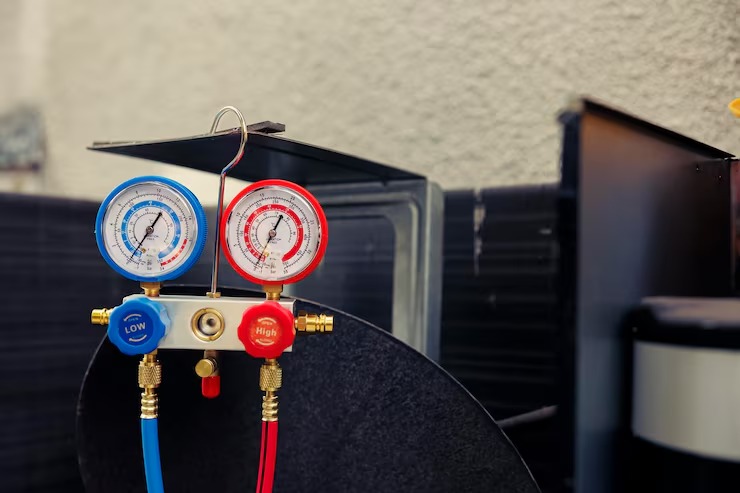
South Hadley’s terrain and lot sizes also factor into where equipment goes. A lot of the properties near the Connecticut River side have more room for outdoor condensers and longer line set runs than the tighter lots near the village center, where placement options are genuinely limited and matter for both permitting and future service access.
- A room-by-room load calculation, not a flat square-footage number
- Specific equipment model numbers, not just "a 2-ton system"
- Line set lengths and routing
- Confirmation the electrical service has capacity, or what it will take if it doesn't
- Permit and inspection included, not an add-on
- A written price, not a verbal estimate
Electrical capacity comes up on almost every heat pump and EV charger conversation out here. A lot of the older South Hadley housing stock still has 100-amp service or smaller, and once you add a heat pump, electric backup heat, and an EV charger to that panel, you can run out of room fast. I hold the electrical licensing to evaluate that and do panel upgrades in-house, not refer it out and hope it gets scheduled.
What the work involves
- Site visit and load calculation
- Written proposal with equipment, zones, and price
- Permit filed with the town
- Installation, typically one to three days depending on scope
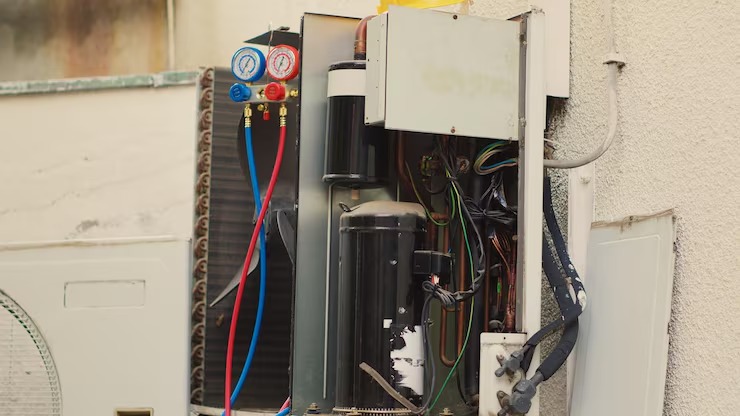
- Commissioning and system check, including refrigerant charge verification
- Inspection and walkthrough
On a ductless install, that’s running refrigerant line sets and a condensate line from each indoor head back to the outdoor condenser, keeping those runs within the manufacturer’s length and elevation limits so the system actually hits its rated capacity, and a clean electrical circuit to the outdoor unit. On a ducted system, we’re also checking static pressure in the existing ductwork, because undersized or leaky ducts will choke a new system’s output no matter how good the equipment is. If your project includes a panel upgrade or an EV charger, that’s licensed electrical work on the service conductors themselves, and it gets pulled under permit and inspected, same as the mechanical work. I don’t do unpermitted panel work and I wouldn’t recommend hiring anyone who offers to.
What it costs
Most residential heat pump and mini-split projects in this area run in the range of {PRICE_LOW} to {PRICE_HIGH}, and the spread comes down to a handful of real variables: how many zones or indoor heads the house needs, whether you’re using wall-mounted heads, ceiling cassettes, or a ducted air handler, how long the line set runs are and how hard the install site is to access, and whether your electrical panel has capacity already or needs upgrading first. Central air and furnace replacements have their own range depending on ductwork condition and equipment tier. I’ll give you a number after I’ve seen the house and run the load calculation, not before, because a price quoted over the phone with no site visit is a guess, not a quote.
Rebates and incentives
Mass Save offers incentives for qualifying heat pump installations, and the program is worth understanding before you finalize equipment choices, since eligibility depends on the specific equipment and how the system is configured. Rules and amounts change, so rather than quote a figure here that may be out of date by the time you read it, check masssave.com [EXTERNAL LINK: Mass Save program site, for current rebate eligibility and amounts] directly, or see our Mass Save heat pump rebates page for how the program generally works. I can walk through what your specific setup might qualify for once we’ve scoped the job, but the rebate itself comes from the program, not from us.
Permits and Inspection
Mechanical work on refrigerant systems and any electrical work on your panel or service gets permitted through South Hadley’s building department and inspected before it’s considered done. That’s not paperwork for its own sake, it’s what confirms the refrigerant charge, the electrical connections, and the condensate handling were done to code. A contractor skipping the permit is usually the same contractor who quoted the lowest number, and the two facts are related.
Get a Quote
If you’re trying to figure out whether your South Hadley house makes sense for ductless, a ducted heat pump, central air, or a panel upgrade to support any of it, call {PHONE} or send details about the house and I’ll set up a time to look at it. You’ll get a load calculation and a straight answer about what fits, including if the honest answer is to hold off or do less than you were planning.
frequently asked questions
Does South Hadley have natural gas, or is it mostly oil and propane?
It's mixed. Areas closer to the village center and the college tend to have gas service, while homes further out toward South Hadley Falls and the outskirts are more often on delivered oil or propane. That difference changes the savings case for a heat pump conversion significantly, so it's worth discussing your specific street.
My South Hadley house has radiators and no ductwork. What are my options?
Ductless mini-splits are the most common solution for homes like this. Each indoor head serves a room or zone without needing ductwork, and the outdoor condenser connects through refrigerant line sets run through walls or along the exterior. We size the number and placement of heads based on a room-by-room load calculation.
I own a rental property in South Hadley. Does that change what you'd recommend?
Yes. Landlords are often weighing upfront cost and reliability differently than an owner-occupant planning to stay for decades. We factor in tenant turnover, maintenance access, and your actual holding timeline when discussing equipment tier and zoning.
Can you upgrade my electrical panel if I want a heat pump and an EV charger?
Yes, panel upgrades and EV charger installs are licensed electrical work we perform in-house, not something we refer out. All of it is permitted and inspected through the town.
How do I know if a quote I received is legitimate?
Ask whether a load calculation was performed before the recommendation. A proposal that just lists equipment and a price with no room-by-room heat loss and heat gain analysis behind it is a sign the sizing was guessed, not calculated, and that often leads to an oversized, less comfortable system.