
Central Air Conditioning Installation in Belchertown, MA
Drive through the newer subdivisions off Route 9 or South Street and you’re looking at a lot of forced-air systems installed between the late 1990s and mid-2000s, many running on propane or oil rather than natural gas. That original equipment is now old enough that replacement, not repair, is the honest conversation to have, and the cooling side of the system often needs attention at the same time the furnace does.
- Powers Air HVAC, based in Granby, MA
Central Air Conditioning Installation in Belchertown
Belchertown has grown faster than most of the towns around it, and the housing stock shows it. You’ve got newer single-family homes on big lots built with forced-air ductwork already in place, which makes central air a straightforward addition or replacement. You’ve also got the older center-village homes near the common, some of which were built for steam or hot water heat and never had a duct system at all. Knowing which category a house falls into changes the entire install, and it’s the first thing we figure out before talking equipment.
For homes that already have ductwork sized reasonably well, central air conditioning is usually the right call over ductless. It cools the whole house evenly, it uses the infrastructure that’s already there, and it doesn’t require mounting indoor units in every room. We install it as a standalone AC paired with an existing or new furnace, or as part of a full system replacement when the furnace is also at the end of its life.
- Ductwork already exists and is in decent condition
- A furnace or air handler is already in place and just needs a matching outdoor condenser
- One thermostat and one system serving the whole house is genuinely simpler than several ductless zones
- Whole-house humidity control matters as much as temperature does
What Belchertown homes are working with
A big share of Belchertown has no natural gas line. Newer construction out toward the Belchertown and Ware lines runs on propane or delivered oil for heat, with central air riding on the same ductwork for cooling. That matters for the cost math on any future heating decision, but for a pure AC install it mostly affects what’s already sitting next to the furnace in the basement or mechanical closet and how much room there is to work.
The other half of the picture is the older center-village and Federal Street area housing, built well before forced air was standard, heated by steam or hot water radiators with zero ductwork to speak of. For those houses, retrofitting ducts for central air is possible but invasive and expensive compared to the alternative, and we’ll say so plainly rather than quote a duct retrofit just because it was asked for. Belchertown’s mix of large newer lots and older in-town parcels means we see both scenarios in the same week, sometimes the same street.
How we size and specify the system
Every quote starts with a Manual J load calculation, not a guess based on square footage or what the last contractor installed. The load calc accounts for insulation, window area, orientation, ceiling height, and air leakage, and it’s the only reliable way to know how many tons of cooling a house actually needs.
Oversizing is the most common mistake in this trade, and it doesn’t make a house more comfortable, it makes it less. An oversized system cools the air fast and shuts off before it has time to pull humidity out, so the house feels clammy even at the right temperature, and the equipment short-cycles, which wears it out faster and runs up the electric bill. Right-sized equipment runs longer, quieter cycles and actually dehumidifies.
If a quote shows up with a price and a unit size but no load calculation behind it, that’s worth treating as a warning sign. A proper proposal tells you the calculated load, the equipment matched to it, ductwork condition and any modifications needed, and what’s included versus what could come up once the job is opened.
- Short cycles: it cools the air fast and shuts off before it's run long enough to pull humidity out, so the house ends up cold and clammy at the same time
- Wears out faster, because more starts and stops means more stress on the compressor
- Costs more to buy and more to run than a correctly sized system would
What the work involves
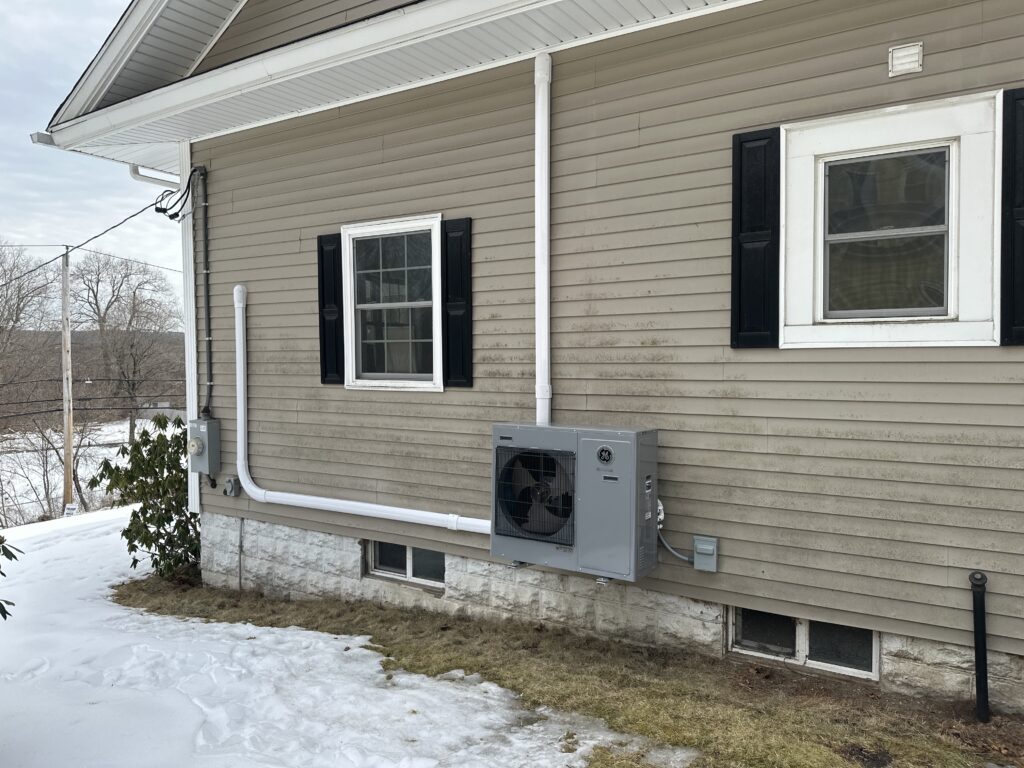
For a house with existing, reasonably sized ductwork, installing central air means setting the outdoor condenser on a pad, running refrigerant line set to the indoor coil, installing the coil above or alongside the furnace, running a condensate drain, and tying the whole system into the existing air handler controls. We check static pressure in the ducts before committing to a blower and coil combination, because undersized or leaky ductwork will choke even the right-sized equipment and undercut the whole point of the install.
For houses without ductwork, we’ll talk through whether a partial duct retrofit makes sense or whether a ducted mini-split or ductless system is the more honest answer for the money. We’re not going to sell a full duct retrofit into a 1920s center-village house just because central air was the original ask.
Electrical capacity gets checked early too. Central air adds a dedicated circuit and disconnect, and if a panel is already full or outdated, that’s a conversation we have before equipment gets ordered, not after. Powers Air holds electrical licensing in-house and handles panel upgrades directly when a job calls for one, permitted and inspected the way it’s supposed to be, not farmed out and hoped for.
- The load calculation itself, not just a tonnage number pulled from it
- The SEER2 rating of the equipment proposed and what that means for the summer electric bill
- Ductwork condition, and whether sealing or modification is part of the job
- Electrical circuit requirements for the outdoor condenser
- What's covered under manufacturer parts warranty versus labor warranty
Line set length and routing matter more than most quotes let on. Longer refrigerant runs between outdoor and indoor units lose efficiency and require larger line diameters or additional refrigerant charge, and routing through finished walls or tight basements adds labor that a flat per-ton price doesn’t capture. We walk the actual path before giving a number.
What the work involves
Access matters on older Belchertown lots with mature trees and smaller driveways, and on newer construction with finished basements where the mechanical room was an afterthought. Both affect labor time, and both get accounted for in the walkthrough rather than discovered mid-install.
- A straight conversation about whether central air is still worth the disruption, or whether ductless is the better fit for that unit
- New duct runs through closets, dropped ceilings, or chases, placed to do the least damage to finished space
- Coordination on panel capacity if the building's electrical service can't support another circuit
What it costs
A straightforward central air install onto existing, adequate ductwork in Belchertown typically runs between {PRICE_LOW} and {PRICE_HIGH}. What moves the number: whether the ductwork needs modification or just a tap-in, the capacity and condition of the electrical panel, how far the refrigerant line set has to travel, whether the job includes a new furnace or air handler at the same time, and site access. A full duct installation in a house that never had one is a different and larger project, and we’ll quote that separately and honestly rather than folding it into a per-ton number that doesn’t apply.
What it costs
We don’t price jobs over the phone sight unseen. A short walkthrough of the mechanical space, attic or crawlspace if ducts are involved, and the electrical panel gives us what we need for a number that holds up once the work starts.
- Number of zones or separate systems needed
- Whether ductwork exists, needs sealing, or needs to be built new
- Line set length between the indoor and outdoor equipment
- Whether the electrical panel has capacity for another circuit or needs work first
- Access, a condenser pad on an open side yard costs less to install than one on a tight lot with a fence and a neighbor's driveway in the way
Rebates and incentives
Mass Save offers incentives that can apply to certain cooling and heating equipment, and the programme details and eligibility change over time, so it’s worth understanding what currently applies to your specific situation rather than relying on what a neighbor got last year. We can walk through what might apply to your house as part of a quote. For current programme details, see masssave.com directly, and for more on how heat pump incentives specifically work alongside or instead of central air, see our Mass Save heat pump rebates page.
Get a Quote
If you’re in Belchertown and dealing with a central air system that’s quit, or planning ahead because the furnace and coil are both original to a 2003 build, call {PHONE}. You’ll talk to Drew, not a scheduler reading from a script, and the quote you get back will have a load calculation behind it.
Why Belchertown Homeowners Choose Us
Belchertown’s mix of older farmhouses, newer builds near the Quabbin, and properties on well water each bring their own quirks to a central air installation. We’ve worked through the ductwork limitations, electrical panel questions, and placement challenges that come with this area’s housing stock, so the system we spec accounts for the actual house rather than a generic estimate.
No pressure, no upsells – just a straightforward plan sized to your home and explained in plain language.
frequently asked questions
Can central air be added to a Belchertown home that currently only has a furnace for heat?
Yes, as long as the ductwork is adequate or can be reasonably modified. We check duct sizing and static pressure before recommending equipment, since adding a coil and condenser to undersized ducts will limit performance regardless of the unit's rating.
Is central air a better choice than ductless for my house?
If you already have working ductwork sized to handle the airflow, central air is usually the simpler and more cost-effective choice, especially for whole-house cooling. Homes without ductwork, common in Belchertown's older center-village housing, are usually better served by ductless or a ducted mini-split system.
Does Belchertown have natural gas service?
Coverage is limited and much of the town, including many newer subdivisions, runs on propane or delivered oil for heat. This doesn't affect a standalone central air install directly, but it's relevant if you're replacing a furnace at the same time.
How long does a central air installation take?
A straightforward install onto existing ductwork is typically completed in a day. Jobs that involve duct modifications, panel work, or a simultaneous furnace replacement take longer, and we'll give you a realistic timeline during the walkthrough.
What size central air system does my house need?
That's determined by a Manual J load calculation, not a rule of thumb based on square footage. Oversized systems cool fast but cycle short, which leaves the house humid and wears out equipment faster, so we size to the calculated load, not the biggest unit that fits.