
EV Charger Installation in Hadley, MA
Home EV charging only works where a car can sit still on your own property for hours at a stretch. That’s a garage, a driveway, a gravel pull-off next to a barn. It is not a shared lot or a street-parked spot in a three-decker neighborhood, which is why this is a service we build out town by town rather than offer everywhere in the territory. Hadley, with its working farmland, older farmhouses with additions tacked on over the decades, and the Route 9 retail corridor, has exactly the kind of off-street parking this work depends on.
- Powers Air HVAC, based in Granby, MA
Powers Air is based in Granby and does this work in-house under Drew’s own electrical licensing, {ELECTRICAL_LICENCE}. There’s no subcontractor handed your job and no call center between you and the person who actually plans the circuit. The same is true of our panel work and our heat pump installs: one person looking at the whole house before anything gets decided.
Where the Car Parks and What That Means
A lot of Hadley properties are set up around tobacco barns, equipment sheds, and outbuildings that were wired decades ago for a very different set of loads. Some of those structures have their own feed off a subpanel, some run on nothing more than a light circuit, and some farmhouses have additions where the electrical was patched in piecemeal as rooms got added. Before we talk about charger models, we need to know where the car actually parks relative to the main panel, because that distance and that path drive almost everything else about the job, including price.
If the car parks in an attached garage close to the panel, this is usually a straightforward run. If it parks at a detached garage, a converted barn, or anywhere across the yard, the job changes shape: it may mean an underground run, it may mean tying into an existing subpanel if there’s capacity, or it may mean a new feed is the cleanest answer. We walk the property and look at what’s already there before we quote anything.
- Single-family home with a driveway or garage. The straightforward case. The main cost driver is distance from the panel to where the car sits, and whether the run is exposed in a garage or fished through finished walls.
- Small multi-family conversions. A lot of the older housing here was carved into two or three units over the decades, often still fed by one aging panel with circuits nobody has traced in thirty years.
- Larger apartment or condo buildings. Stacked meter banks, a house panel sized in a different era for hallway lighting and laundry, and a question that is rarely about the charger itself.
None of this is guesswork from a brochure. It’s the same approach we use sizing a mini-split or a heat pump: look at the house and the loads it actually has, not a generic number off a chart.
Level 2, and What Your Car Can Actually Take
Level 2 charging means a dedicated 240-volt circuit, and that’s what every practical home charger uses. Where people overspend is on the charger itself. Chargers are commonly rated anywhere from around 16 amps up to 48 amps or more, but the number that actually matters is what your car’s onboard charger can accept. Plenty of EVs on the road cap their AC charging around 7.7 kW. If that’s your car, a 19.2 kW wall unit on a 48-amp circuit isn’t going to charge any faster. You’re paying for headroom you can’t use, and sometimes paying for a bigger circuit and panel capacity you didn’t need either.
There’s also a code distinction between hardwired chargers and ones that plug into a NEMA 14-50 receptacle. A 14-50 gives you flexibility, it’s a standard receptacle used for RVs and ranges too, and some chargers are designed around it. Hardwired units skip the receptacle and connector, which some manufacturers require and which some homeowners prefer for a cleaner installation with nothing to work loose over time. Code treats continuous loads like EV charging conservatively, which is part of why the circuit is sized above the charger’s actual draw, not exactly to it. In real terms, a well-sized Level 2 setup overnight will put most daily commuting back into the battery and then some, which is the honest expectation, not a marketing number.
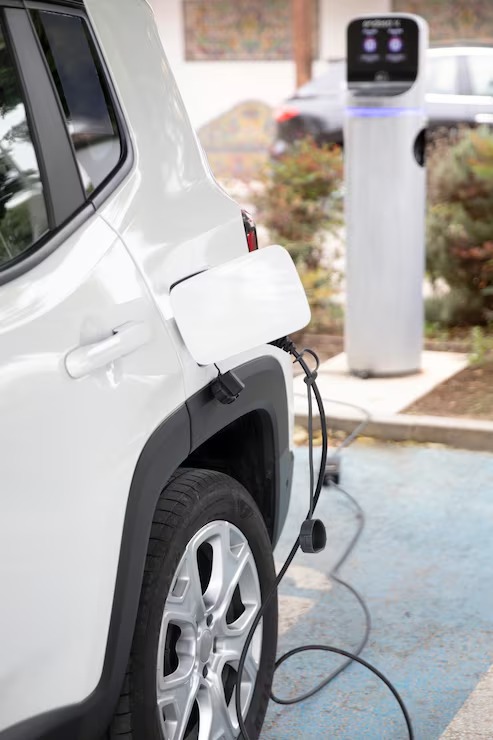
- Hardwired connection. No receptacle in the circuit at all. Typically the choice for higher-amperage installs, and there is no plug and cord sitting outdoors year after year to work loose or corrode.
- Plug-in on a NEMA 14-50 receptacle. The same style of receptacle used for a range or a welder. You can unplug the charger and take a portable unit with you, but code treats a cord-and-plug load differently than a hardwired one, and that changes some of the sizing and protection requirements.
Tell us the car you drive now and the one you’re likely to replace it with, and we’ll size the circuit and the unit to match, not oversize it because bigger sounds better.
Whether Your Panel Has Room
An EV charger is a large, continuous load, and it’s one more thing asking for capacity on a panel that may already be carrying a heat pump, a heat pump water heater, an electric range, or all three. This is the question that sends roughly half of these jobs back to a conversation about the panel itself. We don’t guess at it. A load calculation looks at what’s actually on the panel, what each circuit draws, and what headroom is left, and it gives a straight answer.
More often than not in Hadley’s housing stock, especially the older farmhouses that were never fully electrified for modern loads, the answer is yes, there’s room, and the charger goes in without touching the panel at all. When there isn’t room, the next move usually isn’t a full service upgrade. A load management device, which shares available capacity between the charger and other large loads so you never actually exceed what the service can handle, is frequently a cheaper and faster fix. If the panel genuinely needs more capacity, that’s a separate, bigger job, and you can read about what that involves on our Hadley panel upgrade page. If you’re weighing a heat pump and a charger together, the heat pump panel upgrade page covers how those two loads get planned together instead of separately.
What the Work Involves
Once we know where the car parks and what the panel can support, the job is a dedicated 240-volt circuit run from the panel to the charging location, protected by its own breaker, terminating either at a hardwired charger or a NEMA 14-50 receptacle depending on what you’ve chosen. In a garage with open framing, that run is often straightforward. Through finished walls or across a distance to a detached structure, it takes more planning, and that’s reflected honestly in the quote rather than discovered halfway through the job.
This is licensed electrical work on your home’s service, and we’re not going to walk through the procedure here, because there isn’t a safe version of that explanation for a reader to follow on their own. What we will tell you plainly is what’s involved before we start: the path the circuit takes, whether anything needs to be opened up, and what gets closed up and inspected when it’s done.
- A load calculation confirming the panel can carry the new circuit, or sizing a load management approach if it can't.
- Planning the run from the panel to the charger location, whether surface-run, fished through finished space, or trenched to a detached garage.
- Pulling the electrical permit before any work begins.
- Installing the dedicated circuit and charger or receptacle, sized and protected to code.
- Scheduling and passing the town inspection, which is what makes it code-compliant rather than just working.
What It Costs
A straightforward garage install with the panel nearby and capacity already available runs toward the lower end of a {PRICE_LOW} to {PRICE_HIGH} range. What moves the number up: the distance from panel to parking spot, whether the run is surface-mounted and exposed or has to be fished through finished walls or ceilings, whether you’re dealing with masonry, whether a trench to a detached garage or barn is part of the job, and whether the panel itself needs attention first. We’ll also say this directly: if a quote you’re comparing against ours seems noticeably lower, check whether it includes the permit and inspection. That’s usually the part that’s missing, and it’s not optional.
- Distance from the panel to where the car actually parks.
- Whether the run is surface-mounted in an open garage or has to be fished through finished walls and ceilings.
- Whether the wall is masonry, which changes how the run is fastened and routed.
- Whether a trench is needed to reach a detached garage.
- Whether the panel itself needs work, from a load management device up to a full upgrade.
- Whether the permit and inspection are included in the quote at all.
Utility and state incentive programs for home EV chargers exist and they do change over time. Rather than quote a figure that might be outdated by the time you read this, we’ll help you work out what currently applies to your situation when we talk.
Permits and Inspection
Every EV charger installation we do in Hadley, and in every town we work in, gets a permit and a final inspection. This is service-level electrical work and Massachusetts treats it that way regardless of who’s doing it. It costs a little more and takes a little longer than skipping it, and it’s the difference between a job that’s documented and inspected and one that technically isn’t supposed to exist. For the governing code requirements, see the [EXTERNAL LINK: Massachusetts Electrical Code (as adopted, 2023 NEC amendments) section on electric vehicle supply equipment].
Get a Quote
If you’ve got a car, a place to park it in Hadley, and a panel you’re not sure about, call Powers Air at {PHONE}. We’ll look at the actual distance, the actual panel, and the actual vehicle before we tell you what it takes, and you’ll be talking to the person doing the work the whole way through. For the full picture of how we approach this service across the territory, see our EV charger installation page, or check general pricing on our EV charger installation cost page. For everything else we handle in town, visit our Hadley, MA page.
frequently asked questions
Does my car's onboard charger matter more than the EV charger I buy?
Yes. The wall unit sets a ceiling, but your car's onboard charger decides what you actually draw. A lot of EVs cap out at 7.7 kW no matter what you plug them into, so buying a 48-amp or 19.2 kW charger because it sounds faster is often money spent for nothing. Tell us the car and we'll size the circuit to what it can use, not past it.
Can I install a NEMA 14-50 outlet instead of hardwiring the charger?
Often, yes, and it gives you flexibility if you change vehicles or chargers later. Hardwired installs skip the plug and connector entirely, which some chargers require and some homeowners prefer for a cleaner look. We'll tell you which your unit supports and which makes sense for where it's going.
Will adding a charger mean I need a panel upgrade?
Sometimes, but less often than people assume. We run a load calculation against your actual panel and existing loads first. A lot of Hadley houses have room, especially older farmhouses that never got a heat pump or electric range added. When there isn't room, a load management device is frequently a cheaper fix than a full service upgrade.
Do I need a permit for a home EV charger in Hadley?
Yes. This is electrical work on a dedicated 240-volt circuit and it gets permitted and inspected like any other service work in Massachusetts. If a quote doesn't mention a permit, that's usually the corner being cut.
What if my charging spot is far from the panel, like at a detached garage or barn?
That's common on Hadley's farm properties, and it changes the job. A run to a detached structure may mean trenching for underground conductors or feeding off an existing subpanel if one is already out there and has capacity. We look at the actual distance and existing service before quoting anything.