
Electrical Panel Upgrades and Change-Outs in South Hadley, MA
Electrical panel upgrades in South Hadley
A lot of South Hadley’s housing was wired for a different house than the one standing there now. Properties near Mount Holyoke that were split into rentals or faculty units often still carry the service size they were built with, and whoever added the second kitchen, the mini-split, or the window AC along the way usually didn’t touch the panel to match. That’s where the surprises live.
Powers Air does panel upgrades and change-outs as licensed in-house electrical work under electrical license {ELECTRICAL_LICENCE}. We don’t sub this out and we don’t quote it without opening the panel first.
- Powers Air HVAC, based in Granby, MA
If you’re reading this because you want a heat pump, a heat pump water heater, or an EV charger and someone mentioned the panel might be a problem, this page is for you. So is the homeowner who just wants to know if the panel in a hundred-year-old South Hadley two-family is actually a hazard or just old. Those are two different questions and they get two different answers.
What South Hadley homes have for service today
The housing stock here splits roughly into two eras and they behave differently electrically. Closer to the college and the center, you’ve got older single and two-family homes, a good number converted into rental units or faculty housing over the decades. These often still run 60 or 100 amp service, sometimes with a subpanel added when a basement was finished or a unit was split off a shared meter bank. Multifamily conversions are where we find double-tapped breakers, a mix of knob-and-tube remnants behind newer wiring, and a service that was adequate for one household’s appliances but is now feeding two or three.
Further out toward the newer developments, service is more commonly 100 or 200 amp with cleaner single-family wiring, though even there a finished basement, a hot tub, or a garage subpanel can push a 100 amp service further than it was ever sized for. Overhead drops are still common across the older neighborhoods; underground service shows up more in newer construction. If you’re a landlord with a converted property, the decision here isn’t just about your own comfort. It’s about what the next tenant’s window units, space heaters, and whatever they bring with them will ask of a service that’s already carrying more than its original load.
How we work out what the house actually needs
We don’t size a panel off square footage or a guess at what’s typical for a house this age. We run a load calculation under the Massachusetts Electrical Code that adds up what’s actually connected and what’s planned – the furnace or air handler, the water heater, the range, the dryer, any mini-splits, and whatever you’re adding, whether that’s a heat pump, an EV charger, or a second unit’s kitchen.
That calculation tells us two separate things, and they get confused constantly. One is what the service itself is rated for – the wire coming in from the meter and the main breaker. The other is how many breaker spaces are physically left in the panel enclosure. A panel can be maxed out on spaces while the service underneath it has room to spare, and the fix for that isn’t a new service at all – it’s a subpanel. A real quote tells you which problem you actually have, backed by a load calculation, not a line item that assumes a change-out before anyone’s looked.
If a contractor quotes a panel upgrade without opening the panel and checking what’s actually on it, that’s worth a second opinion. We’ve corrected more than one quote written entirely from a photo of the meter.
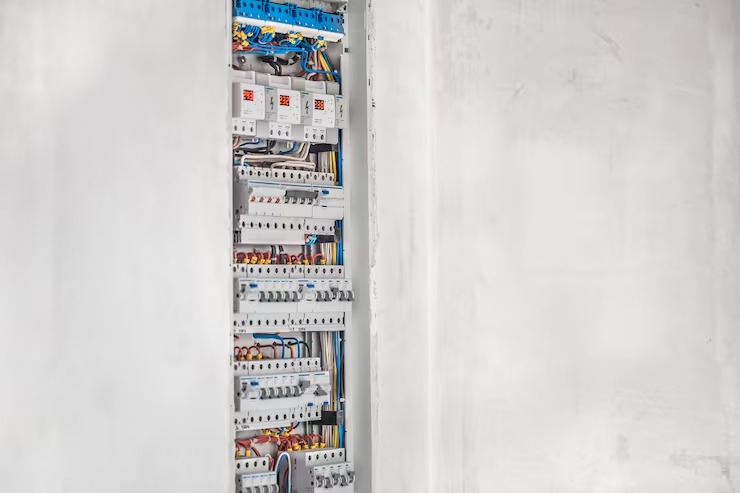
When you do not need a new panel
This is the section most companies skip, because it doesn’t end in a sale. A load calculation frequently shows the existing service is fine, and there are three real alternatives to a full change-out:
- A better-matched appliance. A cold-climate heat pump sized correctly to a Manual J load, or a heat pump water heater with a lower amperage draw, sometimes fits inside a 100 amp service that would choke on an oversized or mismatched unit.
- A load management device. These shed one load automatically when another kicks in – your EV charger pauses for the few minutes the dryer’s running, for instance – so two or three high-draw appliances can share a service that couldn’t otherwise support all of them running at once.
- A subpanel. If the real problem is breaker spaces rather than service capacity, a subpanel solves it for a fraction of a full change-out.
We’d rather tell you the panel’s adequate and sell you the fifteen-minute fix than quote a change-out the load calculation doesn’t support. The homeowner who hears that is the one who calls us for the work the house actually needs.
- A better-matched appliance. A heat pump water heater or a mini-split system sized correctly for the actual load draws less than a straight replacement sized off habit, and sometimes that difference is what keeps the existing panel adequate.
- A load management device. These devices let two loads, an EV charger and an electric dryer for example, share the same available capacity by stepping one down when the other is running, instead of requiring enough headroom for both to run flat out at once.
- A subpanel. When the real problem is breaker spaces rather than total service capacity, adding a subpanel solves it for a fraction of what a full change-out costs, without touching the main service at all.
When the calculation does show the existing service can’t carry what you’re adding, a change-out is the honest answer and we’ll tell you that too. The point isn’t to avoid the work. It’s to only do the work that’s real.
What the work involves
A genuine change-out replaces the service entrance and panel, and that means working with conductors that are live ahead of the main breaker, up to and including the utility connection itself. That’s not something we walk a homeowner through step by step, because there isn’t a safe version of that instruction for anyone who isn’t licensed to do it. What we can tell you is what happens: the old equipment comes out, new service equipment goes in sized to the load calculation, the utility coordinates the disconnect and reconnect, and the installation is inspected before it’s energized. You get a panel that matches what the house actually runs, with room for what you’re planning to add.
What it costs
A straight range for South Hadley work runs {PRICE_LOW} to {PRICE_HIGH}, and what moves you within that range is specific to the job, not the town: the service size going in, whether you’re upgrading an existing 100 amp service to 200 amp or just replacing in kind, overhead versus underground drop, whether the meter socket and mast need replacing along with the panel, how far the panel sits from the meter, and whether the utility needs to schedule a disconnect window around the work. Jobs done alongside other equipment – a heat pump install, an EV charger, a water heater swap – often cost less combined than done as separate visits, since the load calculation and the opened panel serve more than one project at once. If you’re weighing a charger against the rest of this list, our EV charger installation page for South Hadley breaks down what that adds to the load. We never quote a fixed price before opening the panel and running the numbers.
- The size of service going in. Jumping from 100 to 200 amps costs less than sizing up further for a multifamily building.
- Overhead versus underground service. Underground runs cost more because they involve trenching.
- Whether the meter socket and mast also need replacing, which is common on older services.
- How far the panel is from the meter, since a longer conductor run adds cost.
- The utility's disconnect scheduling, which is outside our control and can add time even to a straightforward job.
- Whether the work is done alongside other equipment, such as a heat pump or an EV charger, which can share some labor.
If the number you’ve been quoted elsewhere came with no mention of a load calculation, ask where it came from. That’s usually the corner being cut.
Permits and Inspection
Every panel upgrade and service change-out we do in South Hadley is permitted and inspected. That’s not an upsell line, it’s how the work is supposed to happen everywhere in Massachusetts, and it’s the surest way to tell a serious quote from a cheap one. The permit protects you at resale, with insurance, and with the utility. Our quotes include it as a matter of course. For the specifics of what the code requires, the [EXTERNAL LINK: Massachusetts Electrical Code as adopted by the Board of State Examiners of Electricians, for readers who want the underlying standard] lays out the governing requirements we work to on every job.
Get a Quote
If you’re not sure whether your South Hadley panel needs replacing or just needs a closer look, that uncertainty is the normal starting point, not a problem. Call {PHONE} and tell Drew what you’re trying to add – heat pump, charger, water heater, finished basement – and he’ll walk you through what a load calculation would actually tell you before anyone commits to a change-out. For the electrical work across our whole service area, see the electrical panel upgrades hub, and for everything else we do in town, visit the South Hadley service page. If a heat pump is what’s driving this, our heat pump panel upgrade page covers how the two projects fit together.
frequently asked questions
Does my South Hadley home need a 200 amp panel for a heat pump?
Not necessarily. A cold-climate heat pump's electrical draw depends on its size and the load calculation for the whole house, not a blanket rule. Plenty of 100 amp services handle a correctly sized heat pump without any upgrade at all. We check before assuming either way.
I own a converted rental near the college with a shared meter bank. Does that change anything?
It can. Shared services and meter banks sometimes mean the panel you're looking at isn't sized around just your unit's load, and older conversions often have subpanels stacked on an original service that was never meant to carry this much. A load calculation on the actual service, not just your unit, gives you the real answer.
How long does a panel change-out take?
The work itself is typically done in a day, though the utility's disconnect and reconnect scheduling can add time depending on their availability. We coordinate that as part of the job rather than leaving you to sort it out.
Can I add an EV charger without upgrading my panel?
Sometimes, especially with a load management device that shares capacity between the charger and another high-draw appliance. It depends on what else is already on the service, which is exactly what the load calculation tells us.
Do you do this work yourselves or send out a subcontractor?
In-house. Drew holds the electrical licensing for panel upgrades and change-outs, and that's who you're dealing with from the quote through the inspection, not a dispatched crew.