
HVAC Contractor in Belchertown, MA
Belchertown has two housing stories running side by side. Out toward the newer subdivisions you’ve got 1990s and 2000s colonials and capes on big lots, most of them built with propane or oil and forced air rather than gas, because gas service doesn’t reach most of this town. In the center village and along the older roads you’ve got farmhouses and capes from well before that, some still running on oil-fired boilers and radiators with no ductwork at all.
- Powers Air HVAC, based in Granby, MA
That mix matters because the right HVAC call for a 2003 colonial on a half-acre lot is not the right call for a 1920s farmhouse with cast iron radiators. Powers Air is based in Granby, a few minutes away, and I spend a lot of time in Belchertown basements and mechanical closets figuring out which situation I’m actually looking at before I recommend anything.
- Ductless mini-split installation, single-zone and multi-zone
- Heat pump installation and replacement, cold-climate rated equipment
- Central air conditioning
- Furnace installation and replacement
- Ductwork and ventilation
- Electrical panel upgrades and change-outs, licensed and permitted, done in-house
- EV charger installation
HVAC Contractor in Belchertown
I’m Drew Powers. I ran a bigger outfit for years, ten to twenty guys on the payroll, and I went back to working the jobs myself with a small crew and a short list of plumbing and electrical subs I trust. When you call about a Belchertown job, you’re talking to the person who’s going to be standing in your basement or your garage doing the work, not a dispatcher reading off a script.
Powers Air handles residential and commercial heating and cooling, with a focus on ductless mini-splits and heat pumps. We also do central air conditioning, furnace replacement, ductwork and ventilation work, and we now do electrical panel upgrades and EV charger installation as licensed in-house work, not something we hand off to someone else.
What Belchertown homes are working with
The newer construction in Belchertown’s subdivisions is almost always forced air, which means the ductwork is already there. A lot of that equipment went in with the original build in the late 90s or early 2000s, and it’s now at or past the point where replacement makes more sense than another repair bill. Most of these homes run on propane or oil rather than gas, since gas lines don’t serve much of Belchertown outside a few pockets, so the fuel-cost math for switching some or all of the heating load to a heat pump is usually more favorable here than it would be in a town with cheap gas.
The older centre-village housing is a different animal. Steam or hot water radiators, no ducts, often a boiler that’s been patched more than once. For those houses, ductless mini-splits aren’t a nice-to-have upgrade, they’re the realistic path to air conditioning and supplemental heat without ripping open plaster walls to run ductwork that was never designed to be there. I also see a fair number of larger lots in Belchertown where outdoor unit placement and line set length actually matter to the design, more so than in a tight in-town lot where everything’s close together.
How we size and specify the system
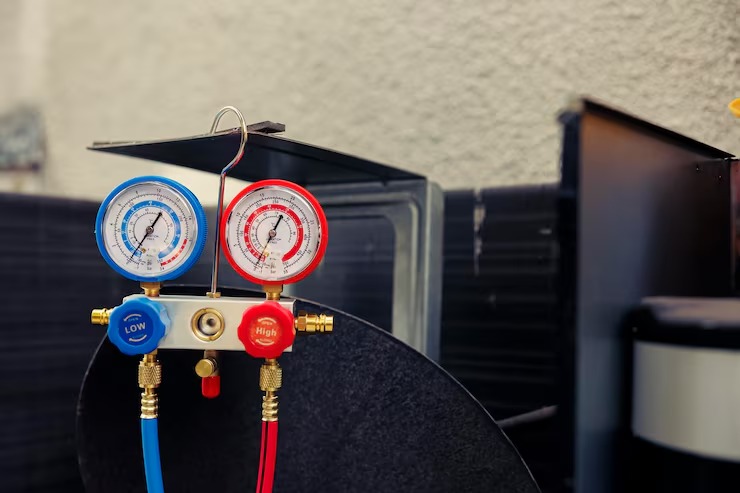
Every recommendation starts with a load calculation, not a tape measure and a guess. A Manual J load calc accounts for your square footage, insulation, window area, orientation and air leakage to tell us how much heating and cooling capacity the house actually needs, room by room if it’s a multi-zone ductless layout.
Oversizing is the most common mistake I see from other quotes, and it doesn’t make a house more comfortable, it makes it less. An oversized system short-cycles: it blasts the space, shuts off, and leaves you with temperature swings and poor dehumidification in summer. Oversized equipment also wears out its compressor faster from all that starting and stopping. If someone hands you a quote with a system size on it and no load calculation behind it, that’s a warning sign, not a sign they moved fast for you.
For heat pumps specifically, I’m also looking at cold-climate ratings and HSPF2 numbers, how much capacity the unit retains as outdoor temperatures drop, and whether you need backup or auxiliary heat for the coldest stretches of a Western Mass winter. A quote from us tells you the equipment model, the calculated loads, the line set routing, and what backup heat strategy we’re recommending, not just a number at the bottom.
- A room-by-room load calculation, not a flat square-footage number
- Specific equipment model numbers, not just "a 2-ton system"
- Line set lengths and routing
- Confirmation the electrical service has capacity, or what it will take if it doesn't
- Permit and inspection included, not an add-on
- A written price, not a verbal estimate
For a propane or oil-heated house in Belchertown, the heat pump conversation is usually about how much of the heating load to shift, not whether to go all-electric on day one. A lot of homeowners end up running the heat pump as primary heat through most of the season and keeping the existing oil or propane system as backup for the coldest days, which protects you if the heat pump’s output drops off during a deep cold snap.
What the work involves
- Site visit and load calculation
- Written proposal with equipment, zones, and price
- Permit filed with the town
- Installation, typically one to three days depending on scope
- Commissioning and system check, including refrigerant charge verification
- Inspection and walkthrough
Electrical capacity is part of this conversation more often than people expect. A whole-home heat pump conversion, plus an EV charger if you’re thinking about one, can push an older 100-amp panel past what it can safely handle. We check panel capacity as part of the HVAC quote, and if an upgrade is needed, we do that work ourselves rather than telling you to go find someone else.
What the work involves
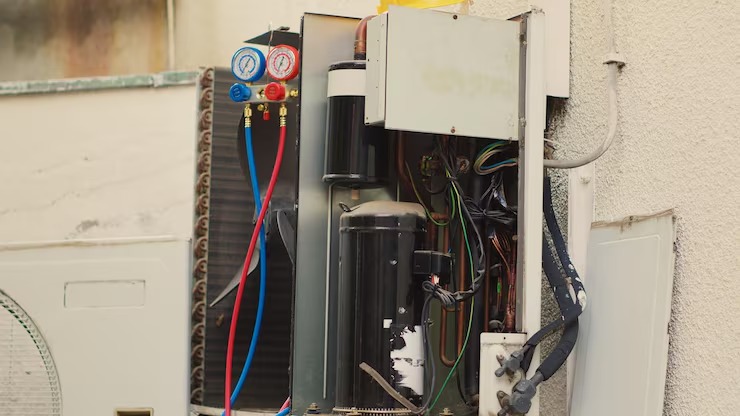
For a ducted system replacement in one of Belchertown’s newer subdivision homes, the work usually means pulling the old furnace or air handler and condenser, verifying the existing ductwork can handle the new equipment’s static pressure, and swapping in properly matched components. Old ductwork sized for a different unit is a common hidden problem, and we check it rather than assuming it’s fine.
For a ductless install in an older centre-village house, it’s about planning indoor head locations room by room, routing line sets and condensate drains cleanly through walls or chases, and sizing the outdoor unit or units for the whole-house load rather than treating each room in isolation. Multi-zone systems need a design that accounts for how the zones interact, not just a head in every room.
If electrical work is part of the job, whether that’s a panel upgrade to support new equipment or an EV charger installation, that work is done under Drew’s electrical licensing, permitted and inspected the same as the HVAC work.
What it costs
A straightforward single-zone mini-split in Belchertown typically runs in the range of {PRICE_LOW} to {PRICE_HIGH}, with multi-zone systems, full ducted replacements, and jobs that require panel upgrades landing higher. What moves the number: how many zones you need, whether you’re installing wall-mounted, ceiling cassette, or ducted indoor units, how far the line sets have to run, whether your electrical panel has the capacity for new equipment or needs upgrading first, and how accessible the install locations are. We don’t give you a number until we’ve actually looked at the house and run the load calc, because a quote built on a guess isn’t a real quote.
Permits and Inspection
HVAC and electrical work in Belchertown both require permits, and any panel upgrade or EV charger install we do gets pulled with a permit and signed off by inspection. That’s not optional paperwork, it’s what confirms the service conductors and connections were done to code, and it’s part of why the cheapest quote on panel work is often the one skipping that step. We handle the permitting as part of the job.
Rebates and incentives
Mass Save offers incentives for qualifying heat pump installations, and the specifics around eligibility and amounts change and depend on your home and the equipment installed. We can help you understand what might apply to your specific house as part of the quote process, but the program is run through the utility sponsors, not through us. For current details, check [EXTERNAL LINK: masssave.com, the authoritative source for current Mass Save program rules] or see our Mass Save heat pump rebates page for a general overview.
Get a quote
If you’re in Belchertown and trying to figure out whether your old subdivision heat pump needs replacing, whether ductless makes sense for a centre-village house with no ducts, or whether your panel can handle new equipment or an EV charger, call {PHONE}. You’ll talk to Drew directly, and if the right answer for your house is smaller or simpler than what you were expecting to pay for, that’s what you’ll hear.
frequently asked questions
Does Belchertown have natural gas service?
Gas service is limited in Belchertown, and most homes outside a few pockets run on delivered oil or propane. That changes the economics of a heat pump conversion compared to a town with cheap gas, usually in the heat pump's favor.
My Belchertown house has no ductwork. Can I still get central air or heat pump heating?
Yes. Ductless mini-split systems are built for exactly this situation, delivering heating and cooling room by room without needing ducts run through plaster walls or finished ceilings.
My subdivision home's original HVAC system is from the early 2000s. Should I repair it or replace it?
Equipment from that era is generally reaching the end of its useful life, and repair costs on an aging system often don't make sense compared to replacing it with a properly sized, more efficient unit. We can assess the specific system before you decide.
Do you handle the electrical work if my panel needs an upgrade for a heat pump or EV charger?
Yes. Panel upgrades and EV charger installation are done in-house under Drew's electrical licensing, not referred out, and the work is permitted and inspected.
How do I know what size heat pump or AC system I need?
It's based on a load calculation specific to your house, not a rule of thumb based on square footage. We calculate the actual heating and cooling load before recommending equipment sizing.