
EV Charger Installation in Granby, MA
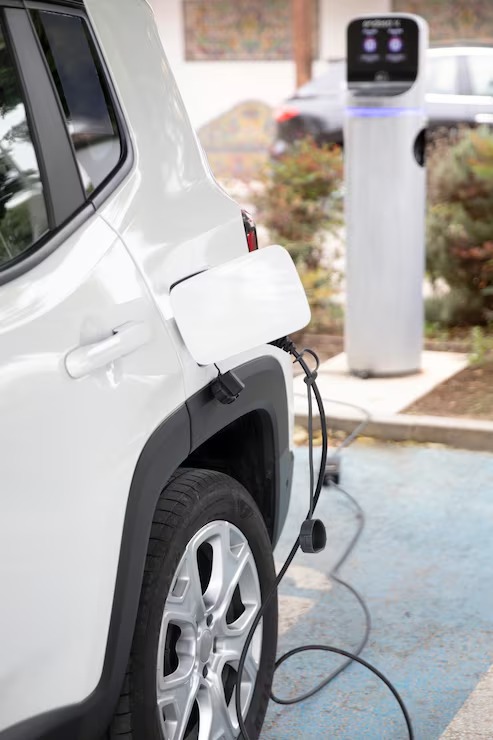
We added EV charger installation to what Powers Air does for the same reason we added panel upgrades: it’s electrical work tied directly to the house, and Drew holds the licensing to do it himself instead of handing it to someone else. In Granby that pairing matters more than it would in a town full of shared driveways and street parking, because here the car almost always has a place to sit overnight on the owner’s own property.
- Powers Air HVAC, based in Granby, MA
This page is about that specific job: a Level 2 charger fed by its own 240 volt circuit, installed where the car actually parks, done as permitted electrical work rather than a weekend favor. If you’re trying to figure out whether your panel can take it, what a realistic cost range looks like, or whether you even need the biggest charger on the shelf, that’s what’s below.
Where the Car Parks and What That Means
Granby is large lots and long driveways more than it’s tight village blocks. That’s the whole reason home EV charging makes sense here in a way it doesn’t in a three-decker neighborhood a few towns over. Your car has a fixed spot, whether that’s an attached garage, a carport, or just a stretch of driveway off the side door, and that spot is what determines everything else about the job.
A lot of Granby properties are older farmhouses that have been built onto over the years, sometimes more than once, and the electrical has usually grown the same way: an original service, a subpanel added when the addition went in, maybe another one for a barn or a detached garage. Before we talk charger, we need to know what’s actually feeding what. That’s not a formality, it’s the first real question on almost every one of these jobs out here.
- Single-family home with a driveway or garage. The straightforward case. The main cost driver is distance from the panel to where the car sits, and whether the run is exposed in a garage or fished through finished walls.
- Small multi-family conversions. A lot of the older housing here was carved into two or three units over the decades, often still fed by one aging panel with circuits nobody has traced in thirty years.
- Larger apartment or condo buildings. Stacked meter banks, a house panel sized in a different era for hallway lighting and laundry, and a question that is rarely about the charger itself.
We also see more detached outbuildings on their own feeds in Granby than almost anywhere else in the territory we serve, and those feeds are frequently the oldest wiring on the property. If the car parks near the barn and not near the house panel, that changes the run, the cost, and sometimes the whole plan.
Level 2, and What Your Car Can Actually Take
Every home charger conversation starts with the same mistake: buying based on the charger’s rated output instead of what the car can actually accept. The charger doesn’t move electrons into your battery, it just delivers power to the car’s onboard charger, and that onboard unit has its own ceiling. A lot of EVs on the road today top out around 7.2 to 7.7 kW no matter what you plug them into. If that’s your car, a 48 amp, 11.5 kW charger isn’t wrong to own, but it’s not buying you a faster charge either. The car is the limit, not the wall unit.
On the circuit side, there’s a real difference between a hardwired charger and one that plugs into a NEMA 14-50 receptacle. Code treats continuous loads like EV charging differently than it treats a dryer or a range, which is why a charger rated for 40 amps needs a breaker and wire sized for 50 amps continuous duty, not just 40. A plug-in setup on a 14-50 gives you flexibility to move or swap chargers later. A hardwired unit is a cleaner, more permanent installation and is often what’s called for on a dedicated circuit with no slack in it. Which one makes sense depends on your panel, your garage, and whether you think you’ll ever want a second charger or a different car.
As for what you actually gain overnight: a typical Level 2 circuit in the 32 to 40 amp range puts somewhere around 20 to 30 miles of range back into most EVs per hour of charging. For a car that sits in the driveway from 7pm to 6am, that’s a full charge from nearly empty, which is the whole point of charging at home instead of chasing a public station.
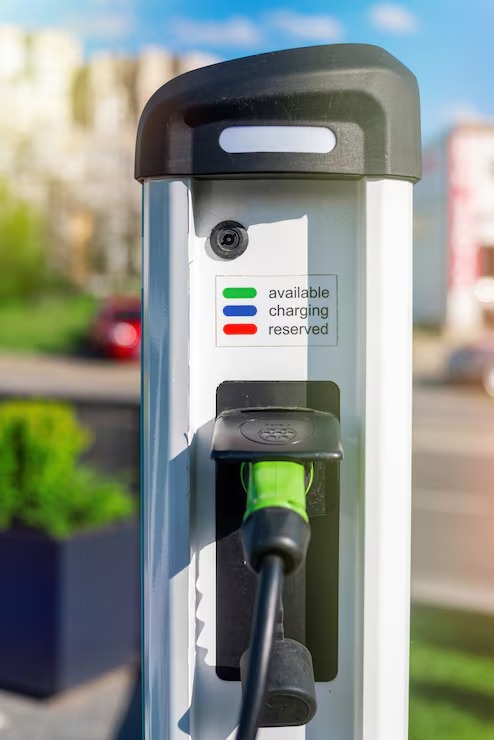
- Hardwired connection. No receptacle in the circuit at all. Typically the choice for higher-amperage installs, and there is no plug and cord sitting outdoors year after year to work loose or corrode.
- Plug-in on a NEMA 14-50 receptacle. The same style of receptacle used for a range or a welder. You can unplug the charger and take a portable unit with you, but code treats a cord-and-plug load differently than a hardwired one, and that changes some of the sizing and protection requirements.
Whether Your Panel Has Room
This is the section that decides whether your job is simple or whether it turns into a panel conversation first. An EV charger is a large continuous electrical load, and if your house already has a heat pump, a heat pump water heater, an electric range, and maybe electric heat somewhere in an addition, your panel may not have the headroom to add one more big draw safely.
The honest answer is that nobody can tell you from a drive-by. It takes an actual load calculation, adding up what the house draws against what the panel and service are rated for. More often than you’d think, the answer comes back yes, there’s room, with no panel work needed at all. When there isn’t, the fix isn’t automatically a full service upgrade. A load management device, which shares capacity between the charger and the rest of the house so you never actually exceed what the panel can handle, is frequently a cheaper and faster path than replacing the panel outright.
If the load calc does point to a service upgrade, that’s a separate piece of work we also do in-house, and it’s worth understanding before you commit to a charger. See our panel upgrade page for Granby and, if a heat pump is part of what’s already loading your panel, how heat pumps and panel capacity interact.
What the Work Involves
The job, at a high level: we confirm the car’s parking spot, run a dedicated 240 volt circuit from the panel to that location, mount and terminate either a hardwired charger or a 14-50 receptacle, and verify the circuit under load before we call it done. What we don’t do on this page is walk you through how to land conductors in a panel or size a breaker yourself. That’s not a confidence issue, it’s that there’s no safe version of that instruction for someone without the license to pull the permit and do the work, and we’re not going to pretend otherwise.
Where the run goes matters as much as the charger itself. A garage with an open stud bay and the panel on the same wall is a straightforward job. A finished garage, a wall that needs fishing through living space, a masonry wall, or a run out to a detached barn all add time and materials, and we’ll walk that physical path with you before quoting anything.
What It Costs
A straightforward Level 2 install, panel to an attached garage with a short, accessible run and no panel work needed, typically falls in the range of {PRICE_LOW} to {PRICE_HIGH}. What moves that number: the distance from the panel to where the car actually parks, whether the run is surface-mounted or has to be fished through finished walls, whether you’re dealing with a masonry wall, whether a trench is needed to reach a detached garage or barn, and whether the panel itself needs attention first.
We’ll also say this plainly: the permit and inspection fee should be in every quote you get, and if a number comes in noticeably lower than everyone else’s, that’s usually what’s missing. Skipping the permit doesn’t make the electrical safer, it just means nobody checked.
- A load calculation confirming the panel can carry the new circuit, or sizing a load management approach if it can't.
- Planning the run from the panel to the charger location, whether surface-run, fished through finished space, or trenched to a detached garage.
- Pulling the electrical permit before any work begins.
- Installing the dedicated circuit and charger or receptacle, sized and protected to code.
- Scheduling and passing the town inspection, which is what makes it code-compliant rather than just working.
What It Costs
Programs offering rebates or incentives for home EV charging do exist at the utility and state level, and they change often enough that we won’t quote figures here. If you want to know what currently applies to your situation, ask us and we’ll help you work through it rather than guess.
- Distance from the panel to where the car actually parks.
- Whether the run is surface-mounted in an open garage or has to be fished through finished walls and ceilings.
- Whether the wall is masonry, which changes how the run is fastened and routed.
- Whether a trench is needed to reach a detached garage.
- Whether the panel itself needs work, from a load management device up to a full upgrade.
- Whether the permit and inspection are included in the quote at all.
Permits and Inspection
EV charger circuits are permitted electrical work in Granby and in every town we serve, the same as a panel upgrade or any other service-connected change. We pull the permit, the work gets inspected, and that inspection is part of what you’re paying for, not an optional add-on. For the code basis behind circuit sizing and continuous-load requirements, the [EXTERNAL LINK: Massachusetts Electrical Code (527 CMR), the state’s adopted version of the NEC, as the governing standard for residential EV charging circuits] is the reference worth knowing exists, even if you never read it cover to cover.
Get a Quote
If you know where the car parks and want an honest read on what it’ll take to get power there, call {PHONE}. We’ll talk through the panel, the run, and the realistic cost range before anyone shows up, and if a load calculation turns up a panel issue first, we’ll tell you that too instead of quoting around it.
Start With Your Electrical Setup
Granby homes vary widely in how their electrical service was set up, which means every EV charger install starts with a conversation rather than a quote off a price sheet. Powers Air HVAC walks through your existing panel, your parking situation, and what your vehicle actually needs before recommending anything.
That upfront look saves surprises later, whether your home is older construction or a newer build with more capacity already in place.
frequently asked questions
Do I need a permit for a home EV charger in Granby?
Yes. An EV charger circuit is permitted electrical work, and it gets inspected like any other service-connected change. If a quote doesn't include the permit, that's usually the corner being cut.
Can I just plug a charger into an existing outlet?
A standard household outlet will charge an EV, but extremely slowly, and it's not what most people mean by a home charger. A proper Level 2 installation needs its own dedicated 240 volt circuit sized for continuous duty, which is a different job than plugging something in.
What's the difference between hardwired and plug-in chargers?
A plug-in charger connects to a NEMA 14-50 receptacle, which gives you flexibility to swap units later. A hardwired charger is wired directly into the circuit with no plug in between, which is often the cleaner, more permanent choice. Code treats the circuit sizing for each slightly differently, which we account for when we design the run.
Will a charger overload my electrical panel?
It can, if the panel is already carrying a lot of load from things like a heat pump, heat pump water heater, or electric range. A load calculation tells you for certain. Often there's room without any panel work; when there isn't, a load management device is frequently a cheaper fix than a full panel upgrade.
How long does an EV charger installation take?
The electrical work itself is usually a single day for a straightforward run. Longer or more complex runs, trenching to a detached garage, or a panel upgrade ahead of the charger will extend that.