
Electrical Panel Upgrades and Change-Outs in Northampton, MA
Electrical panel upgrades in Northampton
Northampton has the densest mix of electrified households in the territory. Walk down a side street off Elm or through the Florence center and you will find a heat pump condenser, an induction range vent, and a car charger all sharing a driveway that used to run a window AC and not much else. A lot of that electrification is landing on a 100 amp service that was sized for a different house doing different things, and that is the problem this page is about.
- Powers Air HVAC, based in Granby, MA
This is an electrical page, not a heating page, so we are going to talk about amps, breaker spaces, and what a load calculation actually counts, not BTUs. Drew holds the electrical licensing for this work and does it in-house, with the permit and the inspection that go with it. The honest version of this conversation often ends with you keeping your existing panel, and that is where we start.
What Northampton homes have for service today
The center of town is Victorian and pre-Victorian housing stock, much of it converted to multifamily at some point in the last hundred years, and the service situation reflects that history. A single-family Victorian that has not been touched electrically since a mid-century rewire is commonly still on 100 amp service, sometimes less, and it is not unusual to find knob and tube wiring still live in a wall that nobody has opened since a renovation stopped short of it. Converted multifamily properties often have a meter bank with individual unit panels, plus one or two subpanels stacked on top of an original service from a kitchen addition or a finished basement, and figuring out what is actually feeding what takes more than a glance at the panel door.
Overhead drops are still common on the older streets near downtown, while newer infill and anything rebuilt after a renovation is more likely underground. Whether you own the building you live in or rent it out to tenants changes the conversation too. An owner-occupant upgrading their own service is a different job, timeline, and set of priorities than a landlord upgrading a triple-decker ahead of new appliances, and we treat them differently from the first visit.
How we work out what the house actually needs
We run a load calculation under the Massachusetts Electrical Code that counts what is actually connected in your house, not a square-footage guess and not whatever number is printed on the panel label. The label tells you what the panel is rated for. It does not tell you what is actually drawing on it, and those are two different numbers that lead to two different answers.
There are also two separate problems that get confused constantly: service capacity and breaker spaces. A panel can be rated for plenty of amperage and still be physically full, with no slots left for a new circuit. That is a spaces problem, and it has a cheaper fix than a full service change-out. A panel can also have open slots and still not have the amperage to add a heat pump, a heat pump water heater, and a car charger without tripping the main under real load. That is a capacity problem, and it is the one that actually requires new service.
A real quote for this work includes someone opening the panel, reading the existing breakers and wire gauges, and writing down what is actually on the service before any number gets attached to the job. If a contractor quotes a panel upgrade over the phone or off a photo without ever opening the panel, that is a quote built on a guess, and it is usually the cheap one for a reason.
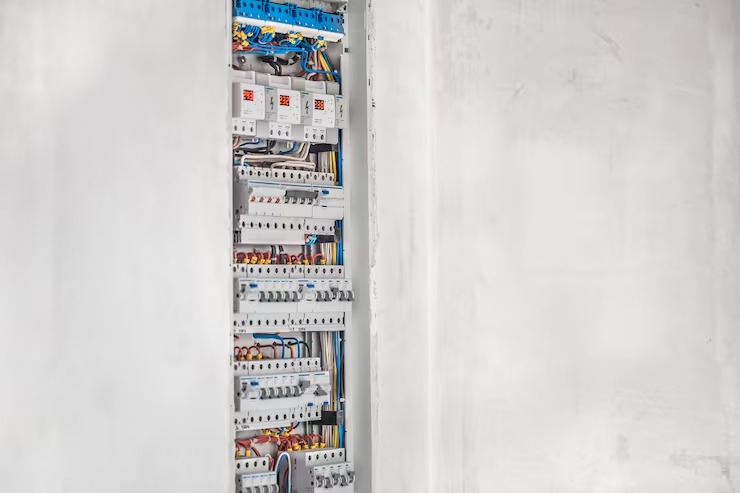
When you do not need a new panel
This is the section most companies skip, because the honest answer here does not always lead to a change-out. A load calculation frequently shows that a 100 amp or 150 amp service can carry what you actually want to add, once you know what is competing for amperage and when.
There are three real alternatives to a full service upgrade. The first is matching the appliance to the service instead of the other way around, choosing a cold-climate heat pump or heat pump water heater with a smaller electrical draw rather than assuming you need more capacity to fit the biggest unit available. The second is a load management device, which sheds or limits one circuit automatically when another is drawing hard, letting a car charger and a heat pump coexist on a service that could not run both at full output simultaneously. The third is a subpanel, which solves a spaces problem by adding breaker room without touching your actual service capacity at all.
If your load calculation comes back clean, we tell you that and we tell you what it would take to stay there. A homeowner who hears that their panel is fine today is the homeowner who calls us when something genuinely does need upgrading, and that is a better outcome for both of us than selling a service change-out nobody needed.
- A better-matched appliance. A heat pump water heater or a mini-split system sized correctly for the actual load draws less than a straight replacement sized off habit, and sometimes that difference is what keeps the existing panel adequate.
- A load management device. These devices let two loads, an EV charger and an electric dryer for example, share the same available capacity by stepping one down when the other is running, instead of requiring enough headroom for both to run flat out at once.
- A subpanel. When the real problem is breaker spaces rather than total service capacity, adding a subpanel solves it for a fraction of what a full change-out costs, without touching the main service at all.
When the calculation does point to a change-out, here is what that work actually involves and what it is reasonable to expect it to cost in this market.
What the work involves
A service change-out replaces the main panel and often the service conductors and meter equipment that feed it, sized to carry the new load with room to grow. This work involves the conductors feeding your house ahead of the main breaker, which are live any time the utility’s equipment upstream is energized, and that is the piece of this job that gets permitted, inspected, and coordinated with the utility rather than described to a homeowner as a procedure. Your job in this process is understanding the decision, what size service you are moving to and why, not performing or supervising the physical work.
Depending on what the inspection and load calculation turn up, the job might also touch the meter socket, the mast, and the grounding, since a change-out is frequently the moment those get brought up to current code rather than left as they were.
What it costs
A straightforward panel upgrade in Northampton generally runs in the range of {PRICE_LOW} to {PRICE_HIGH}, and the honest answer is that the number moves on real variables, not on negotiation. The service size you are moving to matters, a jump to 200 amp service costs more than staying at 150. Overhead versus underground service matters, because underground work usually means trenching and conduit that an overhead drop does not. Whether the meter socket and mast need replacing alongside the panel adds to the job, and how far the panel is physically located from the meter affects how much new conductor has to run.
Utility coordination is its own variable. Some change-outs require the utility to schedule a disconnect and reconnect around the work, and that scheduling can affect both cost and timeline independent of the electrical work itself. If you are doing the panel upgrade specifically to support an EV charger, worth a look at our EV charger installation page for Northampton alongside this one, since the two jobs are frequently done together and priced together. We never quote this work as a flat number sight unseen, because the honest range depends on what we find when we open the panel.
- The size of service going in. Jumping from 100 to 200 amps costs less than sizing up further for a multifamily building.
- Overhead versus underground service. Underground runs cost more because they involve trenching.
- Whether the meter socket and mast also need replacing, which is common on older services.
- How far the panel is from the meter, since a longer conductor run adds cost.
- The utility's disconnect scheduling, which is outside our control and can add time even to a straightforward job.
- Whether the work is done alongside other equipment, such as a heat pump or an EV charger, which can share some labor.
None of this is guesswork once we are inside the panel, and none of it should be guesswork on paper either, which is why permitting and inspection are part of every quote we write.
Permits and Inspection
Every panel upgrade we do in Northampton is permitted and inspected, full stop. That is not an upsell line, it is how this work is legally performed in every town in our service area, and it is also the reason a quote that skips the permit is almost always the cheaper one for the wrong reason. Permitting means the local wiring inspector reviews the work against the Massachusetts Electrical Code, and inspection means someone other than the person who did the job confirms it was done right before it gets closed out. That protects you, your insurance, and whoever buys the house after you.
[EXTERNAL LINK: Massachusetts Board of State Examiners of Electricians – Massachusetts Electrical Code as adopted, for homeowners who want to read the code basis behind the load calculation themselves]
Get a Quote
If you are adding a heat pump, a heat pump water heater, or a car charger to a Northampton house and you are not sure what your existing service can carry, that is exactly the question a load calculation answers before anyone commits to a panel upgrade. Call {PHONE} and you will talk to Drew directly about what is on your panel now and what the honest path forward looks like, whether that is a change-out, a subpanel, a load management device, or nothing at all. For the broader electrical work we do across the territory, see our electrical panel upgrades page, and for more on Powers Air’s work around town visit the Northampton hub page. If you are weighing a panel upgrade specifically against a heat pump install, our heat pump panel upgrade page walks through how those two decisions interact.
frequently asked questions
Do I need a new panel to install a cold-climate heat pump?
Not necessarily. It depends on what else is already drawing on your service and what the load calculation shows once everything connected is counted. Plenty of 100 amp Northampton homes can carry a heat pump without a change-out, especially if nothing else large is added at the same time.
What is a load calculation and why does it matter more than the panel label?
A load calculation under the Massachusetts Electrical Code tallies what is actually connected to your service, not what the panel is rated for or what your square footage suggests. The label tells you capacity. The calculation tells you whether you are using it.
Is a full 200 amp service always the right upgrade?
No. The right service size depends on what you are trying to run, now and reasonably soon. Jumping to 200 amp when 150 would cover everything you actually plan to add costs more without buying you anything.
Can a subpanel solve my problem instead of a full upgrade?
If your issue is running out of breaker spaces rather than running out of amperage, yes. A subpanel adds room without touching your service capacity, and it is often a fraction of the cost of a change-out.
Is this work permitted and inspected?
Yes, every panel upgrade we perform is permitted with the local wiring inspector and inspected before the job is closed out. That is included in the quote, not an add-on.