
Furnace Repair in Palmer, MA | Powers Air
Furnace Repair and Heating Service in Palmer
Palmer’s older homes and farmhouses often carry furnaces that have been patched together over the years, sometimes paired with ductwork added long after the original install. When the heat fails on a cold night, a quick fix isn’t always the right call. Our technicians look at the whole system, not just the broken part, so you know whether repair or replacement actually makes sense for your home.
- Powers Air HVAC, based in Granby, MA
Powers Air HVAC is owner operated, and the person who answers your call in Palmer is the same person who inspects your furnace. If replacement genuinely makes more sense than repair, that technician works the numbers with you before recommending it.
What Palmer homeowners can expect
Furnace repair in Palmer gets the same treatment as any other licensed heating work: a real diagnosis of the failed part, not a guess based on the thermostat setting. We check ignition components, blower function, and combustion safety before recommending a fix, and we tell you plainly when a repair makes sense versus when the furnace is nearing the end of its useful life.
What's heating Palmer houses
Palmer’s housing stock is a mix of older farmhouses, mill-era homes near the Depot Village area, and newer builds further out, and that mix shapes how furnaces fail here. Many older homes still run oil furnaces with cast iron heat exchangers that have been patched and repaired for decades, while newer construction tends to lean on gas or propane units with tighter tolerances and more electronics to troubleshoot.
That difference changes what a repair actually involves. An oil furnace problem is often mechanical: a clogged nozzle, a failing igniter, or soot buildup from a dirty burn. A gas furnace issue is more likely electrical or related to a sensor reading the flame incorrectly. We ask what fuel a house runs before we guess at the fix.
Ductwork age matters too. Houses with original duct runs sometimes have airflow restrictions that make a furnace work harder than it should, which shortens its life regardless of how well the unit itself is maintained.
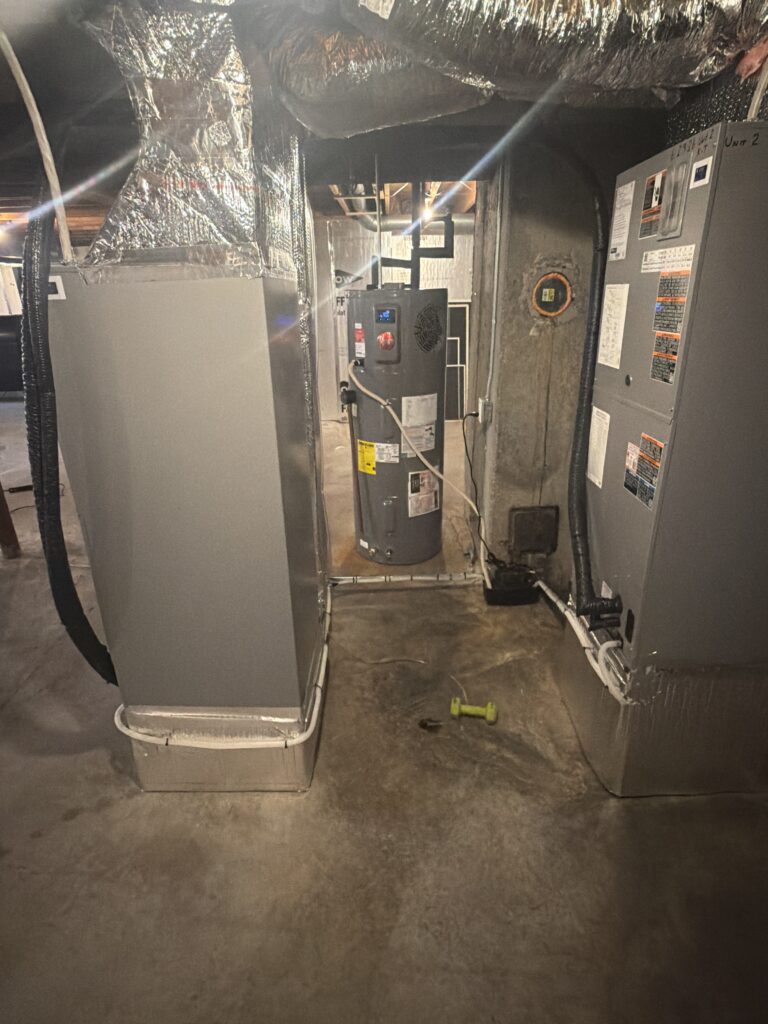
Palmer’s older triple-deckers and converted multifamily homes often have furnaces that were added after the building was divided, not designed alongside it. Landlords and property managers need zone-by-zone answers, not guesswork, when one unit runs cold while another overheats.
We treat each unit on its own terms, explaining exactly what’s driving the recommendation before any work begins.
- Gas service, or oil and propane
- Existing ductwork, radiators, or nothing at all
- Build era and how the house has been altered since
- House size, lot exposure, and insulation
- Owner occupied or rented, and how many units
How we diagnose a furnace that's acting up
When a furnace won’t light, short-cycles, or blows cold air, we don’t start swapping parts and hoping something sticks. We walk through ignition, airflow, gas pressure, venting, and the control board in order, checking each system against the manufacturer’s specs before moving to the next. That sequence tells us whether we’re looking at a failed sensor, a cracked heat exchanger, a dirty flame sensor, or something upstream like a blower motor or capacitor on its way out.
Palmer homes run a mix of furnace ages and fuel types, so we bring the tools to test electrical components, combustion, and static pressure on site rather than guessing from symptoms alone. That means you get an actual answer about what’s wrong, what it costs to fix, and whether repair still makes sense or the unit is nearing the end of its useful life.
- The load calculation, or a clear reason it was not needed
- Equipment model, capacity at design temperature, and efficiency ratings
- Line set length and route, condensate drainage, and mounting locations
- Electrical requirements, and whether the panel needs work
- Warranty terms, and who performs the labour
Before any repair work starts on your Palmer furnace, we explain what’s failing and why. You’ll hear the actual part or component causing the trouble, not a vague reference to “the system acting up.”
If a technician can’t point to the specific cause of a breakdown, that’s worth questioning. A clear diagnosis should always come before a repair quote, not after.
What the repair actually covers
A furnace repair visit in Palmer starts with testing the components that fail most often: the ignitor or pilot assembly, flame sensor, blower motor, capacitor, pressure switch, and control board. Once we isolate the actual fault, we explain what broke, what it costs to fix, and how long you can expect that repair to hold up in a Palmer winter before you commit to anything.
If the furnace is at the point where repair stops making sense, we’ll say so plainly rather than keep patching an aging unit. Any electrical work tied to the repair is performed in-house under Powers Air’s own licensing, properly permitted and inspected. We don’t push unnecessary parts or upsell a new system when a straightforward fix will get your Palmer home’s heat back on reliably.
Signs Your Furnace Needs Attention
Palmer winters don’t leave much room for a furnace to limp along. If yours is showing warning signs, it’s time to call before a small issue becomes a cold house emergency.
- Short cycling or constant running
- Cold spots in certain rooms
- Strange noises like banging or squealing
- Burning smells or dusty odors from vents
- Rising heating bills with no clear cause
- Pilot light or ignition issues
Catching these early saves money and hassle.
- Number of zones and indoor units
- Indoor unit type, ducted or ductless
- Line set length and the route through the building
- Electrical service capacity, and whether the panel needs upgrading
- Access, including tight basements, upper floors, and exterior wall mounting
Palmer winters don’t wait, and neither should a furnace that’s struggling. Short cycling, cold spots, strange odors, or a spike in your heating bill are all early warnings that something inside the unit needs attention. Catching these issues early usually means a simpler, less expensive fix.
- Furnace runs but doesn’t warm the house evenly
- Burner flame looks weak or flickers
- Unusual noises during startup or operation
Permits and Inspection
Most furnace repair work in Palmer doesn’t require a permit, but swapping out a furnace, modifying gas lines, or changing venting typically does. Town inspection requirements exist to confirm the work meets current safety codes, which protects you and your home long after the job is done.
Powers Air handles the paperwork when permits apply, coordinating with Palmer’s building department so inspections happen without added hassle on your end.
Ready to Get Your Furnace Fixed?
Cold spots, strange noises, or a furnace that won’t stay lit — Palmer homeowners don’t have to live with it. Reach out and describe what’s going on, and we’ll walk you through next steps before anyone sets foot on your property.
Whether it’s a quick repair or something bigger, you’ll get a straight answer and a clear plan, not a runaround.