
Heat Pump Installation in Easthampton, MA
Walk through one of Easthampton’s converted mill buildings or a Victorian off Union Street and you’ll find the same two things: brick or balloon-frame construction that was never built with ductwork in mind, and a heating system in the basement that’s either oil-fired or running on propane, because there’s no natural gas main reaching a lot of this city. That combination is exactly why heat pumps have become such a practical conversation here rather than a sales pitch.
- Powers Air HVAC, based in Granby, MA
Heat Pump Installation in Easthampton
Easthampton has a renovation culture that most Western Mass towns don’t quite match. Between the arts community that rehabbed the old mill complexes into lofts and studios, and the younger homeowners buying up the city’s older housing stock and fixing it up room by room, there’s a higher than average appetite for doing the efficiency work properly instead of patching the old system one more winter. Drew Powers runs the installs himself, from the first walkthrough to the final commissioning, so the person sizing your system is the same person standing in your basement running the line set.
The question Drew hears most in this city is some version of “does this actually work in February.” It’s a fair question and it deserves a straight answer, not a brochure line. Modern cold-climate heat pumps, properly selected for their low-temperature capacity and HSPF2 rating, maintain meaningful heating output well below zero degrees Fahrenheit. They lose capacity as the temperature drops, which is normal physics, not a defect, and that’s why sizing and backup heat strategy matter more than the brand name on the unit. Done right, a heat pump carries an Easthampton house through a Western Mass winter. Done wrong, with the wrong unit or no plan for the coldest nights, it leaves someone cold and tells the whole neighborhood that heat pumps don’t work here, which isn’t true.
What Easthampton Homes Are Working With
Most of the housing Drew sees in Easthampton falls into two categories. There’s the pre-1940s stock near downtown and the mill district, often converted multifamily or single-family homes with steam or hot water radiators and zero ductwork, where ductless mini-splits are the only realistic path to cooling and a strong complement or replacement for the old boiler. Then there’s the slightly newer housing out toward the edges of town, some with forced-air systems already in place, where a ducted heat pump or a hybrid approach that keeps the furnace as backup makes more sense.
The gas question comes up on nearly every call. Large sections of Easthampton, like much of this part of the Pioneer Valley, run on delivered oil or propane rather than natural gas. When the alternative to a heat pump is $4-plus propane or an oil delivery truck, the math on electrification looks very different than it does in a town with cheap gas piped to every house. Add in the mill conversions, where owners are already mid-renovation and open to rethinking mechanical systems entirely, and Easthampton ends up being one of the better fits in the territory for a serious ductless or hybrid heat pump install rather than a like-for-like equipment swap.
How We Size and Specify the System
Every quote starts with a load calculation, not a guess based on square footage. A Manual J calculation accounts for your actual insulation, window count and type, air sealing, orientation, and ceiling heights, and it’s the only honest way to know how much heating and cooling capacity a house needs room by room. Skipping this step is the single most common failure in this industry, and it’s almost always in the direction of oversizing.
An oversized heat pump short-cycles. It satisfies the thermostat fast, shuts off, and never runs long enough to dehumidify the air properly or settle into the steady, quiet low-speed operation that makes these systems comfortable. It also wears out faster from the constant starting and stopping. Bigger is not safer here. The right-sized system, matched to the house and the cold-climate performance curve of the specific equipment, is what actually keeps people comfortable in January.
A proper quote from Powers Air spells out the load calculation results, the specific indoor and outdoor units proposed with their cold-climate ratings, line set lengths and routing, electrical requirements, and how backup heat is handled on the coldest nights. If a bid shows up with a price and a brand name and nothing behind it explaining why that size was chosen for your house, that’s a warning sign worth taking seriously.
What the Work Involves
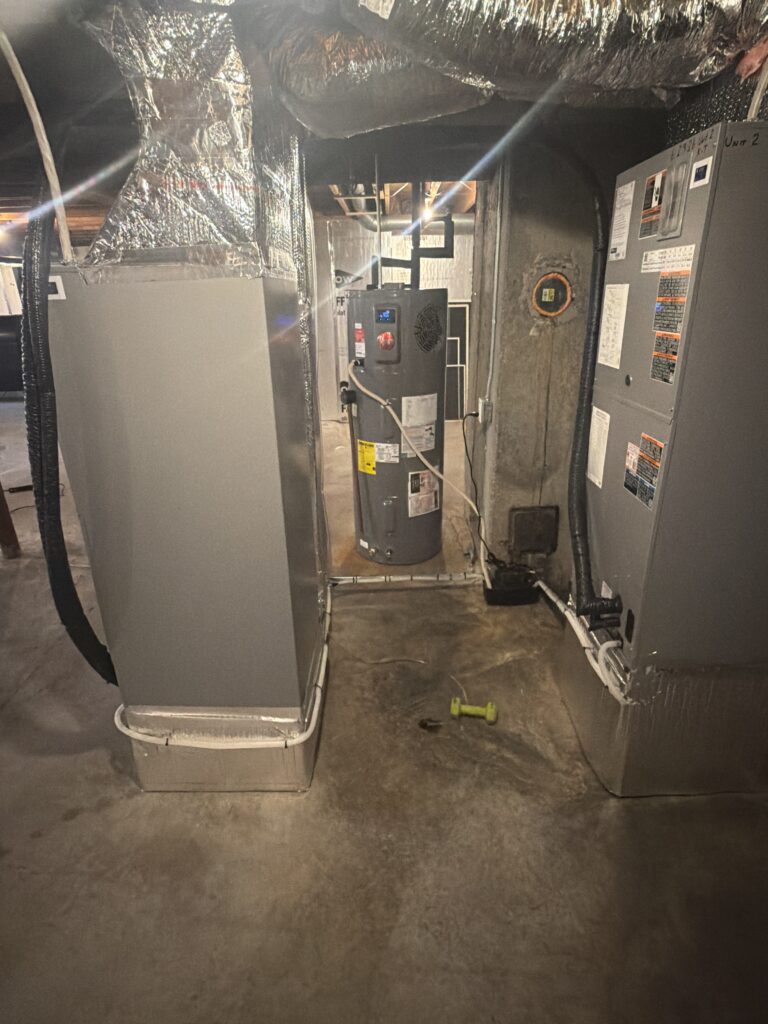
Installation starts with the load calculation and a walkthrough to confirm where indoor heads or air handlers make sense, where the outdoor condenser can sit without blocking snow clearance or airflow, and how far the refrigerant line sets need to run. Line length and the number of elevation changes affect performance and are part of the design, not an afterthought discovered mid-install.
From there it’s mounting the indoor units, running line sets and condensate drainage, setting the outdoor unit on a pad or wall bracket above expected snow depth, and wiring the system to a dedicated electrical circuit. If your existing panel doesn’t have capacity for the new load, Powers Air handles that in-house as a licensed electrical contractor, including a full panel upgrade if one is needed, rather than sending you to find a separate electrician. Every panel change-out and electrical connection is permitted and inspected, because that step is exactly what a lower bidder is often skipping.
Commissioning is the last step and the one that gets skipped most often elsewhere: checking refrigerant charge, verifying static pressure on any ducted portion, confirming the backup heat sequence, and walking you through the thermostat and controls before Drew leaves.
- A load calculation and walkthrough to confirm zone locations
- Mounting the outdoor condenser and indoor units
- Running refrigerant line sets within the manufacturer's length and elevation limits
- Setting up a proper condensate drain
- Dedicated electrical circuits, including a check on panel capacity
- Commissioning the system and a walkthrough of the controls
None of this is complicated to explain, but it is the difference between a heat pump that quietly does its job for fifteen winters and one that gets blamed for a sizing mistake it never had a say in.
What It Costs
A straightforward single-zone ductless install in Easthampton generally runs between {PRICE_LOW} and {PRICE_HIGH}, with whole-house ducted or multi-zone systems landing higher depending on the specifics. What moves the number: how many zones the house needs, whether you’re using ducted air handlers or wall-mounted heads, how far the refrigerant lines have to travel, whether your electrical panel has room for the new circuit or needs upgrading first, and how easy or difficult access is to the install locations. Any number quoted before a load calculation and a site walkthrough is a placeholder, not a real price.
Rebates and Incentives
Mass Save offers incentives for qualifying heat pump installations, and the program is genuinely worth understanding before you commit to a system, since the rules around equipment eligibility and rebate structure change from year to year. Rather than quote figures here that may be out of date by the time you read this, it’s more useful to look at the current program details directly at masssave.com [EXTERNAL LINK: Mass Save program page, for current rebate structure and eligibility rules] or review our Mass Save heat pump rebates page. When Drew puts together a proposal, he’ll walk through what might apply to your specific house and equipment choice so you’re not guessing.
Get a Quote
If you’re weighing a heat pump for an Easthampton home, whether it’s a mill-district conversion with no ductwork or a house on the edge of town with an aging oil furnace, start with a conversation and a real load calculation, not a flyer with a price on it. Call {PHONE} to set up a walkthrough. Drew does the assessment and the install himself, so what you’re quoted is what gets built.
frequently asked questions
Do heat pumps actually keep up during a Western Mass winter?
Yes, when the system is sized and specified correctly. Cold-climate heat pumps maintain real heating capacity well below freezing, and their output does taper as it gets colder, which is normal. The sizing and backup heat plan are what determine whether a house stays comfortable on the coldest nights, not the general technology.
Can a heat pump work in a house with no ductwork?
Yes, this is the exact situation ductless mini-splits were built for. A lot of Easthampton's older housing runs on steam or hot water radiators with no ducts at all, and ductless heads mounted room by room are often the most practical way to add both heating and cooling without tearing open walls or ceilings.
Do I need to replace my oil or propane furnace entirely?
Not necessarily. Many Easthampton homeowners keep their existing furnace or boiler as backup for the coldest stretches of winter and let the heat pump carry the bulk of the heating and all of the cooling load. Whether a full replacement or a hybrid setup makes more sense depends on your house and your appetite for ongoing fuel costs.
What's included in a load calculation?
A Manual J load calculation looks at your home's insulation levels, window types and count, air sealing, ceiling heights, and orientation to the sun to determine actual room-by-room heating and cooling needs. It's the basis for every system recommendation Powers Air makes, rather than a square-footage guess.
Does Powers Air handle electrical panel upgrades for heat pump installs?
Yes, in-house, not as a referral to another contractor. If your panel doesn't have capacity for a new heat pump circuit, Drew can evaluate and perform the upgrade as part of the project, and the work is permitted and inspected.