
HVAC Contractor in Chicopee, MA
Chicopee’s housing stock splits roughly into two camps: dense mid-century two and three family blocks built up through the post-war boom, and older mill-era triple deckers along the Chicopee River with steam or hot water radiators and no ductwork whatsoever. What’s in the basement of either one tells you more about the right HVAC fix than any sales pitch will.
- Powers Air HVAC, based in Granby, MA
Powers Air HVAC is based in Granby, a short drive from Chicopee, and the person who looks at your basement or your attic chase is the person who does the install. No dispatcher, no commissioned salesman walking you into a bigger system than the house needs. Drew Powers runs this company lean on purpose, with a trusted plumbing subcontractor network for anything that crosses trades, and now full in-house electrical licensing for panel and EV charger work.
- Ductless mini-split installation, single-zone and multi-zone
- Heat pump installation and replacement, cold-climate rated equipment
- Central air conditioning
- Furnace installation and replacement
- Ductwork and ventilation
- Electrical panel upgrades and change-outs, licensed and permitted, done in-house
- EV charger installation
What Chicopee homes are working with
With roughly 55,600 residents, Chicopee is the second largest market in our service territory, and it is a practical, price-aware one. A large share of the housing is two and three family stock, which means a lot of owners here are landlords as much as homeowners, weighing equipment cost against what a tenant actually needs and what the unit can bear in rent. That changes the conversation from “best possible system” to “best system for this unit, this budget, this timeline.”
The building stock itself runs two ways. The post-war single and multi-family neighborhoods generally have forced-air ductwork already in place, built for an oil or gas furnace and sometimes a bolted-on central AC coil later. The older mill-adjacent triple deckers, especially closer to the river and the historic center, were built on steam or hot water radiators and never had ducts cut in at all – that’s the textbook case for ductless mini-splits, zone by zone, with no demolition required. Natural gas service is available through much of Chicopee proper, unlike a lot of our more rural territory, but plenty of the older multi-family stock still runs on oil heat installed decades ago, which is exactly the math that makes a heat pump conversion worth running the numbers on.
How we size and specify the system
Every recommendation starts with a load calculation, not a walk-through guess. A proper Manual J looks at your square footage, insulation, window count and orientation, and air leakage, then tells us how much heating and cooling capacity the house actually needs room by room. Skip that step and you get the single most common HVAC failure we see: an oversized system that short-cycles, strips humidity control, wears out its compressor faster, and still leaves rooms uneven because it never runs long enough to even out the air.
For heat pumps specifically, sizing also means knowing the unit’s cold-climate rating and HSPF2 figure, and understanding what happens to its output capacity as outdoor temperature drops. A unit that covers the design load at 5 degrees without backup is a very different proposition from one that falls off a cliff at 20 degrees and needs auxiliary heat to carry the rest of the winter. We spec backup heat honestly rather than pretending a mini-split alone handles every January night in this valley.
A real quote names the equipment model and capacity, shows the load calculation behind it, and spells out line set routing, condensate handling, and electrical requirements. If a bid shows up with a price and a brand name and nothing else behind it, that’s worth a second opinion before you sign anything.
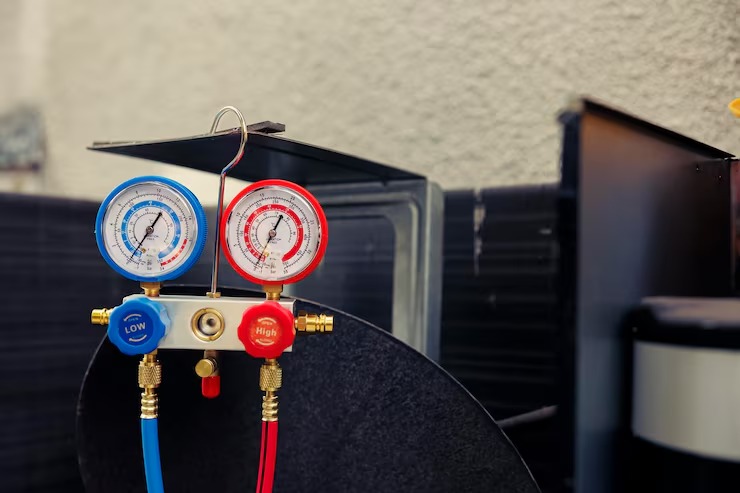
Commercial and light industrial work is part of the mix here too. Chicopee’s commercial base along Memorial Drive and the industrial park corridors means rooftop units, packaged systems, and ventilation work for shops and small plants, not just residential splits. The same rule applies on the commercial side: we size to the actual load and the actual use pattern of the space, not a guess based on square footage alone.
- A room-by-room load calculation, not a flat square-footage number
- Specific equipment model numbers, not just "a 2-ton system"
- Line set lengths and routing
- Confirmation the electrical service has capacity, or what it will take if it doesn't
- Permit and inspection included, not an add-on
- A written price, not a verbal estimate
On the electrical side, panel work and EV charger installs are now done in-house under our own licensing rather than handed off to a referral. If your Chicopee two-family still has a 100-amp panel from the 1960s and you’re adding a heat pump and a Level 2 charger, that panel capacity question needs answering before equipment gets ordered, not after.
What the work involves
- Site visit and load calculation
- Written proposal with equipment, zones, and price
- Permit filed with the town
- Installation, typically one to three days depending on scope
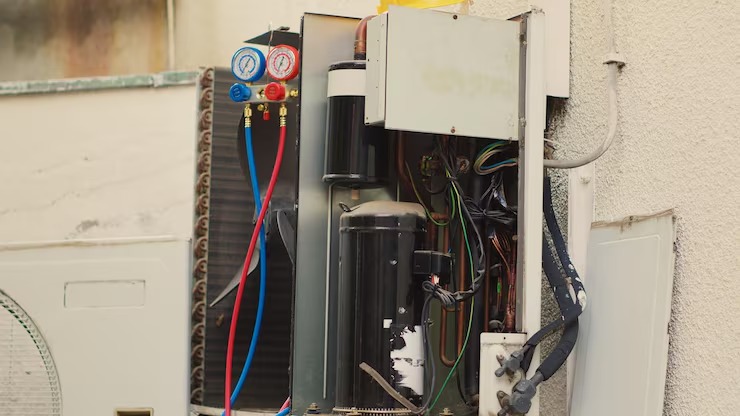
- Commissioning and system check, including refrigerant charge verification
- Inspection and walkthrough
A ductless install in one of Chicopee’s un-ducted mill-era units typically means one outdoor condenser feeding two to four indoor heads, run through a short line set to minimize refrigerant line length and protect efficiency, with a dedicated condensate path and a clean electrical circuit sized to the unit. In a home with existing ductwork, the conversation shifts to whether that ductwork can handle a heat pump’s airflow needs without excessive static pressure, or whether a hybrid approach pairing ducted heat pump capacity with the existing furnace as backup makes more sense.
Central air and furnace replacements in Chicopee’s post-war housing usually involve matching new equipment to ductwork that’s been there since the house was built, which means checking duct sizing and sealing before assuming a straight swap will perform the way the old system did. Electrical panel upgrades follow Massachusetts electrical code to the letter, with permitted work pulled, inspected, and signed off, because a panel change-out touches the service conductors and there is no version of that job done safely without a permit and an inspection.
What it costs
Ductless mini-split installs in Chicopee generally run from {PRICE_LOW} to {PRICE_HIGH}, with the spread driven by number of zones, indoor unit style (wall-mounted versus ceiling cassette or floor console), line set run length, and whether your electrical panel has room for the new circuit or needs work first. Central air and furnace jobs move on similar factors plus ductwork condition – sealing or modifying existing ducts adds time and material a straight equipment swap doesn’t need. Electrical panel upgrades and EV charger installs price out based on panel capacity, service entrance condition, and charger location relative to the panel. Nobody gets a number here without a look at the house first. A fixed price quoted sight unseen on any of this work is a guess, not a quote.
Rebates and incentives
Massachusetts runs the Mass Save program, which offers incentives tied to heat pump installs and other efficiency upgrades, and it’s worth understanding before you finalize a system choice in Chicopee. Rules and amounts change and eligibility depends on the specifics of your house and your existing heating system, so we won’t quote a figure here – we can walk through what might apply once we know your setup. For current program details, see masssave.com [EXTERNAL LINK: Mass Save official program site for current rebate rules and eligibility], and for a broader rundown visit our Mass Save heat pump rebates page.
Permits and Inspection
Every electrical panel upgrade, EV charger install, and applicable HVAC job we do in Chicopee gets pulled as a permit and signed off by town inspection. That’s not paperwork for its own sake – it’s the difference between work that holds up when you sell the house or file an insurance claim and work that doesn’t. If a quote comes in noticeably lower because it skips the permit, that’s the cost you’re not seeing yet.
Get a Quote
If you’re in Chicopee and weighing a ductless system for a radiator-heated triple decker, a straight AC or furnace replacement, or an electrical panel upgrade to support new equipment, call {PHONE} and talk directly to the person who’ll be doing the work. For the full picture of what we cover across the valley, visit our HVAC contractor hub page or the Chicopee town page.
frequently asked questions
Does Chicopee have natural gas service, or is this an oil and propane area?
A good portion of Chicopee proper has natural gas service, which is less common across the rest of our territory, but plenty of older multi-family buildings here still run on oil heat installed decades ago. That mix is exactly why we run the numbers on heat pump conversion rather than assuming one answer for the whole city.
Can you install a ductless system in a triple decker with radiator heat and no ducts?
Yes, that's one of the most common jobs we do in Chicopee's older mill-adjacent neighborhoods. Ductless mini-splits need no ductwork at all, just a line set run and an electrical circuit per zone, which makes them a direct fit for steam and hot water heated buildings.
Will a bigger heat pump heat my house better in winter?
No, oversizing is the most common sizing mistake we see and it actually hurts comfort. An oversized unit short-cycles instead of running steady, which means worse temperature control, worse humidity control, and more wear on the compressor. Proper sizing comes from a load calculation, not picking the biggest unit available.
Do you handle electrical panel upgrades yourselves or refer that out?
We do panel upgrades and EV charger installs in-house under our own electrical licensing. It's not a referral to a separate electrician – it's licensed work we perform directly, permitted and inspected.
What determines the price of a mini-split install in a Chicopee multi-family?
Number of zones, the type of indoor unit, how far the line set has to run, and whether your existing electrical panel has capacity for the new circuit all move the price. A landlord adding one zone to a rental unit pays very differently than a whole-house conversion.
Is Powers Air part of the Mass Save program?
Mass Save is a utility-sponsored program, and we can help you understand what incentives might apply to your specific house and heating setup. For current program rules and the full incentive list, masssave.com is the authoritative source.